In the rapidly evolving landscape of industrial automation, laser sensors have become indispensable components for precision measurement, positioning, and quality control. Understanding the pricing structure of these devices is crucial for engineers, procurement specialists, and system integrators making informed capital expenditure decisions. The cost of an industrial laser sensor is not a single figure but a spectrum influenced by a confluence of technical, commercial, and application-specific factors.
At the core of pricing lies the fundamental technology and performance specifications. Sensors are broadly categorized by their operating principle: time-of-flight (ToF), triangulation, confocal, or interferometric. A standard 2D triangulation sensor for distance measurement may start from a few hundred dollars, while a high-accuracy, blue laser confocal displacement sensor for micron-level inspection can command prices well into the five-figure range. Key performance parameters directly impacting cost include measurement range, spot size, repeatability, linearity, and sampling speed. A sensor with a 0.1µm repeatability will be significantly more expensive than one offering 10µm. Similarly, models designed for high-speed production lines with kHz-level sampling rates incorporate faster processors and specialized optics, elevating their price point.
The laser class and wavelength are further cost drivers. Standard red laser diodes (e.g., 650nm) are cost-effective. However, applications involving challenging surfaces—such as shiny metals, transparent glass, or dark, absorbent materials—often require specialized lasers. Blue lasers (e.g., 405nm) or lasers with modulated wavelengths provide better signal stability on these surfaces but involve more complex and expensive semiconductor fabrication. Class 1 (inherently safe) sensors, which integrate safety enclosures or low-power designs, also carry a premium over Class 2 or 3R devices, which may require additional external safety expenditures.

Environmental robustness, encapsulated in the Ingress Protection (IP) and ingress Protection (IP) rating and operating temperature range, adds another layer to the cost. A sensor with an IP67 rating (dust-tight and waterproof) for harsh environments like welding cells or food processing plants uses hardened casings, specialized seals, and temperature-compensated electronics, increasing manufacturing costs compared to a basic IP40 device for clean lab settings.
Beyond hardware, embedded intelligence and connectivity are pivotal. Basic analog output (0-10V, 4-20mA) sensors are at the lower end of the price spectrum. Modern sensors featuring integrated programmable logic, advanced filtering algorithms, Ethernet/IP, PROFINET, or IO-Link interfaces offer greater functionality and easier integration into Industry 4.0 frameworks but come at a higher initial cost. This investment, however, can lead to lower total cost of ownership through reduced wiring, simplified diagnostics, and predictive maintenance capabilities.
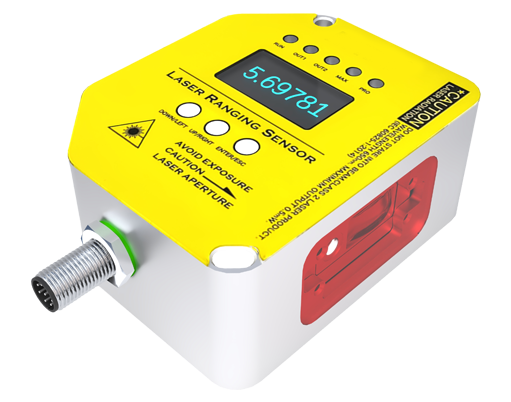
Brand reputation and support constitute a significant, albeit less tangible, factor. Established manufacturers like Keyence, Omron, Sick, or Micro-Epsilon command price premiums justified by decades of R&D, proven reliability, extensive application support, and global service networks. While generic or lesser-known brands may offer attractive upfront prices, the long-term risks associated with potential downtime, lack of technical support, and shorter product lifecycles must be carefully weighed. The total cost of ownership often favors proven brands in mission-critical applications.
Market dynamics and volume also play a role. Prices have gradually decreased for standard sensor types due to advancements in semiconductor manufacturing and increased competition. However, custom-engineered solutions for unique applications (e.g., extreme temperatures, nuclear environments, or aerospace) involve non-recurring engineering (NRE) costs and low production volumes, leading to substantially higher unit prices. For OEMs integrating sensors into their machinery, volume purchase agreements can secure discounts of 15-30% off list prices.
Current market analysis indicates a steady demand growth driven by smart manufacturing and robotics, keeping prices stable for core products while innovation continues in high-end segments. When evaluating cost, engineers must perform a holistic analysis: align the sensor's specifications with the *exact* application requirements, consider integration and lifecycle costs, and factor in the value of supplier support. The cheapest sensor that fails to perform reliably under plant conditions becomes the most expensive asset due to production halts and quality issues. A strategic investment in the right laser sensor, priced for performance and durability, ultimately safeguards productivity and ensures a robust return on investment in an automated industrial future.