In the realm of industrial automation and precision measurement, laser distance sensors have become indispensable tools. Among their critical technical parameters, frequency—often referred to as measurement rate or sampling frequency—plays a pivotal role in determining sensor performance and suitability for specific applications. This article delves into the concept of frequency in laser distance sensors, its implications, and key considerations for selection and optimization.
Frequency, measured in Hertz (Hz), denotes the number of distance measurements a sensor can perform per second. A sensor with a frequency of 1,000 Hz, for example, captures 1,000 discrete distance data points every second. This parameter is fundamentally linked to the sensor's ability to track dynamic processes. In high-speed applications such as robotic assembly lines, conveyor belt monitoring, or vibration analysis, a high-frequency sensor is essential to capture rapid changes in position or displacement accurately. Without sufficient frequency, critical data points may be missed, leading to measurement errors, reduced control accuracy, and potential system failures.
The frequency of a laser distance sensor is influenced by several internal factors. The core technology—whether based on time-of-flight (ToF), phase-shift, or triangulation principles—sets a foundational limit. ToF sensors, commonly used for longer ranges, may have lower frequencies compared to high-precision triangulation sensors designed for short-range, high-speed tasks. Additionally, signal processing algorithms, laser diode modulation capabilities, and the efficiency of the photodetector and associated circuitry all contribute to the maximum achievable sampling rate. Manufacturers often balance frequency with other parameters like measurement range, accuracy, and laser power to meet diverse market needs.

From an application standpoint, selecting the appropriate frequency requires careful analysis. For static or slow-moving object measurement, such as warehouse inventory level sensing or large structural dimensioning, a lower frequency (e.g., 10-100 Hz) may be perfectly adequate, often at a lower cost. Conversely, monitoring fast-rotating machinery components, controlling high-speed pick-and-place robots, or performing real-time profile scanning of moving materials typically demands frequencies in the kilohertz (kHz) to tens of kHz range. It is crucial to note that a higher frequency sensor generates substantially more data. This places greater demands on data acquisition systems, communication interfaces (like Ethernet or IO-Link), and subsequent data processing software to handle the influx without bottlenecks.

Furthermore, frequency interacts with other performance metrics. For instance, increasing the measurement frequency can sometimes impact accuracy or resolution, as the sensor has less time per cycle for signal averaging and noise reduction. Environmental conditions like ambient light interference or the reflectivity of the target surface can also affect the effective stable frequency. Therefore, datasheet specifications should be interpreted with these interactions in mind. Practical implementation often involves testing under real or simulated operating conditions to verify that the sensor's frequency performance meets the application's dynamic requirements.
Looking ahead, advancements in laser technology, faster microprocessors, and improved algorithms continue to push the boundaries of sensor frequency. Emerging trends include the development of multi-channel sensors that can measure multiple points at high frequencies simultaneously and sensors with adaptive frequency control, which can dynamically adjust their sampling rate based on the detected object's speed. These innovations promise to enhance the capabilities of automated systems, enabling more sophisticated real-time control and quality assurance in manufacturing, logistics, and beyond.
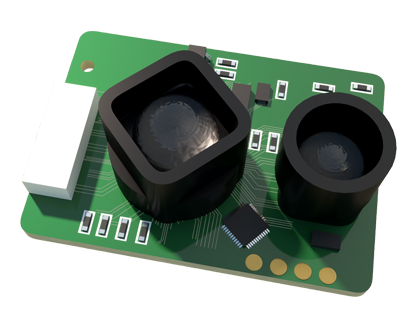
In conclusion, the frequency of a laser distance sensor is a decisive factor that bridges technical specifications with practical application demands. Engineers and system integrators must evaluate this parameter in conjunction with range, accuracy, environmental robustness, and system integration requirements. A thorough understanding of frequency empowers professionals to select the optimal sensor, ensuring reliable, precise, and efficient operation in today's fast-paced industrial landscapes.