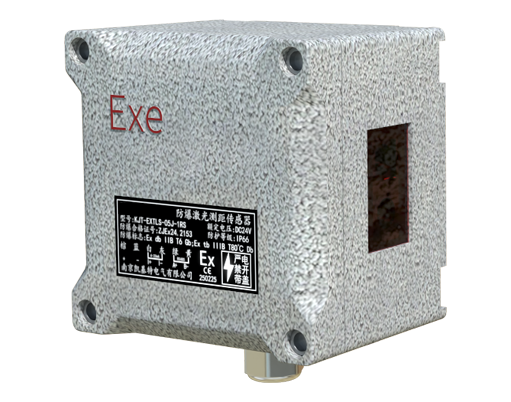
In the rapidly evolving landscape of industrial automation and process control, the demand for high-precision, reliable, and versatile sensing technology has never been greater. Among the most significant advancements meeting this demand are multi-point pump laser sensors. These sophisticated devices represent a paradigm shift from traditional single-point sensing, offering unparalleled capabilities in monitoring, measurement, and control across complex industrial environments. This article delves into the core principles, key applications, and transformative benefits of this cutting-edge technology.
At its essence, a multi-point pump laser sensor is a system that utilizes laser diode pumping mechanisms to generate highly stable and intense laser beams. Unlike conventional sensors that take measurements at a single discrete location, these systems are engineered to simultaneously monitor multiple critical points within a process or machinery. The core technology often involves a single laser source whose beam is split and directed via fiber optics or optical switching mechanisms to various strategic measurement points. At each point, the interaction of the laser light with the target—whether through reflection, absorption, scattering, or interferometry—is detected and analyzed. This data is then processed in real-time by integrated control units, providing a comprehensive, multi-dimensional view of the monitored system's state.

The operational principle hinges on the exceptional coherence and focusability of laser light. The "pump" refers to the method of energizing the laser's gain medium, typically a solid-state crystal or optical fiber doped with rare-earth ions like Ytterbium or Erbium. Electrical energy "pumps" electrons to a higher energy state, leading to stimulated emission and the generation of a precise laser beam. This process results in a light source with superior signal-to-noise ratio, long-term stability, and resistance to environmental electromagnetic interference, which is critical for industrial settings.
The applications for multi-point pump laser sensors are vast and transformative. In the oil and gas sector, they are deployed for distributed temperature sensing (DTS) along pipelines, detecting leaks or hotspots across kilometers of infrastructure from a single control station. In manufacturing, particularly in automotive and aerospace, they enable simultaneous precision alignment of multiple components on an assembly line, ensuring micron-level tolerances. Within the energy sector, they monitor the temperature and strain at hundreds of points on wind turbine blades or in geothermal wells, predicting maintenance needs and preventing catastrophic failures. Furthermore, in chemical and pharmaceutical processing, they provide real-time, multi-point analysis of fluid levels, composition, and flow rates within reactors and vessels, enhancing both safety and product consistency.
The advantages of adopting multi-point laser sensing systems are compelling. First and foremost is the dramatic increase in data density and system awareness. Instead of inferring the state of an entire system from a few data points, engineers receive a continuous, detailed map of conditions. This leads to enhanced predictive maintenance, as anomalies can be localized and addressed before they escalate. Secondly, they offer significant cost and space efficiency. One multi-point system replaces numerous individual sensors, reducing installation complexity, wiring, and long-term maintenance overhead. Thirdly, their robustness and reliability in harsh environments—resistant to vibration, extreme temperatures, and corrosive atmospheres—ensure uninterrupted operation. Finally, the scalability and flexibility of these systems allow for easy reconfiguration or expansion as process needs change, future-proofing industrial investments.

However, the implementation of such advanced technology is not without considerations. Initial capital investment can be higher than for traditional sensor arrays. Successful deployment requires careful planning of measurement point locations and may involve integration challenges with legacy control systems. Furthermore, personnel often need specialized training for operation and data interpretation. Despite these hurdles, the long-term return on investment through reduced downtime, improved product quality, and optimized processes is overwhelmingly positive.
Looking ahead, the integration of multi-point pump laser sensors with Industrial Internet of Things (IIoT) platforms and artificial intelligence is the next frontier. AI algorithms can analyze the vast, multi-point datasets to uncover deeper insights, predict trends, and enable fully autonomous process optimization. As laser and photonics technology continues to advance, we can expect these sensors to become even more compact, energy-efficient, and capable, solidifying their role as indispensable tools for building the smart factories and resilient infrastructure of the future.
In conclusion, multi-point pump laser sensors are far more than incremental improvements; they are foundational technologies enabling a new level of industrial intelligence. By providing simultaneous, precise, and reliable data from multiple critical points, they empower industries to achieve unprecedented levels of efficiency, safety, and control, driving innovation and competitiveness in the global market.