In the vast landscape of industrial automation and control systems, sensors act as the fundamental sensory organs, providing critical data on the physical state of machinery and processes. Among these, proximity switches hold a pivotal position. This article delves into the classification of proximity switches within the broader sensor taxonomy, exploring their operating principles, key types, and typical applications.
Fundamentally, a proximity switch is a type of non-contact sensor. Its primary function is to detect the presence or absence of a target object within a specified sensing range without any physical contact. This non-contact nature is its defining characteristic, leading to minimal wear, long operational life, and high reliability—attributes highly valued in industrial settings. Therefore, within the sensor classification hierarchy, proximity switches are unequivocally categorized under non-contact position/displacement sensors.
The core principle involves the sensor generating an electromagnetic field, light beam, or ultrasonic waves. When a target object enters this field, it causes a detectable change in the field's properties (such as amplitude, frequency, or phase). This change is then converted by the sensor's internal electronics into a clean, binary electrical output signal—typically a switch from "OFF" to "ON" (or vice-versa). This simple digital output makes them ideal for direct integration into Programmable Logic Controllers (PLCs) and other control systems for counting, positioning, sequencing, and limit detection.
The classification of proximity switches is further refined based on their underlying sensing technology. The four most prevalent types are:
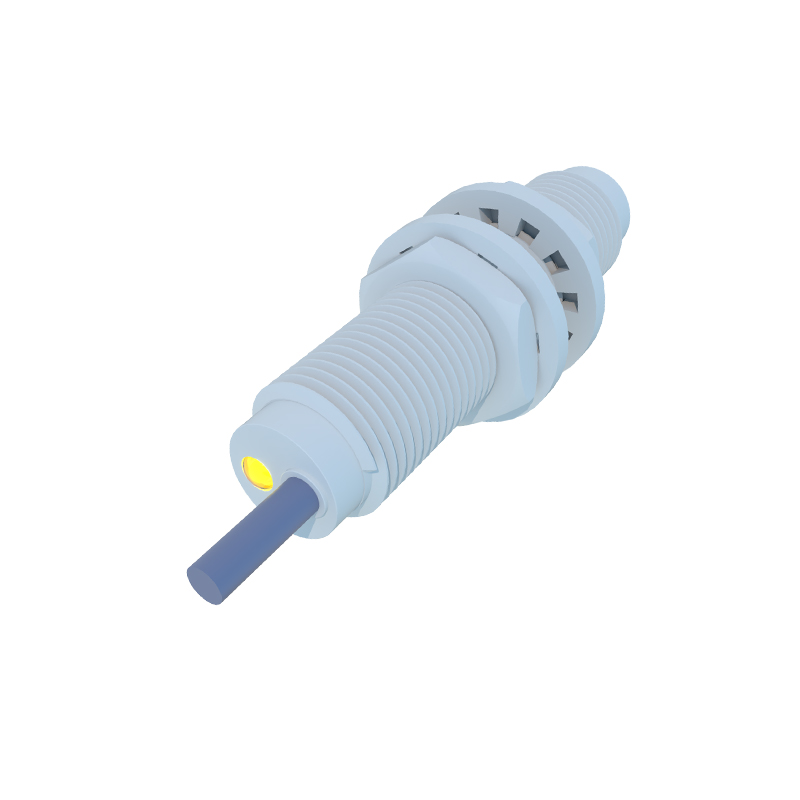
1. Inductive Proximity Sensors: These are among the most common types. They generate an oscillating electromagnetic field. When a metallic object (ferrous or non-ferrous) enters this field, it induces eddy currents within the target, which dampens the oscillation. The sensor detects this damping and triggers an output. Inductive sensors are robust, resistant to environmental contaminants like dust and oil, and are exclusively used for metal detection. Their sensing range is relatively short, typically up to 60mm, depending on the target material and sensor size.
2. Capacitive Proximity Sensors: These sensors function by generating an electrostatic field. They can detect both metallic and non-metallic materials, including liquids, powders, plastics, and wood. The presence of any object with a dielectric constant different from air alters the capacitance of the sensor's field. This change is measured to activate the output. Capacitive sensors are versatile and can even detect materials through non-metallic containers, making them perfect for level detection of liquids or granular substances.
3. Photoelectric Sensors: While often considered a distinct category, many photoelectric sensors function as proximity switches. They operate by emitting a beam of light (visible, infrared, or laser) and detecting its reflection or interruption. In the diffuse (proximity) mode, the sensor detects light reflected directly from the target object itself. Photoelectric sensors offer longer sensing ranges than inductive or capacitive types and can detect virtually any object, regardless of material. However, their performance can be affected by environmental factors like dust, fog, or highly reflective backgrounds.
4. Ultrasonic Proximity Sensors: These sensors emit high-frequency sound waves and measure the time taken for the echo to return. The presence of an object within the sensing range alters the echo pattern or return time. Ultrasonic sensors are excellent for detecting objects of any material, shape, or color, and they perform well in challenging environments with dust, smoke, or moisture. They are commonly used for distance measurement, level control, and presence detection over longer ranges.
The selection of a specific proximity switch type depends on several application-specific factors: the material of the target object, the required sensing distance, the operating environment (temperature, presence of contaminants), the required switching frequency, and installation constraints.
In practical industrial applications, proximity switches are ubiquitous. Inductive sensors are found on CNC machine tools for tool positioning, on conveyor lines for counting metal parts, and as end-of-travel limit switches. Capacitive sensors monitor fill levels in silos containing plastics or grains, and detect the presence of glass or liquid bottles on packaging lines. Photoelectric proximity sensors are staples in material handling for box detection, and in automated assembly for part verification. Ultrasonic sensors manage bulk material levels and control robot palletizing sequences.
In conclusion, the proximity switch is a specialized, non-contact sensor designed for robust and reliable object detection. Its classification under non-contact displacement sensors is clear. Understanding the distinct technologies—inductive, capacitive, photoelectric, and ultrasonic—is crucial for optimal selection and deployment. By providing a precise, contactless switching signal, these devices form an indispensable component in modern industrial automation, enhancing efficiency, safety, and system intelligence across countless applications.