In the realm of industrial automation and precision measurement, ring laser count sensors represent a sophisticated technology that offers unparalleled accuracy and reliability. These sensors utilize the principles of laser interferometry to detect and count objects or measure displacements with extreme precision. At their core, ring laser count sensors operate by generating a coherent laser beam that travels in a closed-loop path, forming a standing wave pattern. When an object passes through or interacts with this laser ring, it causes a disturbance in the wave pattern, which is then detected and converted into a countable signal.
The fundamental working mechanism involves a laser source, typically a helium-neon or semiconductor laser, which emits light into a ring-shaped optical cavity. This cavity is often constructed using mirrors or optical fibers to guide the laser beam in a circular path. As the beam circulates, it creates an interference pattern that is highly sensitive to external perturbations. When a target object—such as a component on a conveyor belt, a rotating shaft, or even fluid flow—crosses the laser ring, it induces a phase shift or frequency change in the light waves. This change is captured by photodetectors and processed through electronic circuits to generate precise count data.
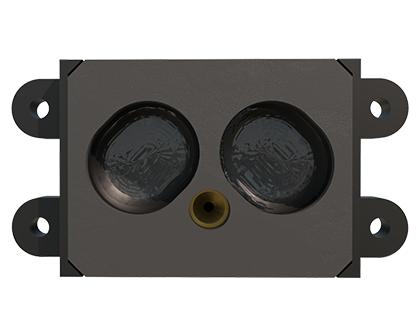
One of the key advantages of ring laser count sensors is their non-contact nature, which eliminates wear and tear and ensures long-term stability. Unlike mechanical counters or optical encoders that may suffer from physical degradation, these sensors maintain accuracy over millions of cycles. They are capable of high-speed counting, often exceeding several thousand counts per second, making them ideal for fast-paced manufacturing lines. Additionally, their immunity to environmental factors like dust, moisture, and electromagnetic interference enhances their robustness in harsh industrial settings.
Applications of ring laser count sensors are diverse and critical across various sectors. In automotive manufacturing, they are used to monitor the production rate of engine parts or count components during assembly. In packaging industries, these sensors ensure accurate filling and labeling by counting bottles, cans, or packages. They also play a vital role in scientific research, such as particle detection in laboratories or motion analysis in robotics. Furthermore, their integration with programmable logic controllers (PLCs) and industrial IoT systems enables real-time data monitoring and predictive maintenance, contributing to smarter factory operations.
Despite their advanced capabilities, implementing ring laser count sensors requires careful consideration. Factors like alignment, calibration, and ambient lighting must be optimized to prevent false counts or signal noise. Regular maintenance, though minimal, involves checking optical components for cleanliness and ensuring stable power supply. As technology evolves, newer versions incorporate digital signal processing and AI algorithms to enhance sensitivity and adaptability.
In conclusion, ring laser count sensors are a cornerstone of modern industrial automation, offering precision, durability, and versatility. Their ability to provide reliable data in demanding environments makes them indispensable for quality control and efficiency improvements. As industries continue to embrace automation and digitalization, the role of these sensors is set to expand, driving innovations in measurement and counting technologies.