In the rapidly evolving landscape of industrial automation and precision measurement, laser sensors have established themselves as indispensable tools. Among their varied specifications, the 2-meter range laser sensor represents a particularly versatile and widely adopted category. This article delves into the operational principles, key performance characteristics, and diverse applications of these sensors, providing a comprehensive overview for engineers and system integrators.
At its core, a 2-meter range laser sensor operates on the principle of optical triangulation or time-of-flight (ToF), depending on the specific model and required precision. Triangulation-based sensors project a visible or infrared laser spot onto a target. A receiving lens, positioned at a known angle to the emitter, captures the reflected light. The position of the reflected spot on a CMOS or PSD (Position Sensitive Device) detector shifts linearly with the target's distance. This method offers high resolution and accuracy for diffuse surfaces within its nominal 2-meter working range. Conversely, ToF-based sensors measure the time delay between emitting a laser pulse and receiving its reflection, calculating distance based on the speed of light. While potentially offering slightly lower resolution at close ranges, ToF sensors are exceptionally robust for longer distances and can handle varying surface properties more consistently up to the 2-meter mark.
The designation "2-meter range" is not arbitrary; it signifies an optimal balance between several critical engineering factors. This range is sufficient for a vast array of industrial tasks without necessitating the higher cost and complexity of long-range systems. Key performance parameters for these sensors include:

* Repeatability and Linearity: High-quality 2m sensors exhibit exceptional repeatability (often in the micron range for triangulation types) and linearity across the entire measurement span, ensuring consistent, reliable data.
* Spot Size and Resolution: The laser spot size remains small and well-defined over the distance, enabling precise measurement of fine features or edges. Resolution defines the smallest detectable change in distance.
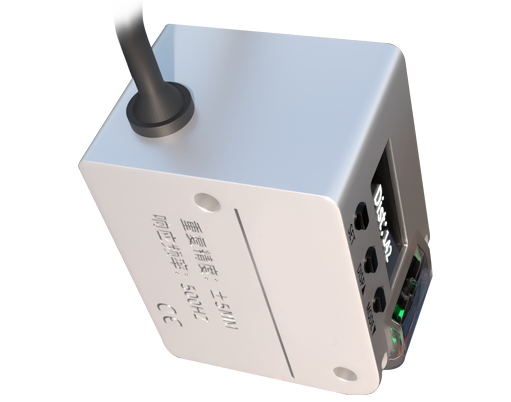
* Response Time: With response times in the microsecond to millisecond range, these sensors can keep pace with high-speed production lines for real-time inspection and control.
* Environmental Robustness: Industrial-grade models are housed in rugged enclosures with high IP ratings (e.g., IP67), protecting against dust, water, and mechanical shock. They are designed to operate reliably in environments with ambient light interference, vibration, and temperature fluctuations.
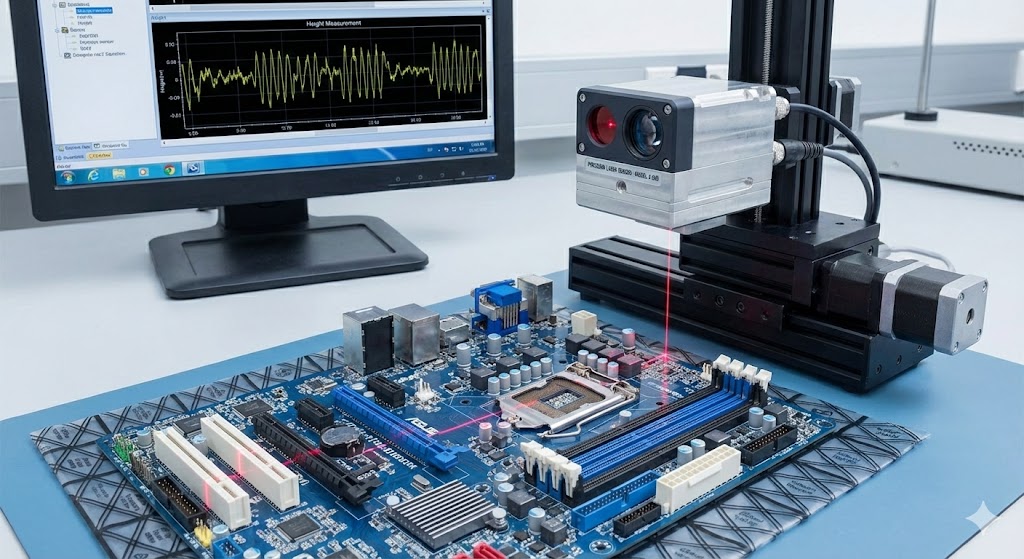
The applications for 2-meter range laser sensors are extensive and cross-sectoral. In manufacturing and robotics, they are pivotal for precise positioning, guidance, and collision avoidance. A robotic arm can use such a sensor to locate a component on a conveyor belt accurately before pickup. In dimensional gauging and quality control, they perform non-contact measurements of height, thickness, width, and profile on products ranging from automotive parts to electronic assemblies, detecting warpage, gaps, or deviations from CAD models. Within the logistics and warehousing sector, these sensors facilitate palletizing, depalletizing, and volume measurement by scanning package dimensions. Furthermore, they are integral to level monitoring in silos or tanks containing bulk solids or liquids, and in the semiconductor industry, for wafer mapping and alignment.
Selecting the right 2-meter laser sensor requires careful consideration of the application's specific demands. Engineers must evaluate the target surface (color, material, reflectivity), required accuracy versus speed, environmental conditions, and necessary output interfaces (analog, digital I/O, Ethernet, IO-Link). For highly reflective or transparent surfaces, specialized models with background suppression or diffuse reflection technology are essential. The integration of smart features, such as programmable logic and built-in diagnostics via software, further enhances their utility in Industry 4.0 setups.
In conclusion, the 2-meter range laser sensor is a cornerstone of modern industrial measurement. Its optimal range, coupled with high precision, speed, and durability, makes it a flexible solution for countless automation challenges. As technology advances, we can expect these sensors to become even more intelligent, compact, and cost-effective, further solidifying their role in driving efficiency, quality, and innovation across the industrial spectrum. Understanding their capabilities is the first step toward leveraging their full potential in any automated system.