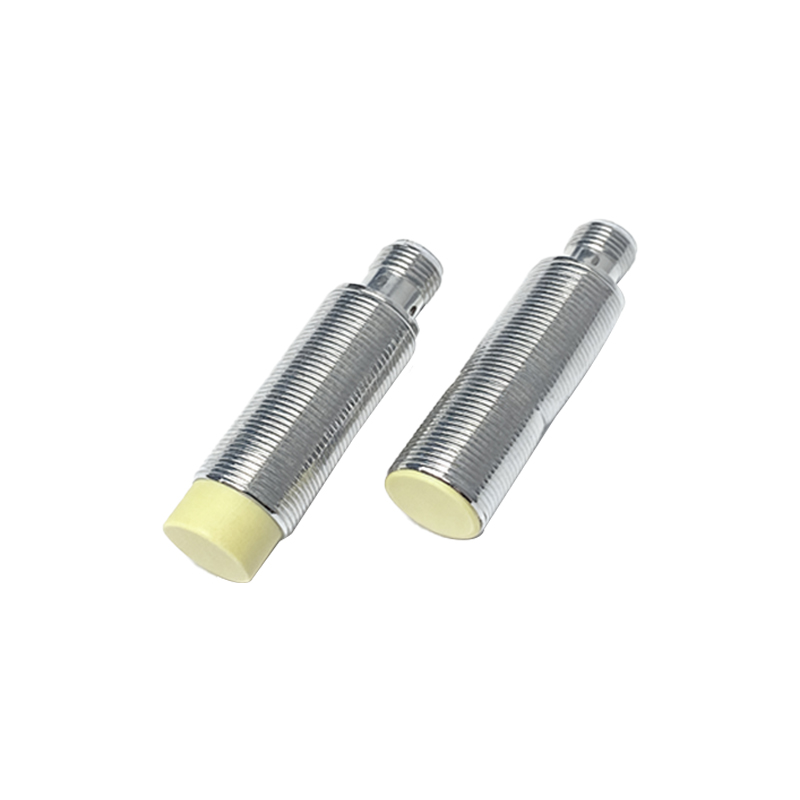
In the realm of industrial automation, proximity sensors are indispensable components for non-contact object detection. Among the various types, 3-wire DC sensors utilizing PNP and NPN output configurations are the most prevalent. Selecting the correct type is not merely a matter of preference but a critical decision that impacts system compatibility, wiring, and overall control logic. This guide delves into the technical distinctions, application considerations, and best practices for choosing between PNP and NPN proximity sensors.
The fundamental difference lies in the type of semiconductor switching device used and the resulting current flow path. A PNP sensor, often described as "sourcing" output, switches the positive voltage supply line. In its active state (when a target is detected), it connects the load (e.g., a PLC input) to the positive supply voltage (+V). The load is then connected between the sensor's signal wire and the common negative (0V). Conversely, an NPN sensor, termed a "sinking" output, switches the negative or ground line. When active, it connects the load to the common negative (0V). Here, the load is connected between the positive supply (+V) and the sensor's signal wire.
This electrical distinction has profound implications for control system design. A simple way to remember is: PNP provides a positive signal to the load, while NPN provides a path to ground. This directly influences how you interface with Programmable Logic Controllers (PLCs). Many PLCs from European manufacturers are traditionally wired to accept PNP signals, meaning their input modules are connected to 0V common, expecting a +V signal to activate. In contrast, PLCs from some Asian and North American manufacturers have historically favored NPN-compatible inputs, with a +V common, expecting a 0V signal for activation. However, modern universal PLC input cards often support both by allowing the common terminal to be wired to either +V or 0V. Always consult the PLC manual to determine the required sinking or sourcing input type.
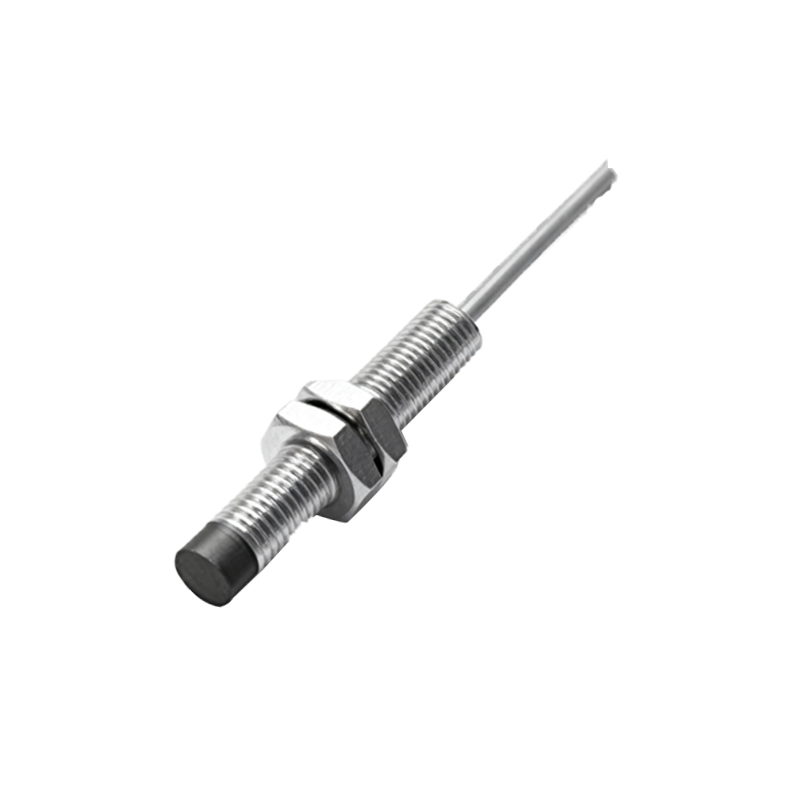
Wiring and diagnostics also differ. With a PNP sensor, a voltmeter between the signal wire and 0V will show the supply voltage when the sensor is active. For an NPN sensor, measuring between the signal wire and +V will show near 0V when active. Understanding this aids in troubleshooting. From a safety perspective, especially in emergency stop circuits, the choice can be significant. Some safety standards or design philosophies prefer an "active-high" (PNP) signal for a healthy state, as a broken wire mimics an inactive (0V) fault state. An NPN "active-low" design might require additional monitoring to detect wire breaks that could be misinterpreted as an active signal.
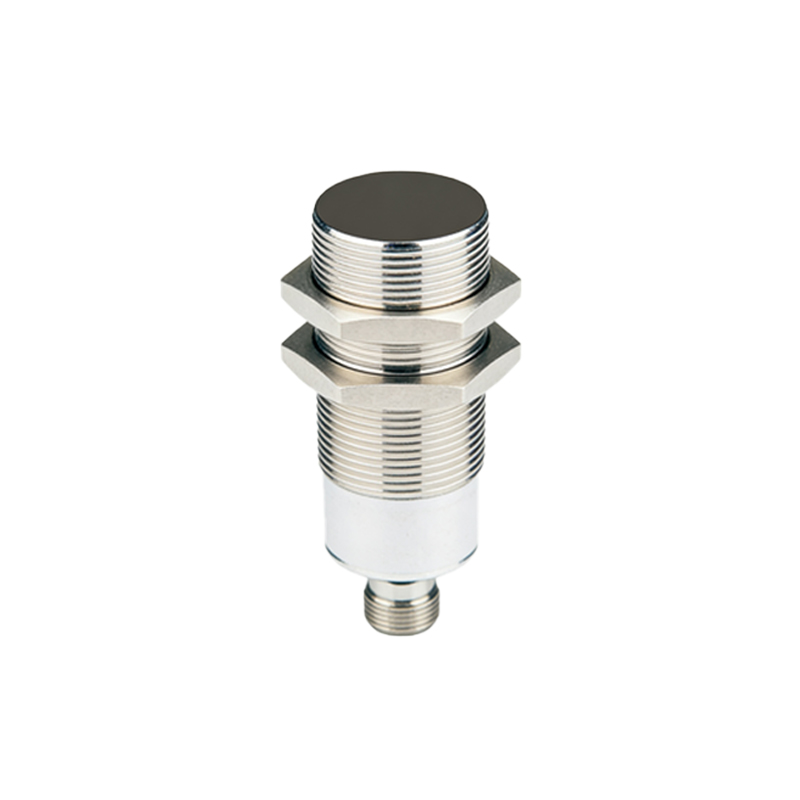
So, how do you choose? Follow this structured approach. First, identify the controller's input specification. This is the primary constraint. Is it designed for sourcing (PNP) or sinking (NPN) devices? Match your sensor to this requirement. Second, consider regional conventions and existing infrastructure. Retrofitting a system in a European plant might lean towards PNP for consistency. Third, evaluate the logic level convention desired in your program. Do you want the PLC input to be "TRUE" when the sensor detects an object (often easier with PNP for positive-true logic)? Fourth, for multi-sensor installations, consistency in type simplifies wiring, spare parts inventory, and maintenance. Using all PNP or all NPN sensors prevents wiring errors.
Furthermore, do not overlook sensor specifications beyond the output type. Ensure the operating voltage range (commonly 10-30V DC) matches your power supply. The sensing distance, material factor (for inductive sensors detecting metals), switching frequency, housing style (cylindrical, rectangular), and environmental protection (IP rating) are equally crucial. For capacitive sensors detecting non-metals, or ultrasonic sensors for distance measurement, the PNP/NPN choice remains the same fundamental decision.
In summary, there is no universally superior option. PNP and NPN are functionally equivalent in their ability to detect objects; the choice is about interface compatibility. The golden rule is to ensure the sensor's output type correctly interfaces with the load's input circuit. Mis matching them will result in a non-functional system. By understanding the sourcing (PNP) and sinking (NPN) principles and systematically reviewing your control system requirements, you can specify the optimal proximity sensor for reliable and efficient operation, ensuring seamless integration into your automated processes.