In the realm of industrial automation and precision measurement, laser photoelectric sensors stand as a cornerstone technology. These devices, which utilize laser light as their source, offer unparalleled accuracy, speed, and reliability for a vast array of detection and measurement tasks. Unlike conventional photoelectric sensors that may use LED light, laser sensors project a highly focused, coherent beam, enabling them to detect minute objects, measure precise distances, and operate effectively over longer ranges even in challenging environmental conditions.
The fundamental operating principle revolves around the emission, reflection, or interruption of a laser beam. There are three primary sensing modes: through-beam, retro-reflective, and diffuse reflective. Through-beam sensors consist of separate emitter and receiver units. Detection occurs when the laser beam traveling from the emitter to the receiver is obstructed. This mode offers the longest sensing range and highest reliability, as it is largely immune to the object's color, reflectivity, or surface finish. Retro-reflective sensors house both emitter and receiver in a single housing, using a reflector to bounce the beam back. An object is detected when it breaks this beam path. Diffuse reflective sensors, also single-unit devices, detect an object by measuring the light reflected directly from its surface. The intensity of the reflected light is analyzed, making this mode sensitive to the object's properties but ideal for applications where a reflector cannot be used.

The core advantages of laser photoelectric sensors are manifold. Their precision is exceptional, with spot sizes often in the micrometer range, allowing for the detection of extremely small parts like semiconductor chips or fine wires. The coherent nature of laser light results in minimal beam dispersion, granting them superior performance in long-range applications, sometimes exceeding 100 meters for through-beam types. Furthermore, their high response speed makes them indispensable in high-throughput manufacturing lines for tasks such as counting, sorting, and edge detection on fast-moving conveyors. Many advanced models incorporate background suppression technology or time-of-flight (ToF) measurement, enabling them to ignore distant backgrounds or precisely calculate distance, thus expanding their utility to precise positioning and contour profiling.
Applications span virtually every industrial sector. In automotive assembly, they verify the presence of tiny components like pistons or valves. In packaging, they ensure labels are correctly positioned and carton flaps are properly closed. In electronics manufacturing, they are critical for wafer handling and component placement on PCBs. Material handling systems rely on them for precise pallet positioning and height detection. Beyond pure presence detection, laser sensors are pivotal in dimensional gauging, monitoring thread diameters in textile production, or checking the fill levels in transparent bottles in pharmaceutical lines.
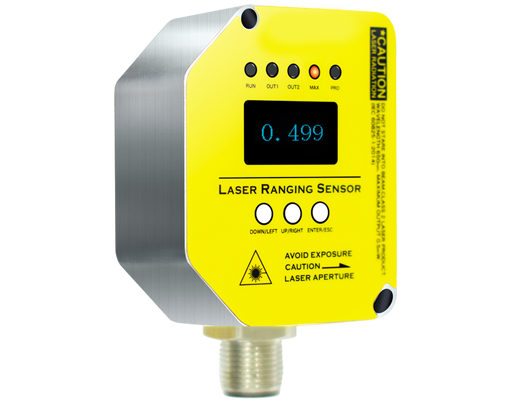
Selecting the appropriate laser photoelectric sensor requires careful consideration of several parameters. First, define the application's primary need: Is it simple presence detection, precise positioning, or distance measurement? Next, consider the sensing range and the size of the target object. A small object at a long distance necessitates a sensor with a very focused beam. The environmental conditions are crucial; factors like dust, fog, ambient light, or vibration can affect performance, potentially requiring sensors with robust housings (IP67/IP69K ratings) and specialized filters. The required output type (e.g., digital PNP/NPN, analog 4-20mA, or IO-Link for smart sensor data) must match the control system. Finally, regulatory compliance, particularly regarding laser safety (Class 1, Class 2), is non-negotiable for operator protection.
In conclusion, laser photoelectric sensors are a transformative technology in industrial sensing. Their combination of pinpoint accuracy, long range, and fast response solves complex detection challenges that other sensor types cannot address. As Industry 4.0 and smart factories evolve, these sensors are becoming even more intelligent, with integrated diagnostics and communication protocols, ensuring they will remain vital components in building more efficient, reliable, and automated industrial systems for the future. Engineers and system integrators must thoroughly understand their operating principles and selection criteria to fully leverage their capabilities and drive operational excellence.