In the rapidly evolving landscape of industrial automation, area laser sensors have emerged as a pivotal technology, offering unparalleled precision, reliability, and flexibility. Unlike traditional point or line sensors, these advanced devices project a two-dimensional laser curtain or plane, enabling the detection of objects, measurement of dimensions, and monitoring of complex zones within a defined area. This capability is transforming safety systems, quality control, and process automation across manufacturing, logistics, and robotics.
The core principle of an area laser sensor involves emitting a fan-shaped laser beam that creates a precise light plane. When an object intersects this plane, the sensor's receiver, often a high-resolution CMOS or CCD array, captures the distortion or interruption. Sophisticated onboard processors then analyze this data in real-time to determine the object's presence, position, shape, or even profile. This non-contact method ensures no physical wear on the sensor or the target, leading to exceptional longevity and minimal maintenance.
One of the most critical applications is in machine safety. Area laser scanners are integral to creating sophisticated safety light curtains and perimeter guarding systems. They can define complex warning and stop zones around hazardous machinery, such as robotic arms, presses, or automated guided vehicles (AGVs). If a person or unauthorized object breaches a predefined safety zone, the sensor triggers an immediate shutdown or alarm, preventing accidents. Their flexibility allows for the configuration of multiple zones with different response protocols, adapting to various operational stages without physical reconfiguration.
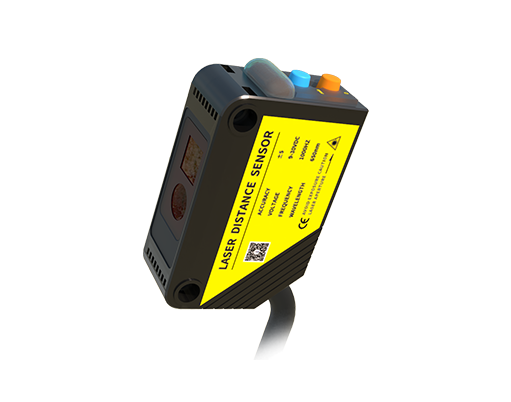
In manufacturing and assembly lines, these sensors excel at precise inspection and measurement tasks. They can verify the correct placement of components on a PCB, measure the height or volume of objects on a conveyor belt, or detect missing parts in an assembly. The ability to generate a profile of an object allows for high-speed, in-line quality control, identifying defects like dents, warping, or incorrect dimensions that would be invisible to simpler sensors. This real-time data feeds directly into control systems, enabling immediate corrective actions and ensuring consistent product quality.
Logistics and material handling have also been revolutionized. Area laser sensors mounted on AGVs or at warehouse portals can detect pallets, measure their dimensions for optimal storage, and ensure safe navigation by mapping obstacles in a wide field of view. They facilitate automated loading and unloading by precisely locating the edges and positions of goods. Furthermore, in packaging applications, they verify fill levels, check seal integrity, and count stacked items with remarkable accuracy.
The integration of these sensors with Industrial Internet of Things (IIoT) platforms and Industry 4.0 architectures unlocks even greater potential. Modern area laser sensors come equipped with Ethernet/IP, PROFINET, or TCP/IP communication protocols, allowing seamless data exchange with PLCs, SCADA systems, and cloud analytics. This connectivity enables predictive maintenance, where sensor performance data predicts potential failures before they cause downtime. It also allows for remote configuration and monitoring, reducing the need for on-site intervention and adapting production parameters dynamically based on real-time feedback.
When selecting an area laser sensor, engineers must consider several key parameters. The scanning range and field of view define the operational area. Resolution determines the smallest detectable object, while scanning speed impacts the system's ability to monitor fast-moving processes. Environmental robustness is crucial; industrial-grade sensors feature high IP ratings (e.g., IP67) to withstand dust, moisture, vibrations, and temperature fluctuations. Additionally, the choice of laser class (typically Class 1 or 2 for eye-safe operation) is vital for ensuring workplace safety.
Looking ahead, advancements in sensor fusion, artificial intelligence, and higher-resolution detectors will further enhance the capabilities of area laser sensors. AI algorithms can be deployed at the edge to perform complex object classification and anomaly detection directly on the sensor data. This will lead to even smarter, more autonomous systems capable of adapting to unpredictable environments.
In conclusion, area laser sensors represent a significant leap beyond traditional sensing methods. By providing rich, two-dimensional spatial data, they form the eyes of modern automated systems, enhancing safety, boosting efficiency, and enabling new levels of precision in industrial applications. Their continued evolution will be a cornerstone in building the agile, intelligent factories of the future.