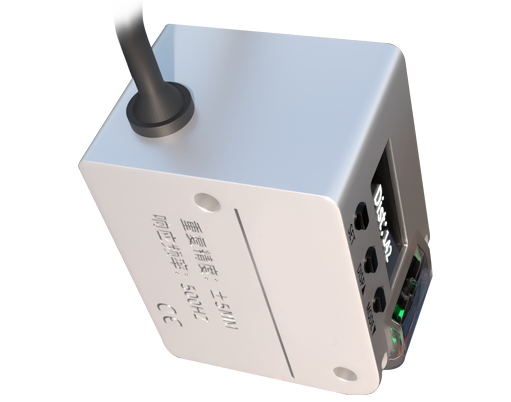
In the realm of precision measurement and automation, the laser sensor has become an indispensable tool. However, its performance is profoundly influenced by a component often overlooked: the laser sensor mount. This guide delves into the critical role of mounts, their types, selection criteria, and best practices for application, ensuring your sensing systems achieve optimal accuracy and reliability.
A laser sensor mount is far more than a simple bracket. It is a precision mechanical interface designed to securely hold, position, and align a laser sensor relative to its target or measurement path. Its primary functions are to provide rigid stability, mitigate vibrations, and allow for precise micrometric adjustments. Without a proper mount, even the most advanced laser sensor can suffer from measurement drift, reduced repeatability, and premature failure due to mechanical stress or misalignment.
The market offers a diverse array of laser sensor mounts, each tailored for specific environments and requirements. Fixed mounts are the most basic, offering a permanent, non-adjustable solution for applications where the sensor position is constant and pre-determined. For setups requiring fine-tuning, adjustable or kinematic mounts are essential. These feature fine-thread screws or lever arms for precise control over multiple axes—typically pitch, yaw, and sometimes linear translation—enabling perfect alignment of the laser beam.
For dynamic or testing environments, vibration-isolation mounts incorporate dampening materials or specialized designs to absorb shocks and high-frequency oscillations, protecting the sensor's delicate internal optics. In harsh industrial settings, ruggedized mounts with high-grade stainless steel or anodized aluminum construction provide protection against dust, moisture, coolants, and physical impact. Additionally, modular mounting systems, consisting of rails, rods, and a variety of clamps, offer unparalleled flexibility for building complex multi-sensor arrangements in research labs or automated production lines.

Selecting the correct laser sensor mount requires careful consideration of several key parameters. First, assess the load capacity and compatibility; the mount must support the sensor's weight and physical dimensions without strain. The material is crucial; aluminum alloys offer a good balance of strength and weight, while stainless steel is preferred for corrosion resistance. The degree of adjustability needed—often measured in resolution per adjustment screw (e.g., arc-seconds per turn)—must match the required pointing accuracy of your application.
Environmental factors cannot be ignored. Will the mount be exposed to temperature fluctuations, humidity, or chemicals? The mount's material and sealing (IP rating) must be suitable. Finally, consider the base interface. The mount must securely attach to your existing platform, whether it's an optical table via threaded holes, a machine frame using clamps, or a standard photographic tripod.
Proper installation and alignment are the final steps to success. Begin by securely fastening the mount base to a stable, vibration-free surface. Mount the sensor, ensuring all locking screws are firm but not over-tightened to avoid distorting the sensor housing. For alignment, use the adjustable stages to direct the laser spot onto the target. Employing an alignment tool like a visible laser pointer (if not integrated) or a beam profiler can significantly streamline this process. Once aligned, sequentially tighten all locking mechanisms, checking frequently to ensure the alignment does not shift—a common issue known as "lock-up shift."
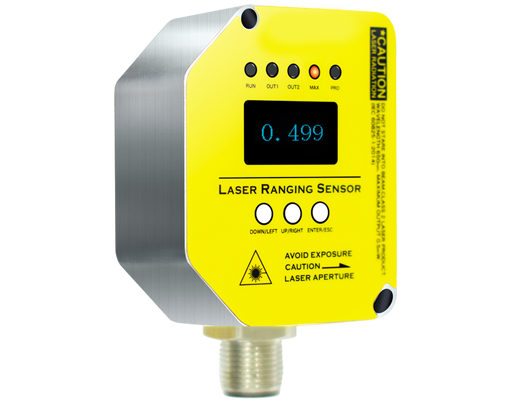
In practical application, a well-chosen mount extends beyond initial setup. It facilitates maintenance and recalibration. In automated quality control on a conveyor belt, a robust, adjustable mount allows engineers to quickly realign a sensor if it is bumped. In laboratory experiments investigating material deformation, a vibration-isolation mount ensures that external noise does not corrupt sensitive displacement measurements measured in microns.
In conclusion, the laser sensor mount is a critical enabler of system performance. Viewing it as an integral part of the sensing system, rather than an accessory, leads to more informed purchasing decisions and superior operational outcomes. Investing time in selecting the right mount based on mechanical, environmental, and precision needs will pay dividends in the form of reliable data, reduced downtime, and the full realization of your laser sensor's capabilities. Always consult both the sensor manufacturer's recommendations and the mount supplier's specifications to ensure a perfect match for your specific technical challenge.