In the world of industrial automation, consumer electronics, and safety systems, proximity sensors play a crucial yet often unseen role. These devices are fundamental components that detect the presence or absence of an object within a specific range without any physical contact. This non-contact operation is their defining characteristic, leading to high reliability, long operational life, and minimal maintenance. The core principle involves emitting a field or beam and monitoring for changes in the field or the return signal. When a target object enters this field, it causes a detectable alteration, which the sensor converts into an electrical output signal.
The technology behind proximity sensors is diverse, leading to several main types, each suited for different materials and environments. Inductive proximity sensors are among the most common. They generate an electromagnetic field and are exclusively used for detecting metallic objects, typically ferrous metals like steel and iron. When a metal target enters the oscillating electromagnetic field, it induces eddy currents within the metal, which dampens the oscillation. The sensor's circuit detects this damping and triggers a switch. These sensors are robust, resistant to environmental factors like dust and moisture, and are staples in machine automation for tasks like counting, positioning, and end-of-travel detection.
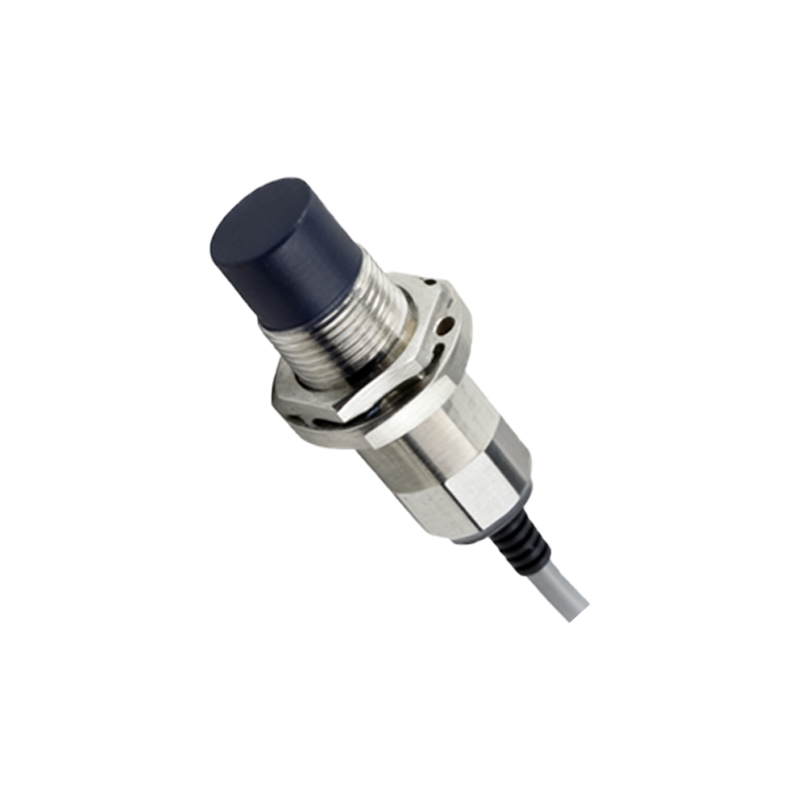
For non-metallic objects, including liquids, glass, wood, and most plastics, capacitive proximity sensors are the go-to choice. They function by generating an electrostatic field. Any object with a dielectric constant different from air (which is nearly all materials) can disturb this field when it comes close. The sensor detects the change in capacitance and provides an output. This makes them versatile for applications like liquid level detection, material handling, and even sensing through certain non-metallic containers. However, they can be more susceptible to environmental factors like humidity.
Another prominent category is photoelectric sensors, which use light beams. They consist of a light emitter (usually LED) and a receiver. When the light beam is interrupted or reflected by an object, the receiver detects the change. They are further divided into through-beam, retro-reflective, and diffuse reflective types, offering long detection ranges and the ability to sense virtually any material. Common uses include object detection on conveyor belts, bottle counting in packaging, and safety curtains.
Ultrasonic sensors operate on a similar principle but use sound waves instead of light. They emit high-frequency sound pulses and measure the time for the echo to return. The distance to the object is calculated based on the speed of sound. These sensors are excellent for detecting objects regardless of color, transparency, or material, and are ideal for distance measurement, level sensing of bulk materials or liquids, and presence detection in challenging environments with dust or vapor.
The applications of proximity sensors are vast. In automotive assembly lines, inductive sensors ensure precise positioning of metal components. In smartphones, capacitive sensors deactivate the touchscreen when held to the ear. In food processing, photoelectric sensors verify packaging seal integrity. In warehouse automation, ultrasonic sensors guide autonomous vehicles and manage inventory height. Their role in safety is critical, forming the basis of machine guarding systems that prevent access to hazardous areas.
Selecting the right proximity sensor requires careful consideration of several factors. First, identify the target material (metal, plastic, liquid) to narrow down the sensor type (inductive, capacitive, photoelectric). Next, consider the required sensing distance or range. Inductive sensors typically have shorter ranges than photoelectric or ultrasonic ones. The operating environment is crucial; factors like temperature extremes, washdown conditions, presence of chemicals, or heavy dust will dictate the required housing material and protection rating (e.g., IP67). Finally, the electrical output needed (e.g., NPN/PNP transistor, analog, IO-Link) must be compatible with the control system.
Installation and environmental considerations are paramount for reliable operation. Sensors should be mounted securely to avoid vibration-induced errors. For inductive sensors, it's important to maintain a minimum distance from other metal objects and sensors to prevent mutual interference, a concept known as "shielding." For photoelectric sensors, keeping the lens clean is essential, and ambient light conditions must be evaluated. Understanding these nuances ensures the sensor performs its intended function reliably over its lifespan.
In conclusion, proximity sensors are indispensable enablers of modern automation and smart technology. Their ability to provide reliable, non-contact detection translates into increased efficiency, enhanced safety, and reduced mechanical wear. From the factory floor to everyday consumer devices, these silent sentinels work continuously, making processes smarter and interactions more intuitive. As technology advances, we can expect these sensors to become even more intelligent, integrated, and capable, further blurring the line between the physical and digital worlds.