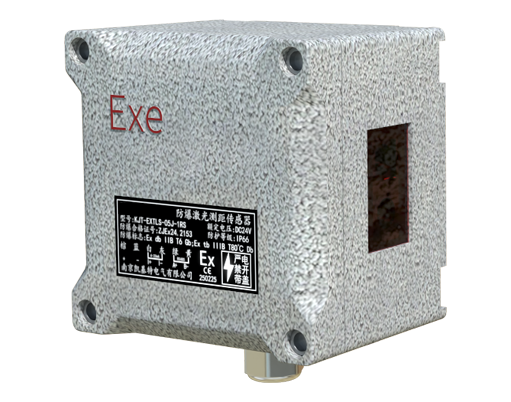
In the realm of industrial process control and monitoring, accurate and reliable level measurement is paramount. Among the diverse technologies available, laser level sensors have emerged as a sophisticated and highly effective solution for a wide range of applications. This article delves into the operating principles, key advantages, common applications, and critical selection criteria for laser level sensors, providing a comprehensive overview for engineers and technical professionals.
The fundamental principle behind a laser level sensor is based on the time-of-flight (ToF) measurement technique. The sensor emits a focused pulse of laser light towards the target material's surface. This light beam is then reflected back to a detector within the sensor. By precisely measuring the time interval between the emission and reception of the laser pulse, the sensor's integrated electronics calculate the distance to the material surface. This distance measurement is then converted into a level value, typically displayed as a percentage, volume, or specific engineering unit. The use of laser light, which is coherent and can be focused into a very narrow beam, allows for exceptional precision and the ability to measure even small targets or in environments with obstructions like agitators or heating coils.
One of the most significant advantages of laser sensors is their non-contact nature. Since the measurement does not require physical contact with the process material, it eliminates issues related to abrasion, corrosion, or material buildup on the sensing element. This makes them ideal for measuring sticky, abrasive, corrosive, or extremely hot/cold substances. Furthermore, laser sensors offer high accuracy and resolution, often in the millimeter range, which is superior to many other non-contact methods like ultrasonic sensors. Their focused beam allows for precise targeting, enabling measurements in narrow vessels, around obstacles, or towards specific points on a solid material pile. They are also largely immune to variations in process conditions such as changing pressure, temperature, vapor, dust, or the dielectric constant of the material, although extreme conditions like heavy dust or steam can attenuate the signal.
The applications for laser level sensors are vast and span numerous industries. In the chemical and pharmaceutical sectors, they are used for precise level control of powders, granules, and aggressive liquids in silos, reactors, and blending tanks. The water and wastewater industry employs them for monitoring sludge levels, filter beds, and open channel flow. In bulk solids handling, such as in cement, food, or plastic production, laser sensors reliably measure the level of pellets, flour, or grains in large storage silos. They are also invaluable in the energy sector for monitoring coal piles, fly ash, and biomass fuels. For liquid applications, they provide continuous level measurement in tanks containing fuels, oils, or solvents.

Selecting the appropriate laser level sensor requires careful consideration of several factors. First, the process material characteristics must be evaluated: Is it a liquid or a solid? What is its color and surface texture? Dark, absorbent, or very rough surfaces may reflect less laser energy, potentially requiring a sensor with higher output power. The process conditions are equally critical: temperature range, pressure, and the presence of dust, steam, or agitation. The installation environment dictates the required housing material (e.g., stainless steel, plastic) and ingress protection (IP) rating. The measurement range and required accuracy are fundamental technical specifications. Finally, the output signal and communication protocol (e.g., 4-20 mA analog, relay outputs, PROFIBUS, Modbus) must be compatible with the existing control system.
Installation is a key factor for optimal performance. The sensor must be mounted securely to avoid vibration, with a clear, unobstructed line of sight to the target. For liquids, the beam should be perpendicular to a calm surface to avoid false reflections. For solids, aiming at a representative point on the pile, away from filling and discharge points, is recommended. Regular maintenance, though minimal, involves keeping the laser window clean to ensure maximum signal strength.

In conclusion, laser level sensors represent a powerful tool for demanding level measurement tasks. Their combination of non-contact operation, high precision, and robustness in challenging environments makes them a preferred choice for engineers seeking reliable process data. By understanding their working principles and carefully matching sensor specifications to the application requirements, professionals can leverage this technology to enhance safety, efficiency, and control in their operations. As technology advances, we can expect further improvements in range, beam quality, and integrated intelligence, solidifying the position of laser sensors in the future of industrial automation.