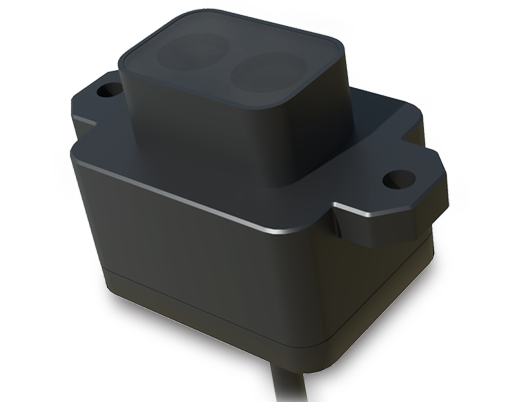
In the rapidly evolving field of industrial automation and precision measurement, selecting the right laser sensor is a critical decision that impacts system performance, reliability, and cost-efficiency. With a myriad of options available from leading manufacturers like Keyence, Banner Engineering, SICK, and Omron, determining which laser sensor is best requires a thorough analysis of technical specifications, application requirements, and environmental factors. This guide provides an objective, engineer-focused comparison to aid in the selection process.
The fundamental principle behind laser sensors involves emitting a focused beam of light and analyzing the reflected signal to measure distance, detect presence, or gauge dimensions. The primary technologies include time-of-flight (ToF), triangulation, and confocal measurement. Time-of-flight sensors calculate distance based on the time it takes for a laser pulse to return, making them ideal for long-range applications, such as in logistics or bulk material level monitoring. Triangulation sensors, which use the angle of reflected light to determine position, offer exceptional accuracy at short to medium ranges and are commonly used in quality control for height or thickness measurement. Confocal sensors provide nanometer-level resolution for ultra-precise tasks, like semiconductor inspection, but come at a higher cost.

When evaluating which laser sensor is best for a specific application, several key parameters must be prioritized. Measurement range and resolution are paramount. A sensor with a 300mm range and 0.1µm resolution might be perfect for inspecting micro-components but would be unsuitable for monitoring a 50-meter conveyor belt. The required response time is another crucial factor; high-speed production lines demand sensors with microsecond-level response to maintain throughput. Environmental robustness cannot be overlooked. Factors such as ambient light interference, dust, moisture, and temperature fluctuations can severely degrade performance. Sensors with IP67 or IP69K ratings and specialized filters for ambient light are essential for harsh industrial environments like welding shops or outdoor installations.
Connectivity and integration capabilities are increasingly important in the era of Industry 4.0. Modern laser sensors often feature IO-Link, Ethernet/IP, or PROFINET interfaces, enabling seamless data exchange with PLCs and SCADA systems for predictive maintenance and process optimization. The choice between analog output (e.g., 4-20mA, 0-10V) and digital communication depends on the existing control architecture. Furthermore, ease of setup and calibration through intuitive software interfaces reduces commissioning time and minimizes human error.

Cost considerations extend beyond the initial purchase price. Total cost of ownership includes factors like maintenance intervals, long-term stability, and compatibility with existing systems. A moderately priced sensor that requires frequent recalibration or fails prematurely in a demanding environment can be more expensive than a high-end, robust model. It is advisable to request samples for on-site testing under real operating conditions before finalizing a procurement decision.
In conclusion, there is no single "best" laser sensor universally. The optimal choice is a function of precise application demands. For long-range, rugged outdoor use, a robust time-of-flight sensor may be superior. For laboratory-grade precision on a clean bench, a confocal triangulation sensor is likely the best. Engineers must conduct a systematic evaluation, balancing technical specifications, environmental constraints, and lifecycle costs. By leveraging vendor expertise and rigorous in-house testing, one can identify the laser sensor that delivers optimal performance, reliability, and value for their specific operational challenge.