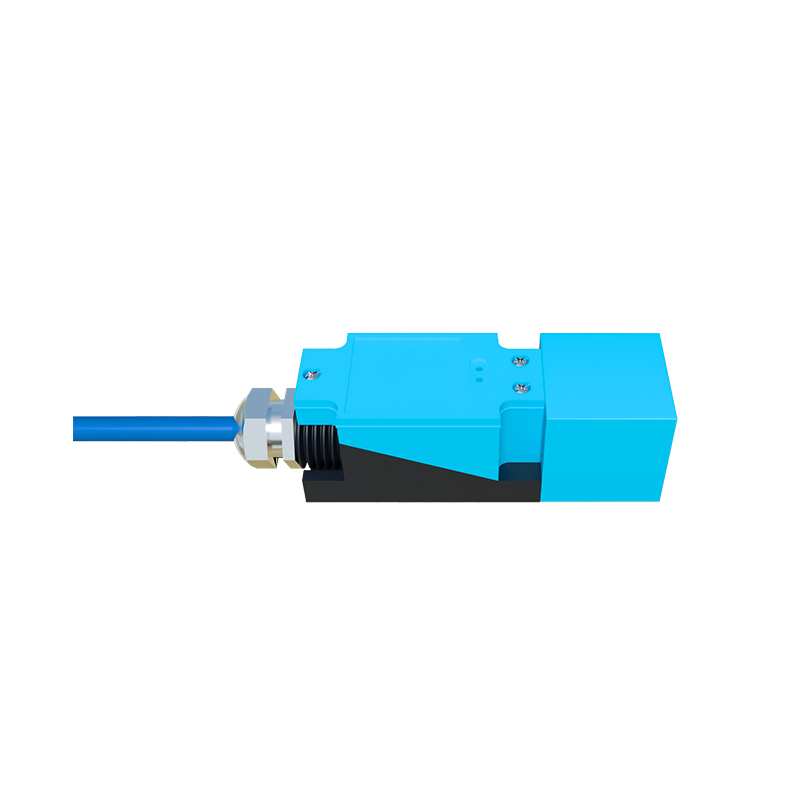
Proximity sensors are indispensable components in modern industrial automation, offering non-contact detection of objects within a specified range. Their structures vary significantly based on the underlying technology, each tailored to specific operational environments and detection requirements. This article delves into the primary structural designs of proximity sensors, highlighting their functional principles and typical applications.
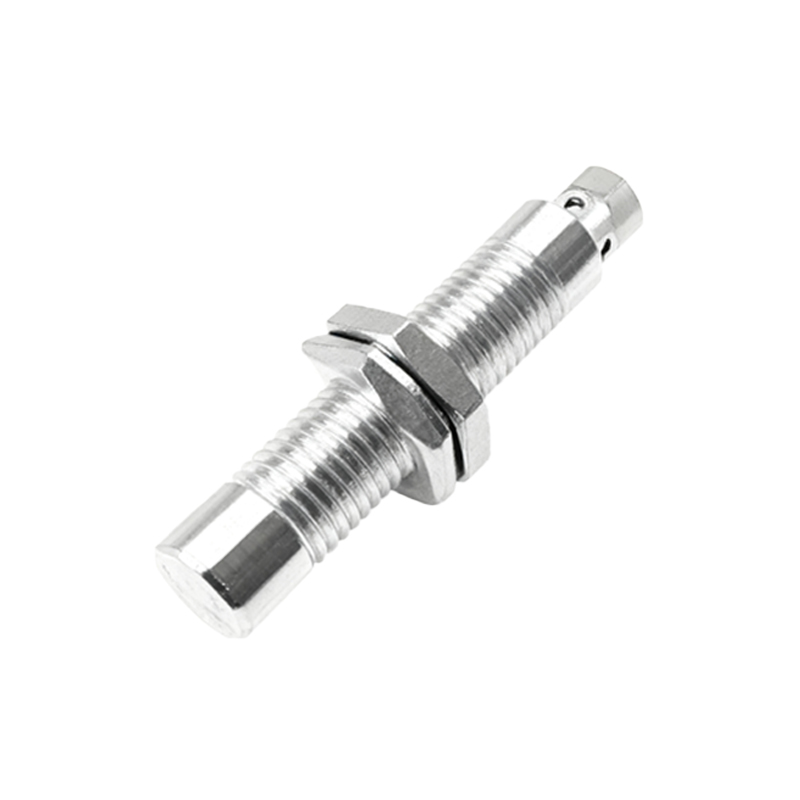
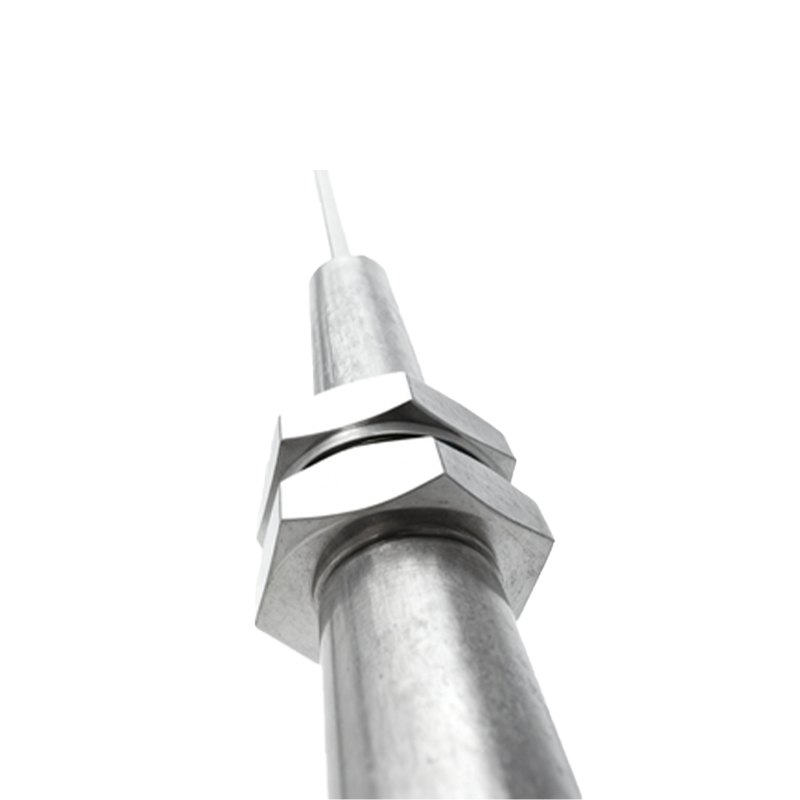
Inductive proximity sensors are among the most common types, primarily used for detecting metallic objects. Their structure typically includes a coil wound around a ferrite core, an oscillator, a signal conditioning circuit, and a housing. When a metallic target enters the sensor's electromagnetic field, eddy currents are induced, causing a change in oscillation amplitude. This alteration is processed by the circuit to trigger an output signal. The robust housing, often made of stainless steel or nickel-plated brass, provides resistance to mechanical stress and environmental factors like dust or coolant exposure. These sensors are widely deployed in machining centers, conveyor systems, and robotic assembly lines.
Capacitive proximity sensors share a similar external structure but differ internally. They consist of two conductive electrodes forming an open capacitor, with one electrode acting as the sensor face. An oscillator generates an electrostatic field extending from the electrode. When any object—metallic or non-metallic—enters this field, it alters the capacitance, leading to a change in oscillation. This change is detected and converted into a switching action. The sensor face is usually insulated with materials like PTFE to prevent false triggers from conductive contaminants. Capacitive sensors excel in detecting liquids, plastics, or granular materials, making them ideal for packaging, level control, and material handling applications.
Ultrasonic proximity sensors employ a completely different structural approach. They incorporate a piezoelectric transducer that emits high-frequency sound waves and receives their echoes. The housing includes an acoustic lens to focus the sound beam and damping material to reduce internal reverberation. The internal electronics comprise a transmitter circuit, receiver circuit, and timing logic. By measuring the time-of-flight of the sound wave, the sensor calculates the distance to the target. These sensors are enclosed in rugged, often IP67-rated casings to withstand harsh conditions. They are particularly effective in challenging environments with dust, fog, or varying lighting, commonly used in parking assistance, bulk material monitoring, and automated warehousing.
Photoelectric proximity sensors rely on optical principles. Their structure integrates a light emitter (usually an LED or laser diode) and a receiver (phototransistor or photodiode) within a single housing. Depending on the design—through-beam, retro-reflective, or diffuse—the optical components are arranged accordingly. The housing features precision-aligned lenses or apertures to shape the light beam and may include filters to reject ambient light. Advanced versions incorporate fiber optic cables for detection in confined or hazardous spaces. These sensors offer long detection ranges and high speed, suitable for object counting, edge detection, and transparent material sensing in electronics manufacturing and logistics.
Magnetic proximity sensors, often referred to as reed switches or Hall-effect sensors, have a simpler structure. Reed switches consist of two ferromagnetic reeds sealed in a glass tube filled with inert gas, while Hall-effect sensors contain a semiconductor chip and a permanent magnet. Both are encased in plastic or metal bodies. They detect the presence of magnetic fields, typically from permanent magnets attached to moving parts. Due to their compact size and reliability, they are extensively used in position sensing for cylinders, door switches, and speed detection in automotive and safety systems.
Each structural design addresses distinct challenges: inductive and capacitive sensors prioritize environmental sealing, ultrasonic sensors focus on acoustic integrity, photoelectric sensors require optical precision, and magnetic sensors emphasize miniaturization. Selection depends on factors like target material, sensing distance, response time, and environmental conditions. Understanding these structures enables engineers to optimize sensor integration, enhancing system reliability and efficiency in diverse industrial settings.