Proximity sensors are indispensable components in modern industrial automation, renowned for their ability to detect the presence or absence of objects without physical contact. They are widely used in applications ranging from object counting and positioning to machine safety and speed detection. However, despite their versatility and reliability, proximity sensors are not without inherent limitations. A thorough understanding of these constraints is crucial for engineers and system designers to ensure optimal performance, prevent operational failures, and select the most appropriate sensing technology for a given application.
One of the primary limitations lies in their sensing range. Unlike some other sensing technologies, the effective detection distance of standard inductive or capacitive proximity sensors is relatively short, typically ranging from a few millimeters to several centimeters. This restricts their use in applications requiring long-range detection. Attempting to detect objects beyond the specified nominal range can lead to unreliable operation, false triggers, or complete failure to detect. Furthermore, the sensing range is not a fixed value; it can be affected by factors such as the target material's properties, size, and shape. For inductive sensors, the detection distance is reduced for non-ferrous metals compared to steel. This necessitates careful calibration and consideration of the specific target object.
The composition and characteristics of the target object itself present another significant set of constraints. Inductive proximity sensors, which are the most common type for metal detection, are highly sensitive to the type of metal. As mentioned, their effective sensing distance varies dramatically between ferrous and non-ferrous metals. Capacitive sensors, used for detecting non-metallic materials like plastics, wood, or liquids, are susceptible to environmental changes. Humidity, dust, moisture, or even changes in the material's dielectric constant can alter the sensor's sensitivity, leading to erratic behavior. For instance, a capacitive sensor calibrated for dry cardboard may malfunction in a humid environment.
Environmental conditions pose a substantial challenge to the consistent operation of proximity sensors. Extreme temperatures can affect the electronic components and the oscillation circuit within the sensor. High temperatures may cause drift in the sensing point or even permanent damage, while very low temperatures can slow response times. The presence of strong electromagnetic interference (EMI) in industrial settings, often generated by variable frequency drives (VFDs), welding equipment, or large motors, can induce noise in the sensor's signal, causing false outputs. While shielded sensors and proper installation practices can mitigate this, it remains a critical design consideration.
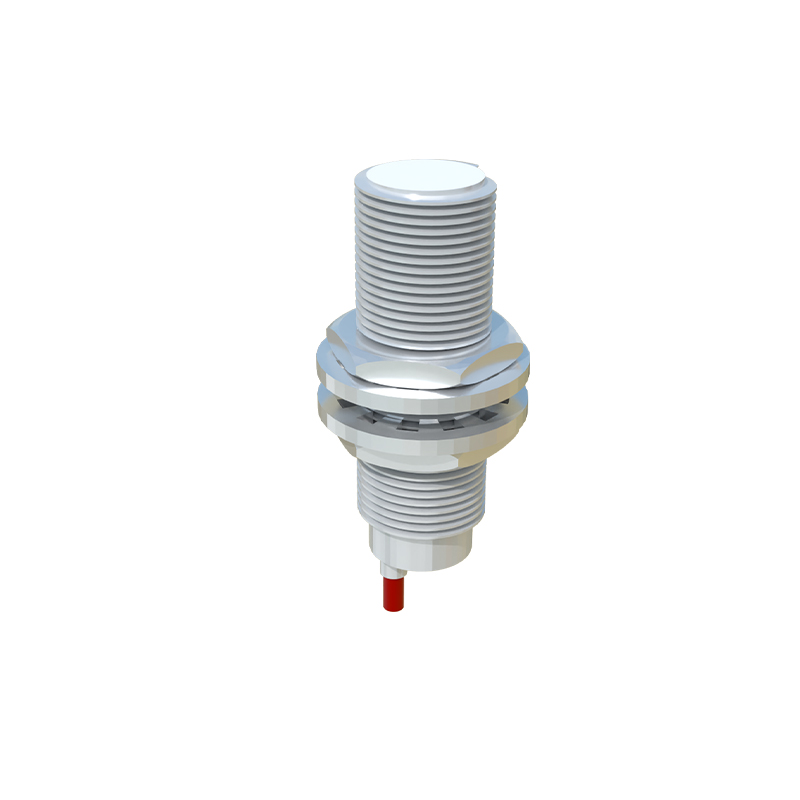
Physical installation and mounting constraints are often overlooked limitations. Most tubular-style proximity sensors require flush mounting or specific non-flush mounting conditions as per their design to achieve the stated sensing range. Incorrect mounting can severely reduce the effective sensing distance. Additionally, the sensor's housing material and the surrounding metal (like the mounting nut or the machine frame) can influence the sensing field, particularly for capacitive sensors. The need for a specific orientation and the potential for mutual interference when multiple sensors are placed in close proximity further complicate installation.
Finally, the nature of the output is a fundamental limitation. Standard proximity sensors provide a simple digital (on/off) output. They indicate the presence or absence of an object within their field but typically cannot provide analog information about distance, speed, or the exact position of the object. For applications requiring precise positional feedback or continuous measurement, other technologies like analog sensors, ultrasonic sensors, or vision systems are more suitable. Moreover, most standard sensors are designed for discrete operation and may not perform well with very fast-moving objects, limited by their response frequency and switching speed.
In conclusion, while proximity sensors are robust and highly effective for countless automation tasks, their successful implementation demands a clear acknowledgment of their boundaries. Engineers must critically evaluate the sensing range requirements, target material properties, operational environment, installation specifics, and the required output data before finalizing a sensor choice. By doing so, they can avoid common pitfalls, enhance system reliability, and leverage the full potential of proximity sensing technology where it is most appropriate, complementing it with other sensing solutions where its limitations become prohibitive.