In the realm of industrial automation and machine safety, proximity sensor switches are indispensable components. Among the various model designations, the "M80" is a common identifier that often appears in product catalogs and technical documentation. This article aims to demystify the term "M80" in the context of proximity sensor switches, explaining its typical meaning, key specifications, and primary applications.
Firstly, it is crucial to understand that "M80" is generally not a universal standard but a specific model series or family name designated by a manufacturer. The "M" likely stands for a series or model line, while "80" often refers to a key physical dimension: the sensor's housing diameter, which is typically 80 millimeters. This is a standard size for many cylindrical inductive proximity sensors, offering a robust form factor suitable for demanding industrial environments. Therefore, when an engineer or procurement specialist encounters a proximity sensor switch labeled "M80," the first inference is usually an 80mm diameter cylindrical sensor.
Delving into the technical aspects, an M80 series proximity sensor is predominantly an inductive type. This means it generates an electromagnetic field to detect the presence of metallic objects—ferrous metals like steel and iron, and often non-ferrous metals like aluminum, copper, and brass, though with a reduced sensing range. The core principle involves an oscillator circuit that creates a high-frequency field at the active face of the sensor. When a metal target enters this field, it induces eddy currents, causing a change in the oscillation amplitude. This change is detected by the sensor's circuitry, which then triggers a solid-state switch output.
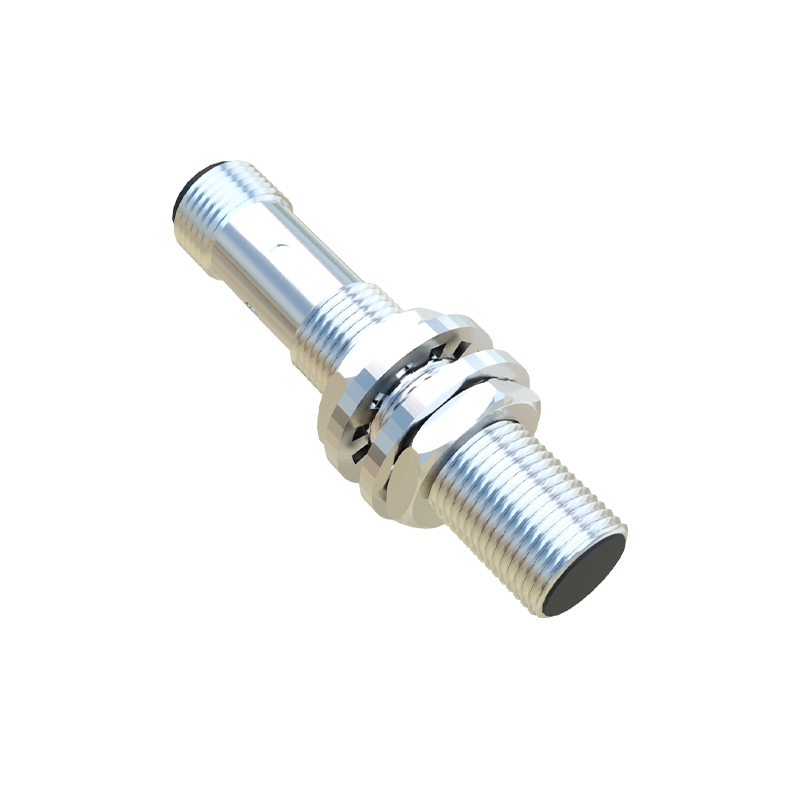
Key specifications commonly associated with an M80 proximity sensor include a substantial sensing range, often up to 80mm for steel targets, owing to its large coil size. It typically operates on standard industrial DC (10-30V DC) or AC (20-250V AC) voltage supplies. The output is frequently a 3-wire configuration (PNP or NPN for DC models) or a 2-wire configuration for AC/DC versions, providing a switched signal to a PLC (Programmable Logic Controller) or other control device. These sensors are built with durable materials like nickel-plated brass or stainless steel housings, offering high ingress protection ratings such as IP67 or IP69K, making them resistant to dust, water jets, and harsh cleaning processes. They are designed to withstand significant mechanical stress, temperature variations, and electrical noise common in factories.
The "switch" part of the name indicates its function: it acts as a non-contact binary switch. Unlike mechanical limit switches, it has no moving parts to wear out, leading to exceptionally long service life and high reliability. It provides a clean, bounce-free signal for precise control logic.
The applications for an M80 proximity sensor switch are vast within industrial settings. Their robust construction and long sensing range make them ideal for position detection in heavy machinery, such as verifying the open/closed status of large valves, gates, or doors. They are used in material handling systems to detect the presence of metal pallets, containers, or products on conveyor lines. In automotive manufacturing, they monitor the position of robotic arms or fixtures. They also serve in packaging machinery, metalworking, and assembly lines. Their primary role is to provide a reliable "yes/no" signal about the presence or absence of a metal object, which is a fundamental input for automated system sequencing, safety interlocks, and counting operations.
When selecting an M80 sensor, engineers must consult the specific manufacturer's datasheet. While "M80" implies common characteristics, details like sensing range for different metals, output type (NO/NC), connection type (connector or cable), and special features (e.g., weld-field immunity, analog output variants) will vary between brands like Siemens, Pepperl+Fuchs, Omron, or Schneider Electric. Always verify the exact part number and technical data for your application.
In summary, the term "M80 proximity sensor switch" primarily denotes a family of large-diameter (80mm) inductive proximity sensors. It represents a workhorse of industrial automation, valued for its durability, long-range detection capability, and non-contact switching reliability. Understanding its typical specifications and applications allows for effective integration into control systems where robust and dependable metal detection is paramount.