Proximity sensors are indispensable components in modern industrial automation, offering non-contact detection of metallic objects. Among these, the PT08-T04NO stands out as a robust and reliable inductive proximity switch designed for demanding environments. This article delves into the technical specifications, operational principles, and typical applications of the PT08-T04NO, providing a comprehensive overview for engineers and technicians.
The PT08-T04NO is an inductive proximity sensor with a nominal sensing distance of 8mm. It features a tubular, threaded metal housing (typically M30 x 1.5mm) that ensures high mechanical strength and resistance to vibration, making it suitable for harsh industrial settings like machining centers, assembly lines, and material handling systems. The sensor operates on a standard DC voltage range, commonly 10-30V DC, and provides a digital output signal. The "NO" in its designation indicates a Normally Open configuration, meaning the output switch is open (non-conducting) when no target is within the sensing range and closes when a metallic object is detected.
At the core of the PT08-T04NO's functionality is the principle of electromagnetic induction. The sensor contains an oscillator circuit that generates a high-frequency electromagnetic field at its active face. When a ferrous or non-ferrous metal target enters this field, eddy currents are induced on the target's surface. This causes a change in the oscillation amplitude within the sensor, which is detected by a threshold circuit. This change triggers the solid-state output switch to change state, providing a clean, bounce-free signal to the connected controller, such as a PLC (Programmable Logic Controller). A key advantage of this technology is its ability to detect objects without physical contact, eliminating mechanical wear and enabling high-speed operation.
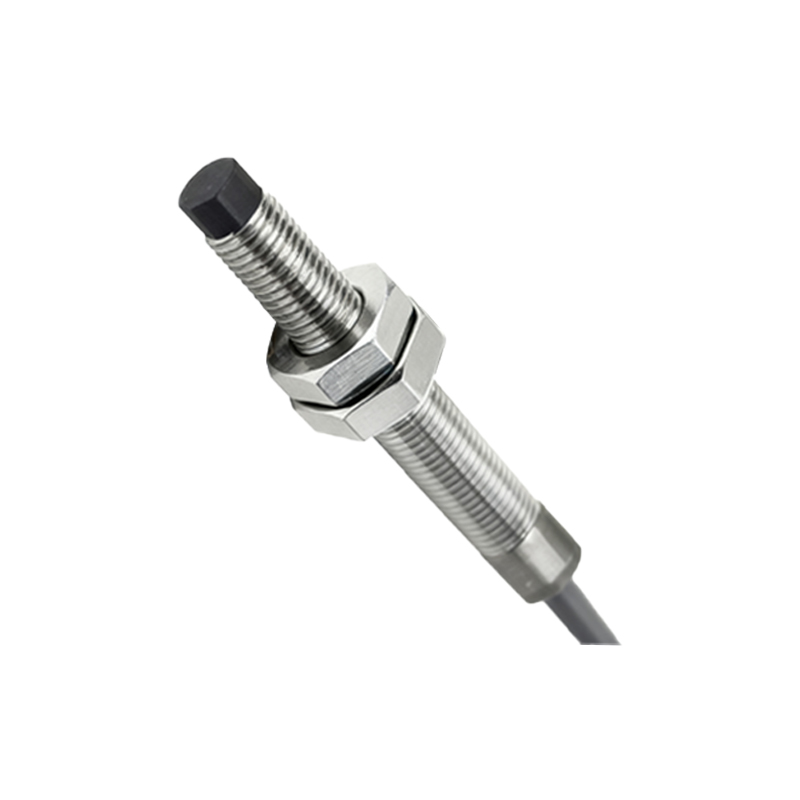
Key technical parameters define the sensor's performance. The rated operating distance (Sn) is 8mm, but practical use requires considering factors like target material, size, and temperature. For standard mild steel, the effective sensing distance is typically 8mm, but for stainless steel or aluminum, a reduction factor (often 0.5 for stainless steel and 0.3-0.4 for aluminum) must be applied. The sensor features a hysteresis of approximately 10% of Sn to prevent output chatter when a target is at the edge of the detection zone. Its switching frequency can reach up to 1kHz, allowing for the detection of rapidly moving parts. The PT08-T04NO is also characterized by its protection rating, usually IP67, which denotes complete protection against dust ingress and protection against temporary immersion in water. This makes it suitable for washdown areas in food processing or outdoor applications.
Wiring and installation are straightforward. The sensor typically has a 2-meter cable or a quick-disconnect connector with three wires: brown for positive supply (V+), blue for negative/common (0V), and black for the output signal. For the NO version, the black wire switches to supply voltage when a target is detected (sourcing output). Proper installation is critical; the sensor should be mounted securely, ensuring that no other metal objects are within the sensing field to avoid false triggering. Adequate clearance around the sensing face is necessary as specified in the datasheet.
In industrial applications, the PT08-T04NO is highly versatile. It is commonly used for position sensing, such as verifying the presence of a metal part in a fixture or the end position of a cylinder. In conveyor systems, it counts metal packages or detects the position of pallets. On machine tools, it serves as a limit switch to prevent over-travel of slides or to index rotating parts. Its robust construction allows it to function reliably in environments with coolant, oil, or metal chips. When selecting this sensor, engineers must consider the target material, required sensing distance, environmental conditions (temperature, chemicals), and electrical compatibility with the control system.
Maintenance is minimal due to the non-contact design. However, periodic checks are recommended to ensure the sensing face remains clean from debris, metal dust, or buildup that could attenuate the sensing field. Verifying the electrical connections and output signal under operational conditions helps in preemptive troubleshooting.
In summary, the PT08-T04NO inductive proximity sensor is a workhorse in factory automation. Its durable design, consistent performance, and ease of integration make it a preferred choice for countless detection tasks involving metallic objects. Understanding its specifications and correct application principles is key to leveraging its full potential in creating efficient and reliable automated systems.