Arc-shaped proximity sensors represent a specialized category of non-contact sensing devices engineered for unique industrial scenarios where conventional rectangular or cylindrical sensors fall short. Characterized by their curved detection surface, these sensors are primarily utilized for detecting the presence, absence, or position of metallic or conductive objects moving along a rotational or curved path. The fundamental operating principle remains based on electromagnetic induction for inductive types or capacitive field changes for capacitive variants. However, the arc geometry fundamentally alters the shape and reach of the electromagnetic field, creating a detection zone that conforms to the curvature of the target's trajectory.
The core design of an arc-shaped proximity sensor involves a meticulously wound coil within a housing that follows a specific radius. This curvature is not merely aesthetic; it is a critical functional parameter. The radius must be precisely matched to the application's requirements, such as the radius of a rotating cam, the path of a conveyor chain, or the circumference of a drum. This design ensures a consistent and reliable sensing gap along the entire arc length, eliminating dead zones that might occur with a standard sensor aimed at a curved surface. Key performance specifications, including sensing distance, repeatability, and switching frequency, are carefully calibrated for the arc form factor. The sensing distance, typically ranging from a few millimeters to several centimeters, is measured perpendicularly from the curved face.
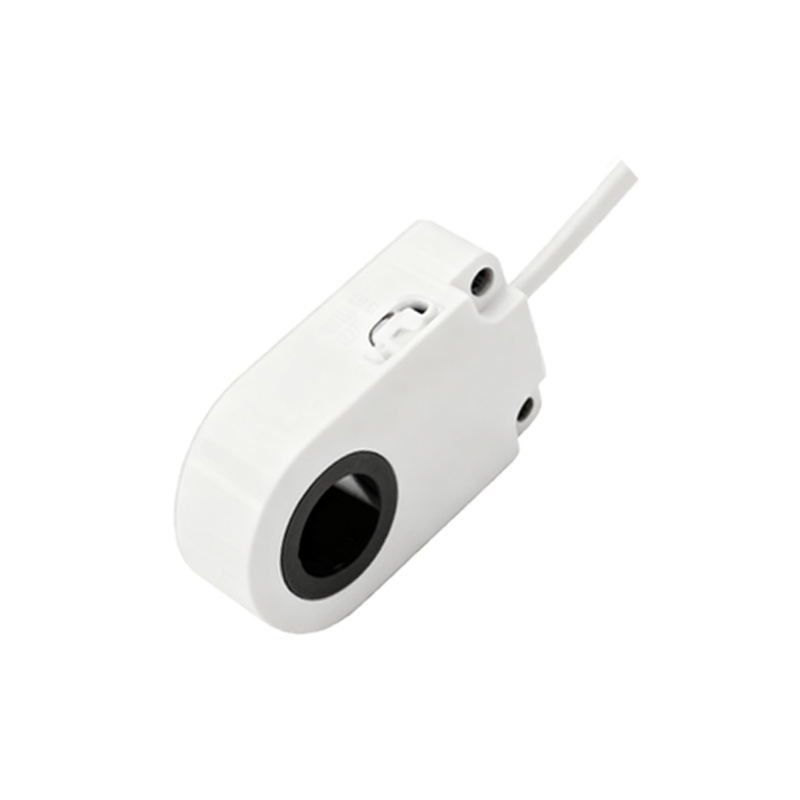
Material selection is paramount for durability in harsh industrial environments. The housing is commonly constructed from nickel-plated brass or high-grade stainless steel (such as V4A/AISI 316L) to resist corrosion, chemicals, and mechanical impact. The sensing face is often made of a specialized, wear-resistant polymer that allows the electromagnetic field to pass through while protecting the internal components. Advanced models feature robust IP67, IP68, or IP69K ingress protection ratings, ensuring reliable operation amidst dust, moisture, and high-pressure washdowns common in food processing, packaging, and automotive manufacturing.
The applications for arc-shaped proximity sensors are diverse and critical. In automated rotary indexing tables, they provide precise position feedback for the table's stops. On large rotating machinery like cranes or excavators, they monitor the slew ring gear rotation, enabling accurate positioning and preventing over-travel. Within printing and converting machinery, they detect the presence of printing plates or cylinders. A highly specialized application is in the monitoring of elevator sheave grooves or hoist ropes, where the sensor's arc can closely follow the rope's path to detect slip or breakage. Their ability to interface seamlessly with Programmable Logic Controllers (PLCs) via standard PNP/NPN outputs or IO-Link communication for smart sensor data exchange makes them integral to modern industrial control systems.
When selecting an arc-shaped proximity sensor, engineers must consider several factors beyond the basic curvature. The target material (steel, aluminum, copper) directly affects the effective sensing distance and may require sensor adjustment or a different model. The required electrical output type, supply voltage (commonly 10-30V DC), and environmental conditions like ambient temperature extremes or exposure to strong magnetic fields are crucial. Installation is also specific; proper alignment parallel to the target's path and securing with the appropriate brackets are essential for optimal performance. Maintenance generally involves periodic cleaning of the sensing face to remove debris, oil, or metal shavings that could attenuate the sensing field.
In conclusion, arc-shaped proximity sensors are a testament to precision engineering solving distinct mechanical challenges. They fill a vital niche where linear sensing approaches are inadequate, offering reliability, longevity, and precision for motion control and safety systems involving rotational or arcing movements. As industrial automation advances towards greater flexibility and complexity, the role of these specialized sensors in enabling sophisticated, reliable machine designs continues to grow.