Proximity sensors are indispensable components in modern industrial automation, enabling non-contact detection of objects with high precision and reliability. As the demand for smart manufacturing and Industry 4.0 solutions grows, selecting the right brand of proximity sensors becomes crucial for ensuring operational efficiency, safety, and longevity of machinery. This article explores leading brands in the proximity sensor market, highlighting their key technologies, product ranges, and industry applications.
Siemens stands out as a global leader in industrial automation, offering a comprehensive portfolio of proximity sensors under its SIMATIC and SIRIUS product lines. Siemens sensors are renowned for their robustness, high switching frequencies, and resistance to harsh environments, making them ideal for automotive, packaging, and material handling sectors. Their inductive, capacitive, and ultrasonic sensors integrate seamlessly with PLC systems, supporting IoT connectivity for predictive maintenance.
Omron, a Japanese electronics giant, specializes in innovative sensor solutions with a focus on miniaturization and energy efficiency. Omron’s E2E and E2K series proximity sensors feature advanced ASIC technology, providing stable detection even in metallic interference scenarios. These sensors are widely used in robotics, semiconductor manufacturing, and food processing industries due to their hygienic designs and compliance with international safety standards.
Rockwell Automation (Allen-Bradley) dominates the North American market with its durable and versatile proximity sensors. The Bulletin 871T and 872C series offer exceptional performance in extreme temperatures and corrosive conditions. Rockwell’s sensors support EtherNet/IP protocols, enabling real-time data exchange in connected enterprises. Their applications span from heavy machinery in mining to precision assembly lines in aerospace.
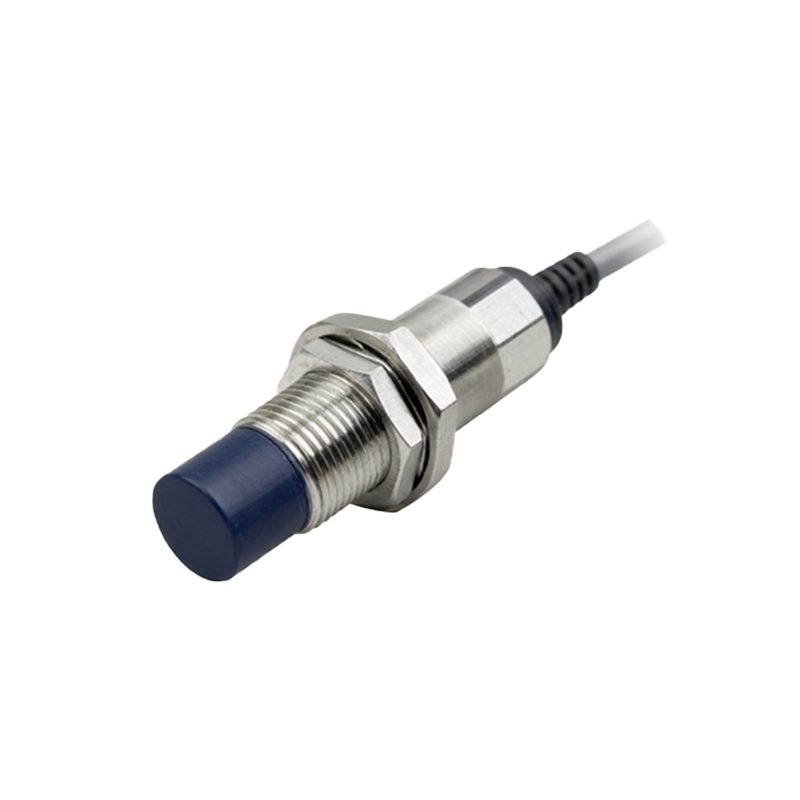
Pepperl+Fuchs, a German specialist in sensor technology, excels in developing explosion-proof and intrinsically safe proximity sensors for hazardous areas. The NJ and NBB series are certified for use in oil and gas, chemical, and pharmaceutical plants. With patented technologies like Factor 1 housing, these sensors ensure reliable operation in volatile atmospheres while reducing false triggers.
Balluff, another German manufacturer, is recognized for its high-precision inductive and magnetic sensors. The BES and BMF series provide millimeter-level accuracy, catering to automated guided vehicles (AGVs), CNC machining, and logistics automation. Balluff’s RFID-integrated sensors enable track-and-trace capabilities, enhancing supply chain visibility.
Keyence, a Japanese innovator, pushes boundaries with photoelectric and fiber-optic proximity sensors offering ultra-fast response times and long sensing ranges. The FS-V and PM series are popular in electronics assembly and pharmaceutical inspection for their ability to detect minute objects. Keyence’s user-friendly software simplifies calibration and diagnostics, reducing downtime.
When selecting a proximity sensor brand, engineers must consider factors such as detection range, material compatibility, environmental ratings (IP67/IP69K), output types (PNP/NPN), and connectivity options. Emerging trends include IO-Link integration for digital parameterization and smart sensors with self-monitoring features. Brands like IFM Electronic and Turck are also gaining traction with modular designs that simplify installation and maintenance.
In conclusion, the proximity sensor market is driven by technological advancements from established brands like Siemens, Omron, and Rockwell Automation, alongside niche players like Pepperl+Fuchs and Balluff. By aligning brand capabilities with specific industrial needs—whether for high-speed automation, hazardous environments, or IoT readiness—engineers can optimize system performance and future-proof their operations.