In the realm of industrial automation and machine safety, the reliable detection of objects without physical contact is paramount. Among the myriad of solutions available, the PM12-04 inductive proximity sensor stands out as a robust and versatile component. This article provides a comprehensive technical analysis of the PM12-04, exploring its operating principles, key specifications, and typical applications within demanding industrial environments.
The PM12-04 is a cylindrical, shielded inductive proximity sensor. Its core functionality is based on the principle of electromagnetic induction. The sensor generates a high-frequency oscillating electromagnetic field from its active face. When a metallic object enters this detection field, eddy currents are induced within the target material. This causes a change in the oscillation amplitude within the sensor's internal LC tank circuit. A dedicated evaluation circuit detects this change and triggers a solid-state switching output, typically in the form of a PNP (sourcing) or NPN (sinking) transistor. The "PM12" denotes the series and housing style, while "04" often refers to a 4mm sensing distance, a standard value for such compact sensors, though exact specifications must always be verified against the manufacturer's datasheet.
Key technical specifications define the PM12-04's performance envelope. The sensing range, typically 4mm for mild steel, is a critical parameter. It is essential to note that this nominal range is calibrated for a standard target (usually a 1mm thick square of Fe360 steel). Detection of different metals, such as stainless steel, aluminum, or copper, will result in a reduced effective sensing distance due to their lower permeability and conductivity; correction factors must be applied. The sensor housing is commonly rated at IP67 (IEC 60529), ensuring protection against dust ingress and temporary immersion in water, making it suitable for washdown areas in food processing or other harsh conditions. Operating voltage ranges are typically from 10-30V DC, accommodating standard industrial control voltages. The output configuration is a decisive factor for integration; a 3-wire design with PNP (sourcing) output is prevalent, providing a positive signal to the PLC input when an object is detected. The switching frequency, often in the range of several hundred Hz to 1 kHz, determines how rapidly the sensor can detect objects passing by, a vital spec for high-speed counting or positioning tasks.
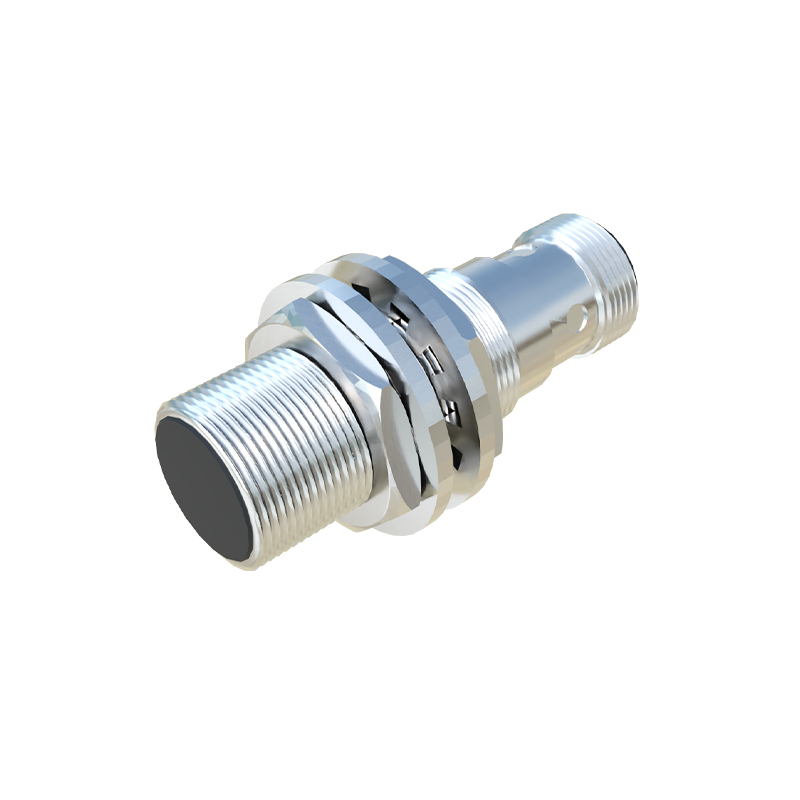
The PM12-04's compact M12 housing, with its threaded barrel design, allows for easy installation via a locknut, facilitating flush or non-flush mounting in tight spaces. Shielded (flush-mountable) construction minimizes the influence of surrounding metal, allowing the sensor to be embedded in a metal bracket without affecting its sensing field. This is a significant advantage over unshielded models. Electrical connection is streamlined through a pre-wired cable or a quick-disconnect M12 connector, promoting faster maintenance and replacement.
Application scenarios for the PM12-04 are extensive across factory floors. A primary use is position verification. It can confirm the presence of a metal part on a conveyor, the end-of-travel position of a pneumatic cylinder (by detecting the piston's metal flag), or the correct seating of a tool in a CNC machine turret. In material handling and packaging machinery, these sensors are indispensable for counting metal items, controlling sorting gates, or ensuring proper fill levels in metal containers. Their robustness also makes them ideal for use in robotic cells, where they provide end-effector status or pallet presence signals. In automated assembly, they ensure components are present before a welding or fastening operation commences, preventing costly defects or machine damage.
When selecting and installing a PM12-04 sensor, several best practices ensure optimal performance. First, always confirm the target material and required sensing distance with derating factors in mind. Second, ensure adequate clearance from other metal objects to prevent false triggering. For flush-mounted shielded sensors, the manufacturer's recommended surrounding metal clearance is minimal but should be followed. Third, pay close attention to wiring: connect the brown wire (typically +V), blue wire (0V), and black wire (output signal) correctly to avoid damaging the sensor or the controller. Incorporating a protective circuit, such as a surge suppressor for inductive loads or a fuse, is recommended for long-term reliability in electrically noisy environments. Regular maintenance involves checking for physical damage, buildup of metallic swarf or debris on the sensing face, and verifying the output signal with a multimeter or PLC diagnostic tools.
In conclusion, the PM12-04 inductive proximity sensor exemplifies the synergy of reliability, precision, and durability required in modern industrial systems. Its straightforward operating principle, coupled with a rugged design and standardized form factor, has cemented its role as a fundamental building block in automation. By understanding its technical nuances—from sensing characteristics to environmental ratings—engineers and technicians can deploy the PM12-04 effectively to enhance machine productivity