In the realm of industrial automation and machine control, proximity sensors are indispensable components for non-contact object detection. Among the most critical decisions an engineer or technician must make is selecting the correct sensor output configuration: NPN or PNP. This choice fundamentally dictates how the sensor integrates into the control circuit and interfaces with the Programmable Logic Controller (PLC) or other control devices. Understanding the distinction is not merely academic; it is essential for ensuring system compatibility, safety, and reliable operation.
At its core, the difference between NPN and PNP proximity sensors lies in the type of transistor used in their output switching circuit and the resulting direction of conventional current flow. This distinction defines whether the sensor provides a sinking or sourcing output.
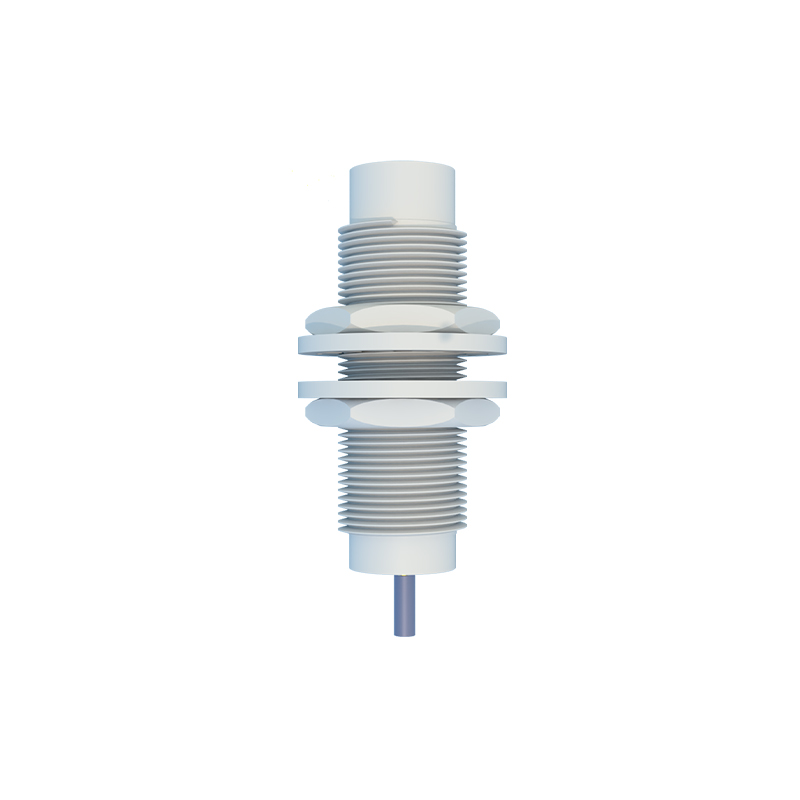
An NPN sensor, utilizing a Negative-Positive-Negative transistor, operates as a current sink. In its normal state (no target detected), the output signal line is effectively floating or at a high impedance. When a target is detected, the internal NPN transistor switches ON, connecting the output signal line to the negative supply voltage (typically 0V or common). This action "sinks" current from the load (e.g., a PLC input module) into the sensor, completing the circuit to ground. Therefore, with an NPN sensor, the load must be connected between the positive supply voltage and the sensor's output wire. The common wiring mantra for NPN is "Switched Negative." This configuration is historically prevalent in regions like Europe and Asia.
Conversely, a PNP sensor, built around a Positive-Negative-Positive transistor, functions as a current source. In its normal state, the output is again inactive. Upon detection, the PNP transistor switches ON, connecting the output signal line to the positive supply voltage (e.g., +24VDC). This "sources" current from the sensor out to the load. For a PNP sensor, the load is connected between the sensor's output wire and the negative supply or ground. The corresponding wiring phrase is "Switched Positive." PNP wiring is commonly the standard in North America.
The choice between NPN and PNP is primarily dictated by the input circuit design of the controller. Most modern PLC digital input modules can be configured for either sinking (common to positive) or sourcing (common to negative) operation, but their internal architecture favors one style. A sinking input module, designed to receive current, typically pairs with a PNP (sourcing) sensor. A sourcing input module, designed to provide current, pairs with an NPN (sinking) sensor. Mismatching these can lead to a non-functional system. Always consult the controller's manual to determine its input type.
Wiring diagrams provide clarity. For a typical 3-wire DC sensor (Brown: +V, Blue: 0V/Common, Black: Output Signal), the connection differs:
NPN Wiring: Brown to +24VDC, Blue to 0VDC, Black to the PLC input. The PLC input's common point is connected to +24VDC (sourcing input).
PNP Wiring: Brown to +24VDC, Blue to 0VDC, Black to the PLC input. The PLC input's common point is connected to 0VDC (sinking input).
A crucial consideration is the sensor's output state—Normally Open (NO) or Normally Closed (NC). An NPN-NO sensor closes a switch to ground when activated, while an NPN-NC opens that switch. Similarly, a PNP-NO closes a switch to positive, and a PNP-NC opens it. This selection depends on the required safety logic for the application; an NC configuration is often used for fail-safe monitoring, as a wire break can simulate an activation signal.
In practice, system design consistency is paramount. Mixing NPN and PNP sensors on the same machine, especially when sharing a common power supply rail, can create ground loop issues or short circuits if not isolated properly. Adopting a uniform standard across a facility simplifies maintenance and reduces wiring errors. Furthermore, when interfacing with legacy equipment or specific safety relays, the compatible sensor type may be explicitly mandated.
Ultimately, there is no intrinsic performance advantage of NPN over PNP or vice versa regarding sensing distance or speed; they are electrically complementary. The decision is an architectural one. By mastering the concepts of sinking (NPN) and sourcing (PNP) outputs, engineers ensure robust sensor integration, forming the reliable backbone of any automated industrial system.