In the rapidly evolving landscape of industrial automation, laser sensors have emerged as indispensable tools for precision measurement, detection, and quality control. These devices operate by emitting a focused beam of light—typically from a laser diode—and analyzing the reflected signal to determine distance, presence, or surface characteristics. Unlike traditional mechanical or ultrasonic sensors, laser sensors offer unparalleled accuracy, high-speed response, and non-contact operation, making them ideal for demanding applications across manufacturing, robotics, and logistics.
One of the primary advantages of laser sensors is their exceptional resolution and repeatability. In assembly lines, for instance, they are deployed for precise positioning of components, ensuring that robotic arms place parts with micron-level accuracy. This capability minimizes production errors and reduces material waste. Additionally, laser sensors excel in measuring dimensions, thickness, and profiles of objects, even on reflective or dark surfaces that challenge other sensing technologies. For quality assurance, they can detect minute defects, such as scratches or deformations, in real-time, allowing for immediate corrective actions and maintaining stringent product standards.
The integration of laser sensors with Industry 4.0 frameworks further enhances their utility. Through connectivity protocols like IO-Link or Ethernet/IP, these sensors can transmit data to centralized control systems, enabling predictive maintenance and adaptive process optimization. For example, in automotive manufacturing, laser sensors monitor weld seam quality and panel alignment, feeding data into analytics platforms that predict equipment wear and schedule downtime proactively. This data-driven approach not only boosts efficiency but also extends the lifespan of machinery.
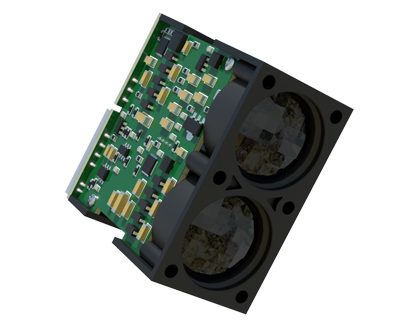
However, implementing laser sensors requires careful consideration of environmental factors. Ambient light, dust, and temperature fluctuations can affect performance, necessitating proper housing and calibration. Selecting the right sensor type—such as diffuse reflective, through-beam, or background suppression models—is crucial based on the application's range and target properties. Regular maintenance, including lens cleaning and output verification, ensures consistent operation.

In robotics, laser sensors facilitate advanced functionalities like collision avoidance and path planning. Autonomous guided vehicles (AGVs) use laser scanners for navigation, creating detailed maps of their surroundings to avoid obstacles and optimize routes. Similarly, in packaging industries, sensors verify label placement and fill levels at high speeds, streamlining operations. The non-contact nature of laser sensing also prevents damage to delicate items, such as electronics or pharmaceuticals, during handling.
Looking ahead, advancements in laser sensor technology are poised to drive further innovation. Developments in miniaturization, energy efficiency, and smart algorithms will expand their applications in sectors like aerospace and renewable energy. As industries increasingly prioritize automation and precision, laser sensors will remain at the forefront, enabling smarter, more responsive manufacturing ecosystems. By leveraging their capabilities, engineers can achieve higher productivity, improved safety, and sustainable operations, solidifying their role as a cornerstone of modern industrial engineering.