Capacitive proximity sensors have emerged as a reliable and versatile solution for liquid level measurement across a wide range of industrial sectors. Unlike traditional mechanical float switches or conductive probes, these sensors operate on a non-contact principle, detecting the presence or absence of a liquid by measuring changes in capacitance. This technology offers significant advantages in terms of durability, maintenance, and application flexibility, making it a preferred choice for engineers designing systems for chemical processing, water treatment, food and beverage production, and pharmaceutical manufacturing.
The fundamental operating principle is based on the capacitor model. The sensor, which acts as one plate of a capacitor, generates an electrostatic field. The tank wall or a dedicated sensing probe serves as the other electrode. When the target medium—in this case, a liquid—enters this electrostatic field, it alters the dielectric constant between the two plates. Most liquids have a significantly higher dielectric constant than air. For instance, water has a dielectric constant of approximately 80, while air is about 1. This substantial change is detected by the sensor's internal oscillator circuit. The electronics convert this change in capacitance into a usable output signal, typically a switching signal (PNP/NPN) or an analog output (4-20 mA or 0-10V), indicating the liquid level has reached the sensing point.
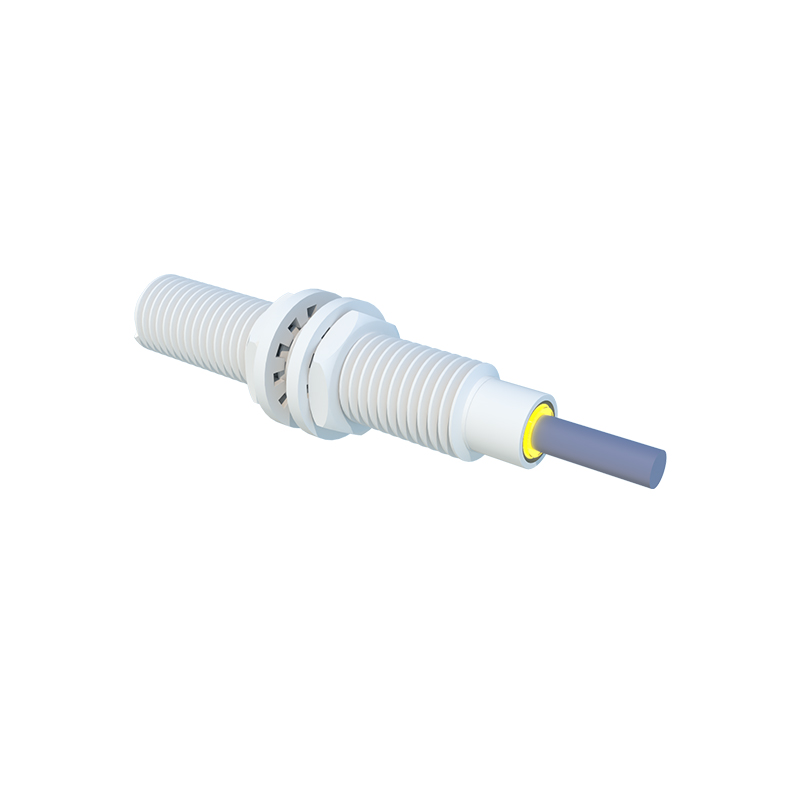
One of the primary benefits of capacitive level sensing is its ability to function through non-metallic tank walls. Sensors can be mounted externally on plastic, glass fiber, or glass containers, enabling completely sealed and hygienic measurement without the need for direct contact with the liquid. This is crucial in sterile environments or when measuring aggressive, corrosive, adhesive, or high-purity liquids where sensor contamination or material incompatibility is a concern. For metallic tanks, internal probes or flush-mounted sensors are commonly employed. The design of the sensing face and probe is critical; factors such as the sensor's size, shape, and housing material must be selected based on the chemical properties of the liquid, temperature, pressure, and required sensing range.
When implementing a capacitive sensor for level control, several key parameters require careful engineering consideration. The first is the dielectric constant (εr) of the liquid. Liquids with a high dielectric constant, like water-based solutions, are easily detected. For liquids with a low dielectric constant, such as certain oils or solvents, specialized sensors with higher sensitivity or adjustable sensing ranges are necessary. Many modern capacitive sensors feature potentiometers or teach-in functions to calibrate the switch point precisely for the specific medium and application conditions.
Environmental factors pose another set of challenges. Foam, condensation, or buildup of product residue on the sensing surface can cause false triggering. Sensors with built-in compensation algorithms or mechanical designs that minimize surface adhesion help mitigate these issues. Temperature fluctuations can also affect the dielectric constant of the liquid and the sensor's electronics, necessitating the selection of sensors with appropriate temperature ratings and stability. In explosive atmospheres, sensors must carry relevant certifications (e.g., ATEX, IECEx) for intrinsic safety.
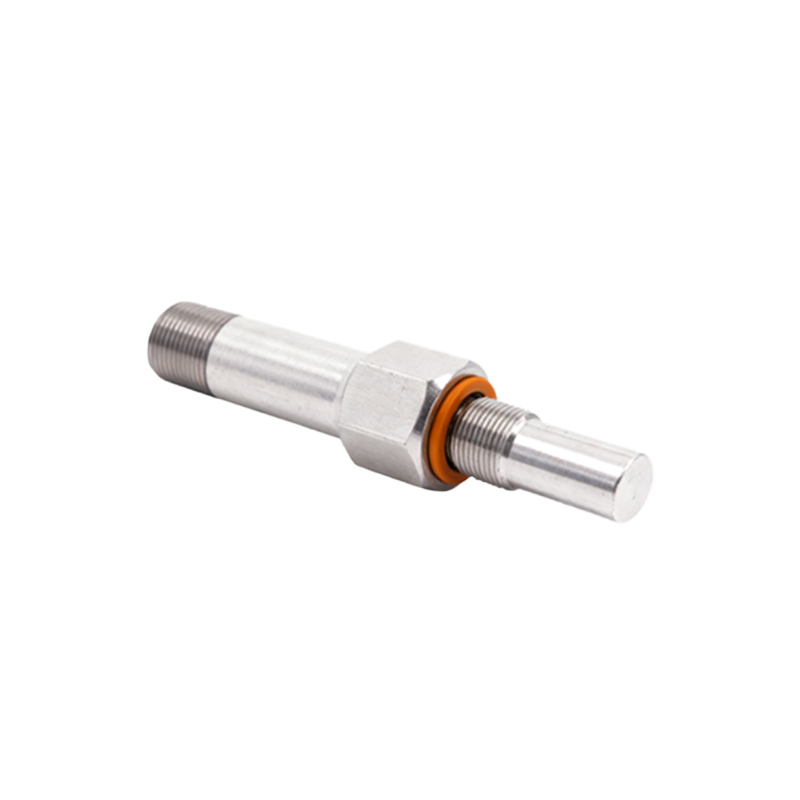
The application scope extends beyond simple point-level detection (full/empty). By using multiple sensors or specially designed long probes, capacitive technology can facilitate continuous level measurement. Analog-output sensors provide a voltage or current signal proportional to the level, which can be fed into a PLC or SCADA system for precise inventory management and process control. Advanced versions integrate self-diagnostics and IO-Link communication, enabling predictive maintenance and seamless integration into Industry 4.0 architectures.
Installation and commissioning are relatively straightforward but demand attention to detail. The sensor must be positioned correctly to avoid interference from agitators, tank walls, or inflow streams. Proper grounding and shielding are essential to prevent electrical noise from motors or variable frequency drives from affecting the sensitive capacitance measurement. Following the manufacturer's guidelines for mounting distance and setup procedures ensures optimal performance and longevity.
In summary, capacitive proximity sensors provide a robust, non-contact method for liquid level detection and measurement. Their ability to work with diverse media through various container materials, coupled with their solid-state reliability and minimal maintenance needs, makes them an indispensable tool for the industrial engineer. As sensor technology continues to advance with smarter electronics and more rugged designs, their role in ensuring efficient, safe, and automated industrial processes will only expand.