In the realm of industrial safety and environmental monitoring, the detection of methane gas remains a paramount concern. Methane, a primary component of natural gas, is not only highly flammable but also a potent greenhouse gas. Traditional detection methods, such as catalytic bead sensors or non-dispersive infrared (NDIR) sensors, have served industries for decades. However, the advent of laser-based methane detection sensors represents a significant technological leap, offering unparalleled precision, speed, and reliability. This article delves into the operational principles, key advantages, and burgeoning applications of these advanced optical sensors.
At the core of laser-based methane detection lies the principle of Tunable Diode Laser Absorption Spectroscopy (TDLAS). A laser diode emits a beam of light at a specific wavelength that corresponds to an absorption line unique to the methane molecule. As this laser light passes through a sampling area—be it an open path in the atmosphere or a gas cell—methane molecules absorb a portion of the light energy. A photodetector then measures the intensity of the transmitted or reflected light. The degree of absorption is directly proportional to the concentration of methane present along the light path. By precisely tuning the laser wavelength and analyzing the absorption spectrum, these sensors can identify and quantify methane with exceptional selectivity, minimizing false alarms from other gases.
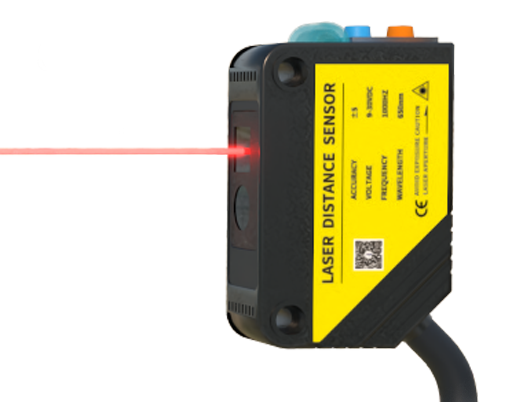
The advantages of laser methane sensors over conventional technologies are substantial. Firstly, they offer superior sensitivity and accuracy, capable of detecting methane concentrations at parts-per-million (ppm) or even parts-per-billion (ppb) levels. This high sensitivity allows for the early detection of minor leaks before they escalate into hazardous situations. Secondly, their response time is remarkably fast, often in the range of seconds. This rapid detection is critical in dynamic industrial environments where conditions can change swiftly. Thirdly, laser sensors are known for their long-term stability and minimal drift. Unlike catalytic sensors, which can be poisoned by certain chemicals and require frequent calibration, optical sensors have no consumable parts and are largely immune to sensor poisoning, leading to reduced maintenance costs and operational downtime.

Furthermore, these sensors support various configurations to suit different monitoring needs. Point sensors are designed for fixed installation at specific, high-risk locations such as compressor stations, valve assemblies, or within confined spaces. Open-path sensors, on the other hand, create an invisible laser beam over distances ranging from a few meters to several hundred meters. They monitor an entire line of sight, making them ideal for perimeter monitoring of facilities, landfill boundaries, or detecting fugitive emissions across wide areas. The non-intrusive nature of open-path detection is a particular benefit, as it does not require physical sampling of the gas.
The applications for laser-based methane detectors are expanding rapidly across multiple sectors. In the oil and gas industry, they are deployed for upstream leak detection and repair (LDAR) programs, midstream pipeline monitoring, and safety assurance in downstream processing plants. In the utility sector, they safeguard natural gas distribution networks, helping to pinpoint leaks in urban infrastructures. Waste management facilities utilize them to monitor methane levels at landfills and biogas plants. Additionally, they play a crucial role in ensuring safety in coal mines, where methane accumulation poses a severe explosion risk. Beyond safety, their precision is invaluable for environmental compliance reporting and greenhouse gas emission inventories.
Despite their advanced capabilities, the implementation of laser methane sensors requires careful consideration. Factors such as initial capital investment, which is typically higher than for traditional sensors, must be weighed against the long-term benefits of reduced maintenance, enhanced safety, and regulatory compliance. Proper installation is also crucial; for open-path sensors, ensuring a clear line of sight and accounting for environmental interferences like heavy rain, fog, or dust is necessary for optimal performance. Modern units often incorporate sophisticated algorithms to compensate for such background noise.
In conclusion, laser-based methane detection sensors embody a transformative technology for industrial gas monitoring. By leveraging the precise interaction between laser light and methane molecules, they deliver a level of performance that traditional methods cannot match. As the technology continues to mature, with trends pointing towards miniaturization, lower costs, and integration with the Industrial Internet of Things (IIoT) for real-time data analytics and predictive maintenance, their adoption is set to become more widespread. For engineers and safety managers committed to proactive risk management and operational excellence, investing in laser methane detection is not merely an upgrade—it is a strategic imperative for a safer, more efficient, and environmentally responsible future.