Plug-in proximity switch sensors represent a critical component in modern industrial automation, offering non-contact detection of metallic and, in some cases, non-metallic objects. Their "plug-in" design, characterized by a separate sensor head and an amplifier unit connected via a cable, provides unparalleled flexibility, ease of maintenance, and installation efficiency compared to traditional unitary designs. This architecture is particularly advantageous in complex machinery or harsh environments where sensor replacement or troubleshooting is frequent.
The core operating principle hinges on electromagnetic fields. Inductive proximity sensors, the most common type for metallic target detection, generate an oscillating electromagnetic field from a coil in the sensing head. When a ferrous or non-ferrous metal object enters this field, it induces eddy currents, causing a change in the oscillation amplitude. This change is detected by the amplifier unit, which then triggers a solid-state switching output (PNP or NDC). For detecting non-metallic materials like plastics, wood, or liquids, capacitive plug-in sensors are employed. They function by measuring changes in capacitance caused by the dielectric properties of the target object entering an electrostatic field.
The plug-in design confers significant operational benefits. Firstly, it drastically reduces downtime. If a sensor head is damaged by impact, chemical exposure, or extreme temperatures, only the relatively inexpensive sensing head needs replacement, not the entire electronic amplifier unit. This modularity saves costs and simplifies inventory management. Secondly, it enhances installation versatility. The compact sensor head can be mounted in extremely tight or hard-to-reach spaces, while the amplifier, which may contain sensitivity adjustments, indicators, and connection terminals, can be placed in a more accessible, protected control cabinet. This separation also protects sensitive electronics from vibration, heat, and contaminants present at the point of detection.
Selecting the appropriate plug-in proximity sensor requires careful consideration of several technical parameters. The sensing distance, or nominal range, is specified for a standard target (usually mild steel). It is crucial to note that for non-ferrous metals like aluminum or copper, the effective sensing distance is reduced, often requiring derating. The housing material of the sensor head is another vital factor; stainless steel (e.g., V2A, V4A) offers excellent corrosion resistance for washdown or chemical environments, while PBT or PVDF plastic housings are suitable for non-metallic applications or to prevent mutual interference in dense arrays. Output configuration—be it normally open (NO), normally closed (NC), or analog—must align with the PLC or control system input card requirements. Furthermore, environmental ratings such as IP67 (dust-tight and protected against temporary immersion) or IP69K (protected against high-pressure, high-temperature water jets) are essential for reliability in demanding conditions.
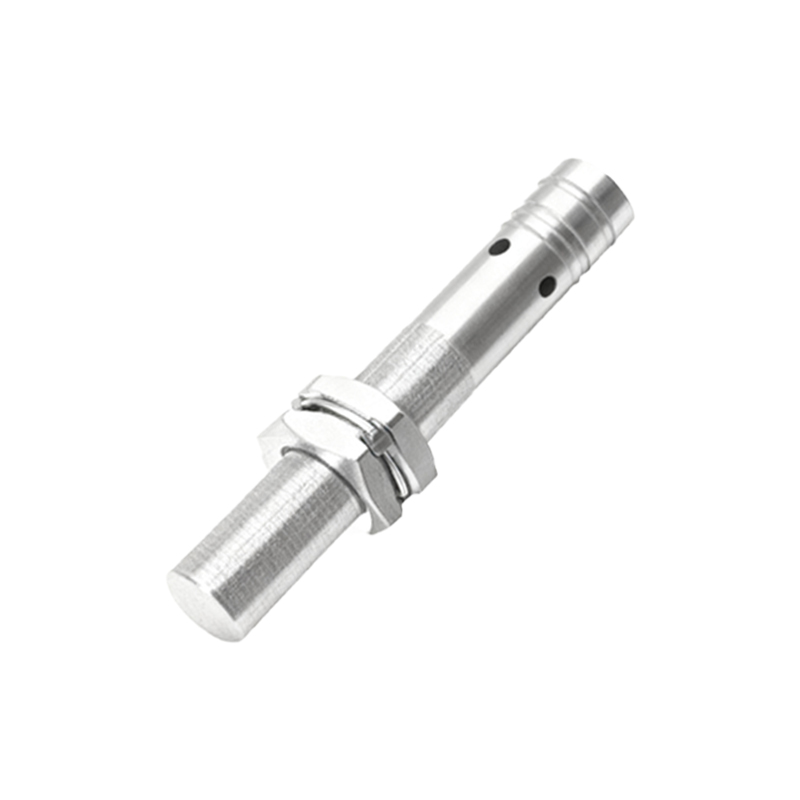
Typical industrial applications are vast. In material handling, they are used for pallet detection, conveyor jam prevention, and counting tasks on packaging lines. In machine tools, they provide precise position feedback for tool changers, spindle orientation, and end-of-travel limits. The automotive industry relies on them for robotic weld gun positioning, part presence verification in assembly jigs, and fluid level sensing in reservoirs. The food and beverage sector utilizes sensors with FDA-compliant materials and high hygiene ratings for bottle cap detection and fill level control.
Installation and wiring demand attention to detail. Ensuring the correct voltage supply (commonly 10-30V DC) to the amplifier is fundamental. Proper grounding and shielding of the connecting cable are necessary to mitigate electromagnetic interference (EMI) from nearby motors or frequency drives, which can cause erratic switching. Adequate clearance around the sensor head's active face must be maintained to prevent false triggers from the mounting bracket or surrounding metal (the "flush-mountable" feature mitigates this). Regular maintenance, though minimal, should include periodic cleaning of the sensor face to remove debris, oil, or metal shavings that could attenuate the sensing field, and verification of the switching signal under normal operating conditions.
In conclusion, plug-in proximity switch sensors are a cornerstone of robust and maintainable automation systems. Their modular design philosophy directly addresses the core industrial needs of minimizing machine downtime, simplifying troubleshooting, and adapting to challenging physical layouts. By understanding their operating principles, key selection criteria, and installation best practices, engineers and technicians can leverage these versatile devices to enhance system reliability, increase productivity, and ensure precise control across a myriad of industrial processes. As Industry 4.0 advances, the integration of these sensors with IO-Link communication for parameterization and diagnostic data further elevates their role in predictive maintenance and smart factory ecosystems.