In the realm of industrial automation and machine safety, proximity sensors stand as fundamental components for non-contact detection. Among the myriad of models and series available, the E2B proximity sensor has established itself as a reliable and widely-adopted solution. This article delves into the technical specifications, operational principles, application considerations, and comparative advantages of the E2B series, providing electrical engineers with a detailed professional overview.
The E2B series, a product line from Omron, a leading manufacturer in industrial automation, encompasses a broad range of inductive proximity sensors. The core operating principle is based on electromagnetic induction. The sensor generates a high-frequency oscillating electromagnetic field from its sensing face. When a metallic target (ferrous or non-ferrous, depending on the sensor type) enters this field, eddy currents are induced on the target's surface. This causes a change in the oscillation amplitude within the sensor's coil. An internal circuit detects this change and triggers a solid-state output switch, signaling the presence of the object without any physical contact. This non-contact nature is crucial, as it eliminates mechanical wear and tear, ensuring long operational life and high reliability in demanding environments.
Key technical specifications define the E2B's performance and suitability for various applications. The sensing distance, a critical parameter, varies by model, typically ranging from a few millimeters to several centimeters. Engineers must carefully consider this in relation to the target material, size, and required installation clearance. The E2B series offers both shielded (flush-mountable) and unshielded (non-flush-mountable) types. Shielded models can be embedded in metal without affecting their sensing characteristics, offering more flexible mounting options. Output configurations are predominantly NPN (sinking) or PNP (sourcing) transistor outputs, compatible with standard programmable logic controllers (PLCs) and other control systems. Some models also feature analog current or voltage outputs (4-20mA, 0-10V) for distance-proportional measurement. The housing is typically constructed from nickel-plated brass or stainless steel, providing excellent resistance to corrosion, oils, and coolants, making them ideal for machine tool and automotive manufacturing applications.
When integrating an E2B sensor into a system, several practical considerations are paramount. First, electrical connection must adhere to the specified wiring diagram, paying close attention to the brown (V+), blue (V-), and black (output) wires for DC models. Incorrect polarity can damage the sensor. Second, environmental factors such as ambient temperature, presence of strong magnetic fields, or conductive dust can influence performance. Selecting a model with an appropriate IP (Ingress Protection) rating, such as IP67, is essential for washdown or outdoor applications. Third, for sensing non-ferrous metals like aluminum or copper, specific models with reduced sensing ranges are required, as the eddy current generation differs from ferrous metals. Finally, engineers should consider the response frequency—how quickly the sensor can detect objects passing by—which is vital for high-speed counting or positioning tasks.
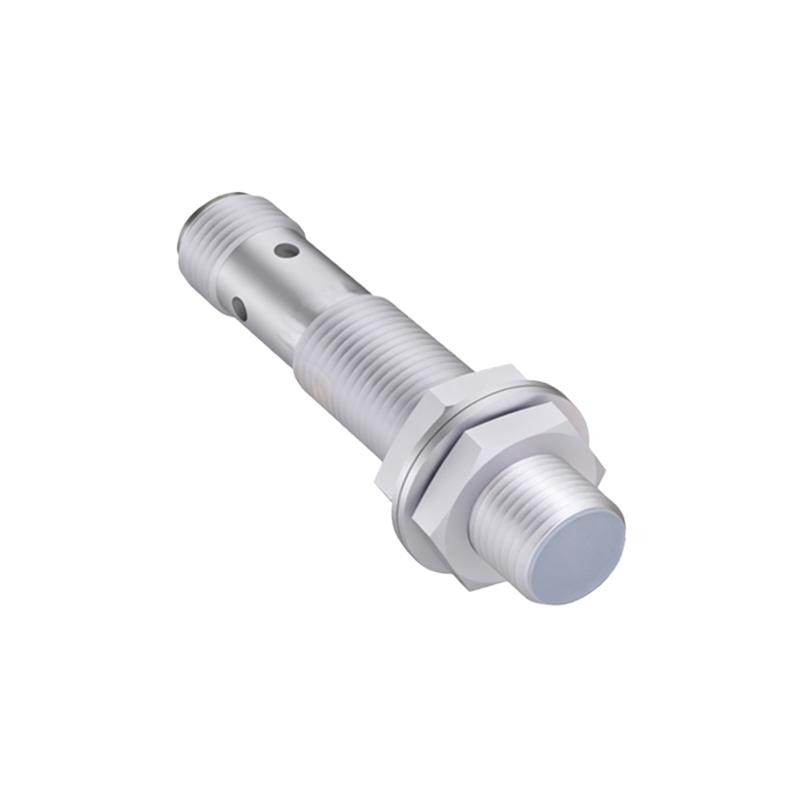
Comparing the E2B to other proximity sensor families, its strengths lie in its robust construction, consistent performance, and extensive model variety. It often provides a favorable balance between cost, durability, and precision. For instance, in high-precision positioning, capacitive or laser sensors might offer finer resolution, but the E2B inductive sensor excels in harsh, dirty environments where robustness is key. Its immunity to ambient light and most non-metallic substances makes it superior to photoelectric sensors in many machine automation scenarios.
Maintenance of E2B sensors is generally minimal due to their solid-state design. However, periodic checks are recommended: verifying the sensing distance has not degraded, ensuring the mounting is secure and free from vibration-induced misalignment, and cleaning the sensing face of any accumulated metallic swarf or grime that could cause false triggering. Troubleshooting typically involves checking the power supply voltage, load connection, and using a simple test like bringing a metal target close to see if the output indicator LED activates.
In conclusion, the E2B proximity sensor represents a cornerstone technology in electrical control systems. Its design, rooted in proven inductive principles, delivers dependable object detection for countless applications, from conveyor line control and robotic end-effector positioning to safety door monitoring. For the electrical engineer, a deep understanding of its specifications, correct selection based on the application's mechanical, electrical, and environmental demands, and proper installation practices are essential for leveraging its full potential to create reliable, efficient, and safe automated systems. As Industry 4.0 evolves, the role of such fundamental, yet sophisticated, sensors like the E2B remains irreplaceable.