Transmissive laser sensors, also known as through-beam sensors, represent a cornerstone technology in industrial automation and precision measurement. Their fundamental operating principle is elegantly simple yet delivers exceptional reliability. The system consists of two separate units: a laser transmitter and a receiver. The transmitter emits a continuous or modulated beam of coherent light, which is then detected by the receiver positioned directly opposite. The primary measured variable is the presence or absence of this beam. Any object passing through the sensing gap interrupts the light path, causing a detectable change in the receiver's signal. This binary state—beam received or beam blocked—forms the basis for countless detection, counting, and positioning tasks.
The core advantage of this configuration lies in its high energy efficiency and signal integrity. Because the receiver detects the light directly from the source, rather than relying on diffuse reflection from a target, the signal is strong and clean. This translates into several key performance benefits. First is an exceptionally long sensing range, which can extend up to several tens of meters in high-performance models, far surpassing the capabilities of diffuse-reflective or retro-reflective sensors. Second is superior precision and stability. The well-defined, collimated laser beam allows for the detection of extremely small objects—down to fractions of a millimeter—and provides a sharply defined sensing boundary. Environmental factors like target color, surface finish, or material have minimal impact on performance, as the sensor is not measuring reflected light. This makes transmissive sensors ideal for detecting transparent or shiny objects like glass, films, or clear bottles, which often challenge other optical methods.
The applications for transmissive laser sensors are vast and span across diverse industries. In packaging and bottling lines, they are indispensable for detecting missing caps, monitoring fill levels in transparent containers, and ensuring proper label placement. Within the electronics manufacturing sector, they perform critical tasks such as verifying the presence of tiny components on circuit boards, counting micro-parts, and controlling wafer handling robots with micron-level precision. Automotive assembly lines utilize them for part verification, robot cell safety curtains, and precise positioning of components. Furthermore, they are employed in security systems as intrusion detectors, in printing for web break detection, and in logistics for high-speed object counting on conveyor belts.
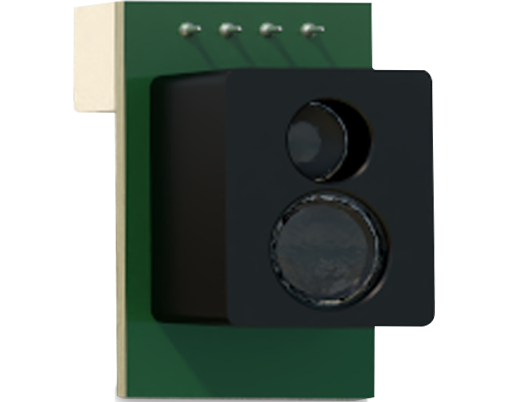
When selecting a transmissive laser sensor for a specific application, several critical parameters must be evaluated. The sensing distance must accommodate the physical layout. The beam spot size determines the minimum detectable object dimension. For high-speed applications, the response time is crucial; modern sensors offer response times in the microsecond range. The light source is typically a visible red laser or a Class 1 infrared laser diode. Visible red lasers facilitate easier alignment, while infrared types are suitable for sensitive environments. Environmental robustness is non-negotiable in industrial settings. Look for sensors with high Ingress Protection (IP) ratings (e.g., IP67) for dust and water resistance, robust housing materials to withstand vibration, and wide operating temperature ranges. Features like automatic sensitivity adjustment can compensate for minor misalignment or lens contamination, reducing maintenance needs.

Alignment, while straightforward in concept, requires attention. Many modern sensors incorporate visual or auditory alignment aids, such as bright visible beams or LED indicators on the receiver that show signal strength. Proper mounting on stable fixtures is essential to prevent drift. For demanding environments with airborne contaminants like dust or mist, air purge accessories can be installed to keep the lenses clean. It is also vital to consider safety classifications. Lasers used in open beam paths must comply with international standards (like IEC 60825-1) to ensure they are eye-safe (typically Class 1 or Class 2).
In comparison to other photoelectric sensor types, the transmissive method's strengths are its long range, high precision, and immunity to target surface properties. Its main limitation is the requirement for two physical components and a clear, uninterrupted path between them, which can pose mounting challenges in space-constrained machinery. Retro-reflective sensors, which use a combined transmitter/receiver and a reflector, offer a one-sided mounting solution but with reduced range and potential issues with reflective targets. Diffuse sensors, with a single unit, are highly versatile for proximity detection but have shorter ranges and are influenced by target color and texture.
Future trends in transmissive laser sensor technology focus on enhanced intelligence and connectivity. Integration of IO-Link communication allows for remote parameter configuration, real-time diagnostics, and condition monitoring, paving the way for predictive maintenance strategies. Miniaturization continues, enabling installation in increasingly tight spaces. Furthermore, advancements in laser diode technology promise even smaller beam spots and higher energy efficiency.
In conclusion, transmissive laser sensors are a powerful, reliable solution for high-accuracy object detection where performance cannot be compromised. By understanding their operating principle, key advantages, and selection criteria, engineers and system integrators can effectively deploy these sensors to enhance automation efficiency, improve quality control, and ensure robust operation in the most challenging industrial environments. Their role as a fundamental building block in smart factories and precision systems remains firmly established and continues to evolve.