In modern industrial automation, laser sensors have become indispensable components for precision measurement, object detection, and quality control. Their ability to deliver high-accuracy, non-contact sensing makes them ideal for applications ranging from assembly line monitoring to robotic guidance. However, the efficiency and longevity of these systems heavily depend on optimized start-stop operations. Improper handling can lead to increased energy consumption, reduced sensor lifespan, and operational downtime. This article delves into best practices for managing laser sensor start-stop cycles, ensuring peak performance in demanding industrial environments.
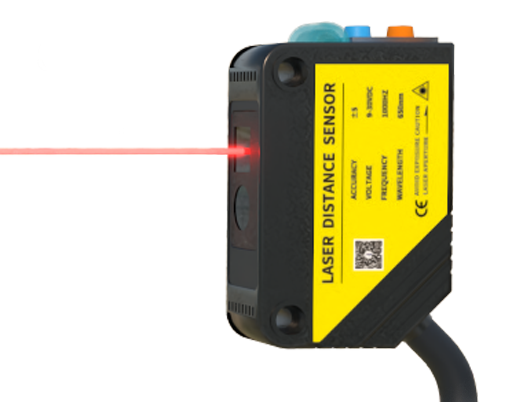
Laser sensors operate by emitting a focused beam of light, typically in the visible or infrared spectrum, and analyzing the reflected signal. When integrated into automated systems, they are frequently subjected to repeated activation and deactivation based on process requirements. Each start-stop cycle involves thermal and electrical stress on the sensor's internal components, including the laser diode, photodetector, and circuitry. Over time, unoptimized cycling can accelerate wear, leading to calibration drift or complete failure. To mitigate these issues, engineers must consider both hardware design and software control strategies.
From a hardware perspective, selecting sensors with robust thermal management is crucial. Models featuring heat sinks, passive cooling, or integrated temperature compensation mechanisms maintain stability during frequent cycling. Additionally, power supply design plays a key role. Utilizing soft-start circuits can gradually ramp up voltage during activation, reducing inrush current that strains electrical components. Similarly, implementing controlled shutdown sequences prevents sudden power cuts, which may cause data corruption or mechanical stress. For high-cycle applications, sensors with solid-state designs—lacking moving parts—often exhibit greater durability.
Software and control logic offer further optimization avenues. Programmable logic controllers (PLCs) or embedded systems can be configured to minimize unnecessary start-stop events. For instance, instead of deactivating sensors during brief idle periods, a low-power standby mode can be employed. This approach maintains sensor readiness while cutting energy use by up to 70%. Advanced algorithms can also predict operational demand, scheduling activations to align with production batches, thus reducing cyclic fatigue. Data logging of start-stop frequency and sensor health metrics enables predictive maintenance, allowing interventions before failures occur.

Environmental factors must not be overlooked. In dusty or humid settings, contaminants can accumulate on sensor lenses during off periods, affecting accuracy upon restart. Enclosures with IP67 or higher ratings provide protection, while periodic automated cleaning cycles can be integrated. Vibration and shock from nearby machinery may also impact sensor alignment; mounting systems with damping materials help sustain precision.
Case studies from manufacturing sectors highlight the benefits of optimized start-stop protocols. In automotive welding lines, implementing staggered laser sensor activation reduced peak power demand by 25%, lowering electricity costs. A packaging facility reported a 40% extension in sensor lifespan after adopting soft-start controls and predictive maintenance schedules. These examples underscore the tangible returns on investment in optimized sensor management.
Looking ahead, the integration of Industrial Internet of Things (IIoT) technologies promises smarter start-stop optimization. Wireless sensors with edge computing capabilities can autonomously adjust cycling based on real-time data, communicating with central systems for coordinated energy savings. Machine learning models may further refine protocols by analyzing historical performance trends.
In conclusion, laser sensor start-stop optimization is a multifaceted endeavor combining hardware selection, control strategy, and environmental adaptation. By prioritizing these aspects, engineers can enhance system reliability, reduce operational costs, and support sustainable industrial practices. As automation evolves, continuous innovation in sensor management will remain pivotal to achieving efficiency gains across diverse applications.
