In the realm of industrial automation and precision measurement, laser sensors have become indispensable tools due to their accuracy, speed, and reliability. A critical parameter that defines their performance is the effective range, which refers to the maximum distance over which a laser sensor can reliably detect, measure, or identify an object with specified accuracy. This range is not a fixed value but varies based on several factors, including sensor design, environmental conditions, and target properties. Understanding these factors is essential for selecting the right sensor for specific applications, ensuring optimal functionality and cost-efficiency.
The effective range of a laser sensor is primarily determined by its optical system and the type of laser technology employed. Common types include time-of-flight (ToF), triangulation, and confocal sensors, each with distinct range capabilities. Time-of-flight sensors, for instance, measure the time taken for a laser pulse to travel to a target and back, making them suitable for longer ranges, often extending up to several hundred meters in outdoor or large-scale industrial settings. In contrast, triangulation sensors use geometric principles to calculate distance based on the angle of reflected light, offering high precision but typically over shorter ranges, such as a few millimeters to meters, ideal for quality control on production lines. Confocal sensors, utilizing chromatic aberration, provide nanometer-level accuracy but are limited to very short ranges, usually under a few millimeters, for applications like surface inspection.

Environmental conditions significantly impact the effective range. Factors such as ambient light, dust, fog, or temperature variations can attenuate the laser beam, reducing signal strength and range. For example, in brightly lit environments, sensors with narrow-band filters or modulated lasers are preferred to minimize interference. Similarly, in dusty or humid atmospheres, sensors with higher power outputs or robust housings may be necessary to maintain performance. Manufacturers often specify an operational range under ideal conditions, but real-world applications require considering derating factors—reducing the effective range by 10-30% depending on environmental harshness.
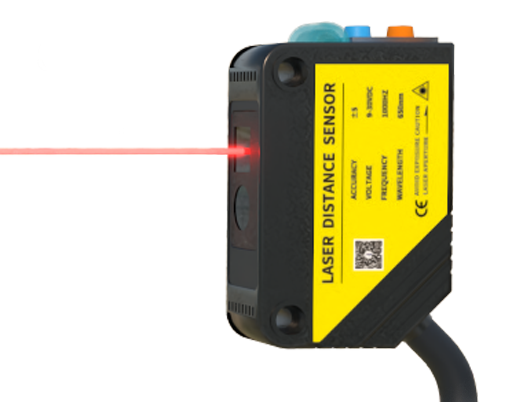
Target characteristics also play a crucial role. The reflectivity, color, and surface texture of an object affect how much laser light is reflected back to the sensor. Highly reflective or light-colored targets enhance range by returning more light, while dark or absorbent surfaces can shorten it. For instance, a laser sensor might achieve its full rated range on a white matte surface but only half on a black glossy one. Some advanced sensors incorporate automatic gain control or adaptive algorithms to compensate for varying reflectivity, extending their effective range across diverse materials. Additionally, the size and shape of the target matter; small or angled objects may scatter light, reducing detection reliability at longer distances.
Calibration and maintenance are vital for sustaining the effective range over time. Regular cleaning of lenses and alignment checks prevent degradation due to contamination or mechanical drift. Many modern laser sensors feature self-diagnostic capabilities, alerting users to issues like lens fogging or power drops that could impair range. In applications requiring consistent long-range performance, such as warehouse automation or autonomous vehicles, periodic recalibration against known references ensures accuracy.
In practice, selecting a laser sensor involves balancing range with other parameters like resolution, response time, and cost. For example, in logistics, ToF sensors with ranges of 50-100 meters are used for pallet detection in large warehouses, while in electronics manufacturing, triangulation sensors with sub-millimeter ranges inspect circuit boards. It's advisable to consult manufacturer datasheets, which provide detailed range specifications under various conditions, and conduct on-site testing if possible. Emerging trends, such as the integration of AI for signal processing, are pushing the boundaries of effective range by enhancing noise reduction and adaptability.
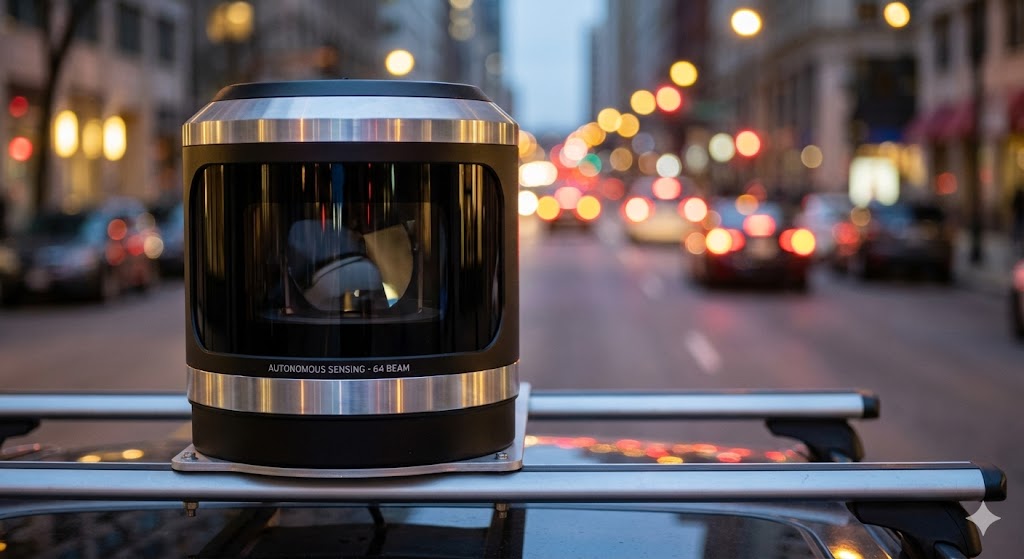
Ultimately, the effective range is a dynamic attribute that underscores the versatility of laser sensors. By accounting for technological, environmental, and target-specific factors, engineers can deploy these sensors to achieve precise, reliable outcomes across industries—from robotics and aerospace to agriculture and healthcare. As laser technology evolves, we can expect even greater ranges and robustness, further expanding their transformative potential in automation and beyond.