Vibration measurement is a critical aspect of condition monitoring, predictive maintenance, and quality control across numerous industries. Traditional contact methods, such as accelerometers, have long been the standard. However, the advent of non-contact measurement technologies, particularly laser displacement sensors, has revolutionized this field by offering unparalleled precision, flexibility, and the ability to measure on delicate or moving surfaces without physical interaction.
At its core, a laser displacement sensor used for vibration measurement operates on the principle of optical triangulation or time-of-flight. In the more common triangulation method, the sensor projects a focused laser beam onto the target surface. The reflected light is then captured by a receiving lens at a known angle and focused onto a position-sensitive detector, such as a CCD or CMOS array. Any minute change in the distance to the target—caused by vibration—results in a shift of the light spot on the detector. This shift is electronically converted into a high-resolution distance measurement. By sampling this distance at an extremely high rate, often in the tens or hundreds of kilohertz, the sensor can capture a detailed displacement-over-time waveform, which is the fundamental representation of vibration.
The key advantages of using laser sensors for vibration are significant. First and foremost is their non-contact nature. This eliminates mass loading, a phenomenon where the weight of a contact sensor alters the vibration characteristics of a lightweight or flexible structure, leading to inaccurate readings. It also allows for measurement on hot, rotating, or otherwise inaccessible surfaces where mounting a sensor is impractical or dangerous. Secondly, laser sensors provide exceptional resolution and frequency response. Modern models can detect sub-micron displacements and capture very high-frequency vibration components, which is essential for analyzing machinery faults like bearing defects or gear mesh issues. The linearity and stability of the measurement are also superior, providing consistent, drift-free data.
The application spectrum for laser-based vibration measurement is vast. In industrial manufacturing, it is used to monitor the health of rotating equipment like turbines, motors, pumps, and fans. By analyzing the vibration spectrum, engineers can identify imbalances, misalignments, looseness, and rolling element bearing failures long before a catastrophic breakdown occurs, enabling cost-effective predictive maintenance. In the automotive industry, laser sensors measure vibrations of engines, components, and even entire vehicle bodies during testing to refine designs for noise, vibration, and harshness (NVH) performance. In the realm of electronics, they are indispensable for assessing the vibration of circuit boards, disk drive heads, and micro-electromechanical systems (MEMS). Furthermore, in civil engineering, laser vibrometers (a specialized type of laser displacement sensor) can assess the structural integrity of bridges, buildings, and wind turbine blades from a safe distance.

Implementing a laser displacement sensor for vibration analysis requires careful consideration of several factors. The target surface's properties are crucial; highly reflective, transparent, or dark absorbent surfaces can scatter or poorly reflect the laser beam, potentially requiring a special coating or the selection of a sensor with adjustable laser power and advanced filtering algorithms. The stand-off distance and measurement range must be chosen to suit the application, ensuring the target remains within the sensor's linear range throughout its vibration cycle. The sampling rate must be at least twice the highest frequency of interest (as per the Nyquist theorem) to avoid aliasing, but in practice, a rate 5 to 10 times higher is often used for accurate waveform representation. Finally, the data acquisition and analysis system is vital. The raw displacement signal is typically processed using Fast Fourier Transform (FFT) algorithms to convert the time-domain waveform into a frequency-domain spectrum, revealing the individual frequency components that make up the complex vibration. This spectral analysis is the primary tool for fault diagnosis.
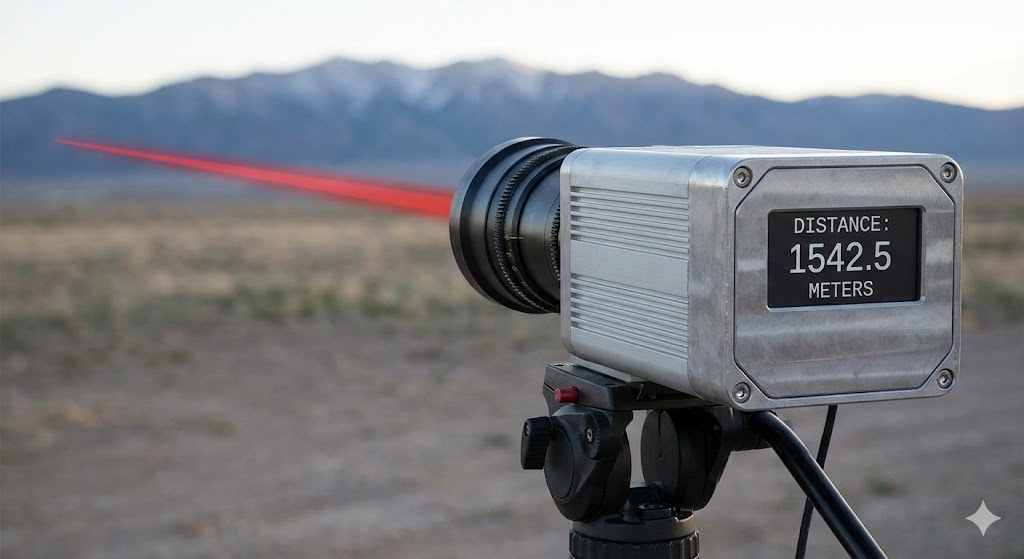
While powerful, the technology has limitations. Environmental factors like ambient light, dust, steam, or oil mist can interfere with the laser beam. The high cost of high-performance laser vibrometers can be a barrier for some applications compared to traditional accelerometers. However, for precision measurements, non-contact requirements, and high-frequency analysis, the benefits overwhelmingly justify the investment.
In conclusion, laser displacement sensors provide a sophisticated, accurate, and versatile solution for modern vibration measurement challenges. By enabling non-contact, high-fidelity capture of dynamic motion, they have become an indispensable tool for engineers and researchers dedicated to improving reliability, safety, and performance in systems ranging from microscopic devices to massive infrastructure. As laser and detector technologies continue to advance, their role in shaping the future of condition monitoring and dynamic analysis is set to grow even more prominent.