DC proximity sensors are essential components in modern industrial automation, offering reliable non-contact detection of metallic objects. These sensors operate on direct current (DC) power supplies, typically ranging from 10 to 30 volts, making them compatible with standard industrial control systems. Unlike mechanical switches, DC proximity sensors use electromagnetic fields to detect the presence of ferrous or non-ferrous metals without physical contact, ensuring minimal wear and extended operational life.
The working principle of DC proximity sensors is based on electromagnetic induction or capacitive sensing. Inductive sensors generate an oscillating electromagnetic field; when a metal object enters this field, eddy currents are induced, causing a change in oscillation amplitude that triggers the sensor output. Capacitive sensors detect changes in capacitance when an object alters the dielectric properties of the sensing area. DC versions provide stable output signals, such as NPN (sinking) or PNP (sourcing) configurations, which interface seamlessly with programmable logic controllers (PLCs) and other automation devices.
Key advantages of DC proximity sensors include high switching speeds, often exceeding 5 kHz, and immunity to environmental factors like dust, moisture, and vibration. They are widely used in applications such as conveyor belt monitoring, robotic assembly lines, and machine safety systems. For instance, in automotive manufacturing, DC sensors precisely detect piston positions in engines, while in packaging industries, they count metallic items on production lines. Their compact designs, including cylindrical, rectangular, and ring-shaped housings, allow installation in confined spaces.
When selecting a DC proximity sensor, engineers must consider factors like sensing distance, material compatibility, and environmental ratings. Standard sensing ranges vary from 2 to 40 mm, with shielded models offering flush mounting capabilities and unshielded types providing longer detection ranges. Temperature tolerance typically spans -25°C to 70°C, with IP67 or higher ratings for protection against water and dust ingress. Regular maintenance involves checking alignment and cleaning sensing surfaces to prevent false triggers.
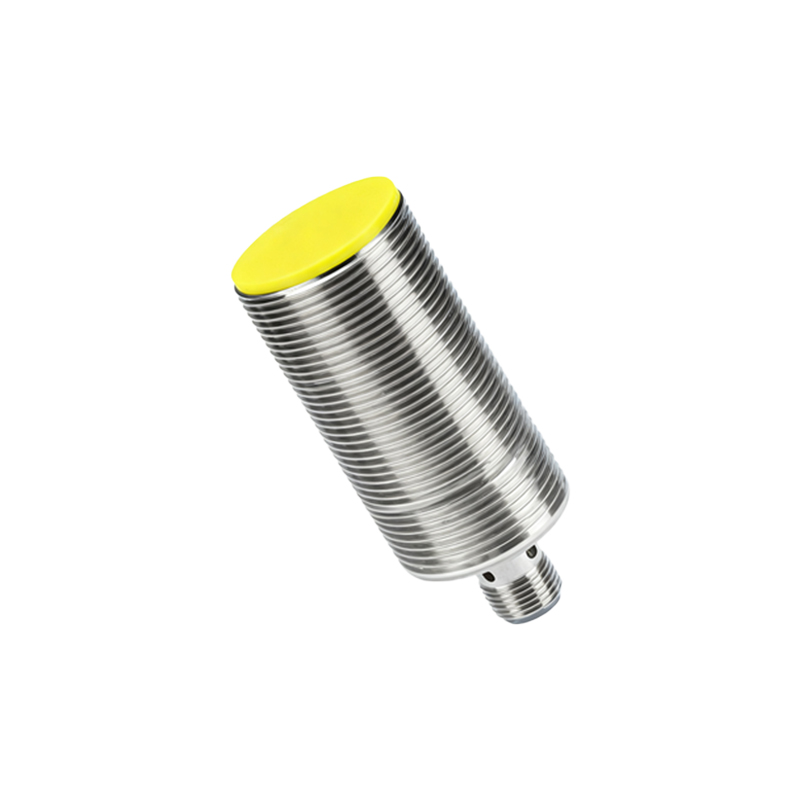
Innovations in DC proximity sensor technology include analog output variants for distance measurement and IO-Link connectivity for real-time diagnostics. These advancements enhance Industry 4.0 integration, enabling predictive maintenance and data-driven optimization. As industries prioritize efficiency and safety, DC proximity sensors remain indispensable for achieving precise, cost-effective automation solutions.
