In the industrial automation and precision measurement landscape, laser displacement sensors are indispensable tools. Their ability to perform non-contact, high-speed, and high-accuracy measurements makes them critical for applications ranging from quality control and robotics to semiconductor inspection and automotive assembly. A common and crucial question from engineers, procurement specialists, and project managers is: "What is the price of a laser displacement sensor?" The answer is not a single figure but a spectrum, typically ranging from approximately $500 to over $5,000 USD per unit. This wide variance is dictated by a complex interplay of technical specifications, performance features, and brand value.
Understanding the core factors influencing laser displacement sensor cost is essential for making an informed purchasing decision. The primary cost driver is the measurement principle and corresponding performance. Sensors utilizing triangulation are common for short to medium ranges and offer a good balance of cost and performance. More advanced confocal chromatic or interferometric principles, which provide exceptional accuracy and capability for measuring transparent or multi-layered surfaces, command a significantly higher price. Directly tied to this is measurement accuracy and resolution. A sensor with sub-micron resolution (e.g., 0.1 µm) will be substantially more expensive than one with micron-level (e.g., 1 µm) or millimeter-level resolution.
The measurement range and stand-off distance also play a pivotal role. A standard sensor with a 10mm range is generally less costly than a specialized long-range sensor capable of measuring up to 500mm or more. Furthermore, laser spot size and type affect price. A fine, focused spot for small feature measurement or a blue laser for improved performance on organic materials (like rubber or food) typically increases the cost compared to standard red laser diodes with larger spots.
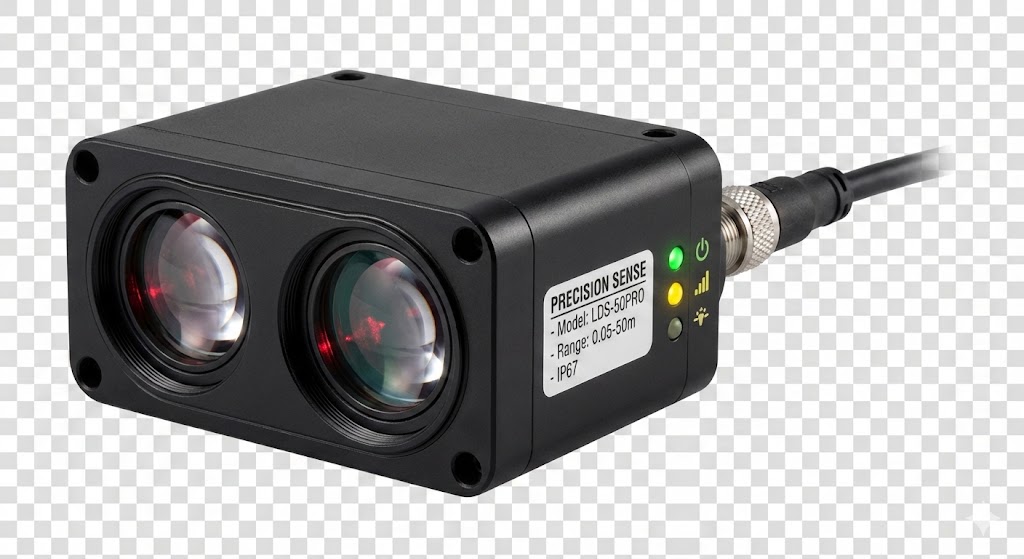
Additional performance features that impact the laser displacement sensor price include sampling speed. High-speed models capable of 50kHz, 100kHz, or even MHz rates for dynamic process monitoring are premium products. Environmental robustness is another key factor. Sensors rated with high IP67/IP68 ingress protection for dust and water resistance, or built to withstand significant vibration and temperature fluctuations, involve more rugged construction and thus higher costs. Integrated advanced functionalities, such as built-in analog and digital outputs (IO-Link), programmable logic, or sophisticated analysis software suites for profile measurement, also add to the unit price.

Beyond technical specs, brand reputation and support are significant components. Established global leaders like Keyence, Omron, Panasonic, and Micro-Epsilon often price their sensors at a premium. This price reflects not only proven reliability and performance but also comprehensive technical support, extensive application engineering, readily available accessories, and strong warranty terms. Conversely, competitive offerings from other reputable manufacturers or newer entrants may provide compelling value for specific applications, potentially offering lower laser displacement sensor prices for comparable specifications.
The procurement channel influences the final cost. Purchasing directly from the manufacturer or an authorized distributor might offer better technical guidance and warranty assurance but at list price. Some volume discounts may apply for OEM or large-quantity orders. Alternatively, secondary market or refurbished units can present cost-saving opportunities, though with potential compromises on the latest features, full calibration, or warranty coverage.
When evaluating cost, it is imperative to consider the total cost of ownership (TCO), not just the initial purchase price. Factors such as calibration frequency, required maintenance, compatibility with existing systems, ease of integration, and the longevity of the sensor all contribute to the long-term value. A slightly higher initial investment in a robust, accurate, and well-supported sensor can prevent costly production errors, downtime, and replacements in the future.
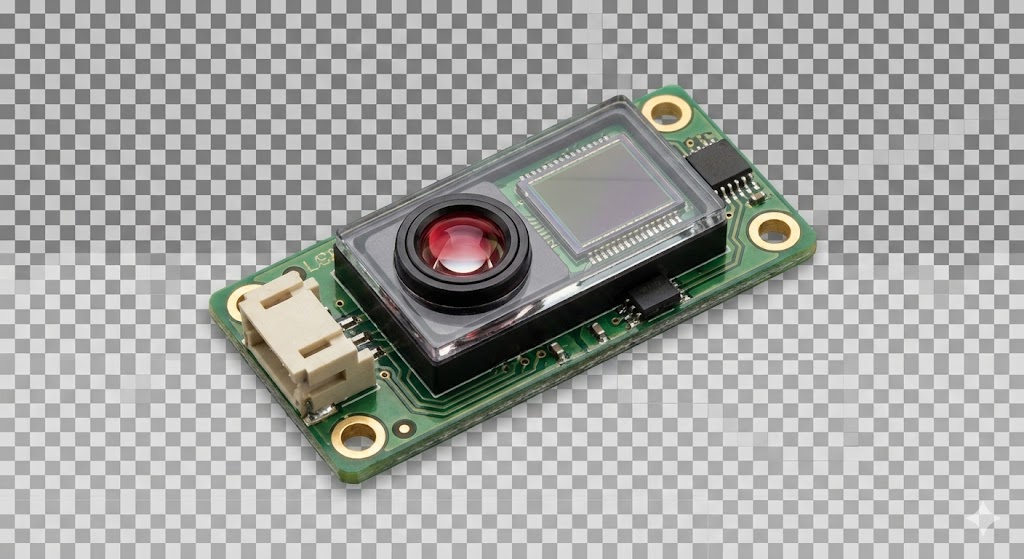
In summary, the laser displacement sensor price is a direct reflection of its capabilities and pedigree. For general-purpose positioning or thickness measurement with moderate accuracy, units can be found in the $500 to $1,500 range. For high-precision laboratory, semiconductor, or advanced manufacturing tasks requiring ultra-fine resolution, high speed, or special material handling, prices readily climb into the $2,000 to $5,000+ bracket. The most effective procurement strategy involves clearly defining the application requirements—necessary accuracy, range, speed, and environmental conditions—and then benchmarking sensors against those needs. Engaging with supplier application engineers for demos or evaluation units is a highly recommended step to ensure performance justifies the investment before finalizing any laser displacement sensor purchase.