The global COVID-19 pandemic has fundamentally altered our approach to public health, safety protocols, and industrial operations. In this transformative landscape, laser sensor technology has emerged as a critical, albeit often unseen, enabler. Far beyond their traditional roles in manufacturing and automation, these precise, non-contact measurement tools are now deployed on the front lines of pandemic management, offering solutions that enhance safety, ensure continuity, and provide valuable data for long-term resilience. This article explores the multifaceted impact of laser sensors across various domains during the pandemic.
One of the most visible applications has been in the realm of public health screening and crowd management. Laser-based infrared thermometers and thermal imaging systems became ubiquitous at airport terminals, hospital entrances, and office buildings. These systems utilize infrared sensors, often enhanced by laser aiming guides, to rapidly and accurately measure body surface temperature from a safe distance. This non-contact method minimizes the risk of cross-contamination between the screener and the individual, a significant advantage over traditional oral or tympanic thermometers. Furthermore, advanced 3D laser scanning and LiDAR (Light Detection and Ranging) sensors are being integrated with video analytics to monitor crowd density in real-time. By creating precise spatial maps, these systems can alert authorities to potential overcrowding in public spaces like train stations or parks, enabling proactive measures to enforce social distancing guidelines.
Within the healthcare infrastructure itself, laser sensors have proven indispensable. In the frantic race to increase ventilator production, manufacturers relied heavily on laser displacement and profile sensors for quality control. These sensors perform micron-accurate measurements of critical components like valves and diaphragms, ensuring every unit functions reliably—a matter of life and death. Similarly, in pharmaceutical labs accelerating vaccine and drug development, laser-based particle analyzers and spectroscopy systems are crucial for characterizing compounds, monitoring reactions, and ensuring purity. The speed and precision of laser analysis directly contribute to shortening development cycles.
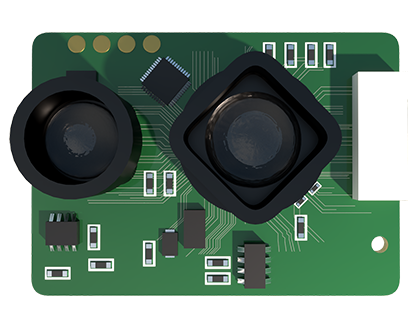
The pandemic accelerated the adoption of automation and robotics to reduce human-to-human contact. Laser sensors are the "eyes" of these systems. Autonomous mobile robots (AMRs) used for disinfection or delivering supplies within hospitals and quarantine facilities navigate using laser scanners (LiDAR) to build maps and avoid obstacles. In logistics and warehouses, facing unprecedented demand, laser sensors guide robotic arms for picking and packing, read barcodes from a distance, and measure parcel dimensions for optimal shipping. This automation, powered by laser sensing, has been vital in maintaining supply chains for essential goods, from medical equipment to groceries, while protecting workers.
On a broader industrial scale, laser sensors have supported business continuity. For factories operating with reduced or distanced staff, predictive maintenance became even more critical. Laser vibrometers can detect subtle anomalies in rotating machinery like motors or pumps from a distance, predicting failures before they cause costly downtime. Similarly, laser gas detectors monitor air quality and leakages in facilities, ensuring a safe environment for skeleton crews. The ability to conduct these inspections remotely or with minimal personnel interaction has been a key factor in keeping essential industries, such as energy, water treatment, and food production, running smoothly.
Looking forward, the legacy of laser sensors in pandemic response points toward a more data-driven and automated future for public health. The integration of environmental laser sensors that can detect aerosol densities or specific pathogens in the air is an area of active research. Combined with IoT platforms, data from myriad laser sensors monitoring temperature, occupancy, air flow, and equipment health can feed into intelligent building management systems. These systems could autonomously adjust ventilation, signal for cleaning, or manage access to optimize for both energy efficiency and pathogen mitigation.

In conclusion, the COVID-19 pandemic acted as a catalyst, rapidly expanding the application horizon for laser sensor technology. From frontline screening and medical device manufacturing to enabling contactless automation and industrial resilience, these devices have demonstrated remarkable versatility and value. Their non-contact nature, precision, and reliability align perfectly with the core requirements of pandemic-era operations: minimizing physical interaction while maximizing safety, efficiency, and data integrity. As we build more resilient systems for the future, the role of laser sensors as foundational components in our technological toolkit is now firmly established.
