In the realm of industrial automation, proximity sensors are indispensable tools for detecting the presence or absence of metallic objects without physical contact. Among the various challenges faced in material handling and sorting processes, distinguishing between non-ferrous metals like copper and ferrous metals such as iron stands out as a critical task. This capability is essential for quality control, recycling operations, and automated assembly lines where material specificity directly impacts efficiency and product integrity.
Proximity sensors operate primarily on two principles: inductive and capacitive sensing. For metal detection, inductive sensors are predominantly used. These sensors generate an electromagnetic field that interacts with metallic targets. When a metal object enters this field, it induces eddy currents, causing a change in the oscillator circuit's amplitude or frequency. The sensor detects this alteration and triggers an output signal. The key to differentiating copper from iron lies in understanding their distinct electromagnetic properties.
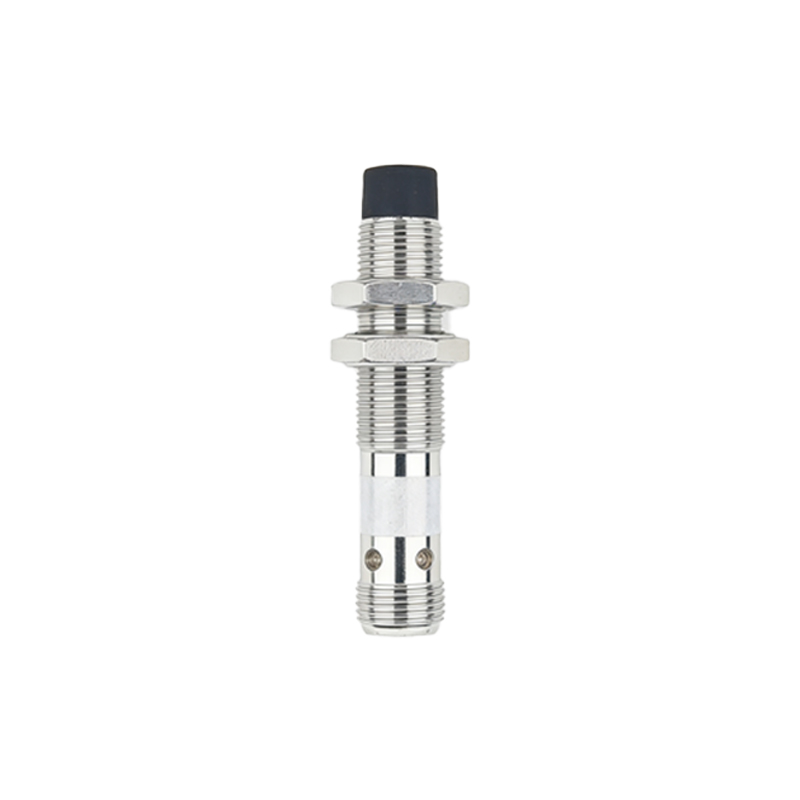
Iron, being a ferromagnetic material, has high magnetic permeability. This means it readily supports the formation of magnetic fields, leading to strong interactions with the sensor's electromagnetic field. As a result, inductive sensors can detect iron at relatively greater distances and with higher sensitivity. The sensor's response is typically robust and consistent due to iron's magnetic characteristics. In contrast, copper is a non-ferrous metal with low magnetic permeability but high electrical conductivity. When copper enters an inductive sensor's field, it generates significant eddy currents due to its conductivity, which dampens the oscillator's energy. However, because copper lacks ferromagnetic properties, the sensing distance is generally shorter compared to iron. This difference in response forms the basis for discrimination.
To effectively distinguish between copper and iron, engineers often rely on specialized inductive sensors with adjustable sensitivity or frequency-based detection methods. Some advanced sensors incorporate multi-frequency technology, where different operating frequencies yield varying responses from materials. For instance, at lower frequencies, the sensor might be more sensitive to ferrous materials like iron, while higher frequencies could enhance detection of conductive non-ferrous metals like copper. By analyzing the amplitude and phase shift of the signal, these sensors can classify materials with high accuracy. Additionally, the use of factor-1 sensors, which are calibrated for all metals, can be paired with signal processing algorithms to identify material types based on threshold values.
In practical applications, environmental factors must be considered. Temperature fluctuations, sensor mounting positions, and the presence of other metals can influence performance. For example, copper alloys or coated materials may exhibit altered electromagnetic responses, necessitating calibration during setup. It is advisable to conduct on-site testing with sample pieces of copper and iron to fine-tune sensor parameters. Moreover, integrating proximity sensors with programmable logic controllers (PLCs) allows for real-time data analysis and automated sorting mechanisms. In recycling plants, this enables efficient separation of scrap metals, reducing contamination and enhancing resource recovery.
While inductive sensors are common, capacitive proximity sensors can also play a role in certain scenarios, particularly for non-metallic materials or when detecting copper through non-conductive barriers. However, for direct metal differentiation, inductive sensors remain the preferred choice due to their reliability and specificity. Industry standards, such as those from IEC 60947-5-2, provide guidelines for sensor performance and installation, ensuring consistent results across diverse operational conditions.
In conclusion, the ability to distinguish copper from iron using proximity sensors hinges on leveraging their electromagnetic disparities. Through careful selection, calibration, and integration with control systems, these sensors enhance automation precision, support sustainable practices, and drive industrial efficiency. As technology evolves, innovations in sensor design and AI-driven analytics promise even greater capabilities in material identification, paving the way for smarter manufacturing environments.