In the rapidly evolving landscape of industrial automation and precision engineering, real-time transmission laser sensors have emerged as a cornerstone technology. These sophisticated devices harness the principles of laser optics and advanced signal processing to deliver instantaneous, high-fidelity data on position, displacement, thickness, and vibration. Unlike conventional sensors that may introduce latency, real-time laser sensors provide continuous data streams with microsecond-level response times, enabling dynamic control systems to react to changes with unprecedented speed and accuracy.
The core mechanism involves emitting a focused laser beam toward a target. The reflected or diffused light is captured by a high-speed photodetector within the sensor. Through techniques like triangulation, time-of-flight (ToF), or interferometry, the sensor calculates precise dimensional or positional data. This information is digitized and transmitted via high-speed industrial communication protocols such as EtherCAT, PROFINET IRT, or IO-Link. The integration of these protocols ensures seamless, deterministic data flow into Programmable Logic Controllers (PLCs), industrial PCs, or cloud-based analytics platforms, forming the backbone of a responsive Industrial Internet of Things (IIoT) ecosystem.
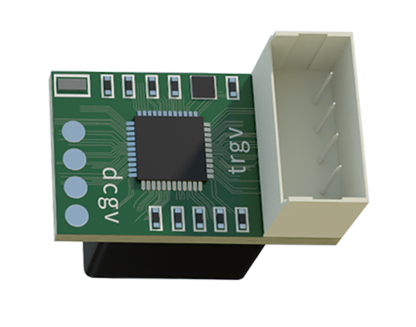
Key advantages of implementing real-time transmission laser sensors are manifold. First, they offer non-contact measurement, eliminating mechanical wear and preventing damage to delicate surfaces. This is critical in industries like semiconductor manufacturing, where even nanometer-scale contamination or physical contact can ruin a wafer. Second, their exceptional resolution and repeatability, often down to the sub-micron level, guarantee consistent quality in applications such as automotive assembly line gap-and-flush measurement or precision robotics guidance. Third, the real-time capability facilitates closed-loop control systems. For instance, in roll-to-roll printing or continuous casting processes, instantaneous thickness feedback allows for immediate adjustment of rollers or dies, minimizing material waste and ensuring product uniformity.

The application spectrum is vast and growing. In automotive manufacturing, these sensors perform real-time weld seam tracking and robotic arm positioning. In electronics, they verify component placement on PCBs. In logistics, they enable high-speed parcel dimensioning and sorting. Furthermore, in condition monitoring, they detect minute vibrations in turbines or motors, predicting maintenance needs before failures occur. The advent of miniaturization and enhanced connectivity options has also paved the way for their integration into collaborative robots (cobots) and portable inspection devices, expanding their utility beyond fixed production lines.
However, deploying these systems requires careful consideration. Environmental factors like ambient light, dust, steam, or target surface properties (e.g., transparency, reflectivity) can influence performance. Modern sensors combat these challenges with features like background suppression, polarized filters, and adaptive algorithms. System integration also demands expertise in selecting the appropriate sensor type, communication interface, and data processing architecture to match the specific latency and precision requirements of the application.
Looking ahead, the convergence of real-time laser sensing with artificial intelligence and edge computing promises even greater advancements. AI algorithms can analyze the continuous data stream to identify complex patterns, predict anomalies, and optimize processes autonomously. As Industry 4.0 and smart factory initiatives accelerate, real-time transmission laser sensors will undoubtedly play an increasingly pivotal role, driving efficiencies, enhancing quality control, and enabling new levels of operational intelligence. Their ability to provide a precise, instantaneous digital representation of the physical world is fundamental to the future of automated and connected industry.