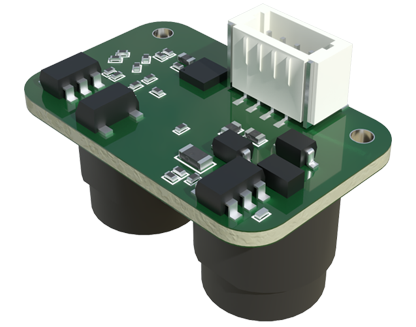
In modern manufacturing environments, the demand for high-precision, non-contact measurement and inspection has never been greater. Laser sensors have emerged as a cornerstone technology for workpiece detection, offering unparalleled accuracy, speed, and reliability. This article delves into the operational principles, key advantages, and practical applications of laser sensors in industrial settings, providing insights for engineers and automation professionals.
At its core, a laser sensor for workpiece detection operates by emitting a focused beam of coherent light towards a target. The sensor then analyzes the reflected light. The most common methods are triangulation and time-of-flight (ToF). In triangulation sensors, a laser diode projects a spot onto the workpiece surface. The reflected light is focused onto a position-sensitive detector (PSD) or a CMOS/CCD array. Any change in the workpiece's distance causes the reflected spot to shift position on the detector, allowing for precise distance or height measurement. This method is exceptionally accurate for short to medium ranges. Time-of-flight sensors, on the other hand, measure the time it takes for a laser pulse to travel to the target and back, calculating distance based on the speed of light. These are better suited for longer ranges.
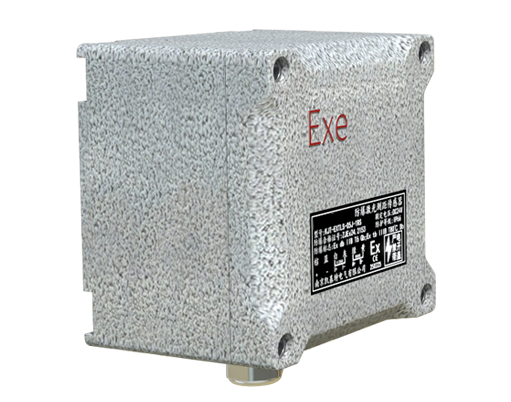
The advantages of using laser sensors for workpiece detection are manifold. First and foremost is precision. Modern laser displacement sensors can achieve sub-micron resolution, enabling the detection of minute variations in thickness, warp, or presence. Speed is another critical factor; laser sensors can perform thousands of measurements per second, making them ideal for high-speed production lines where throughput is paramount. Their non-contact nature eliminates the risk of damaging delicate workpieces or causing wear on the sensor itself, a significant drawback of mechanical probes. Furthermore, laser sensors are largely immune to environmental factors like ambient light (when properly shielded and filtered) and can reliably detect objects regardless of color or material, though surface reflectivity can require parameter adjustments.
In practical application, laser sensors are deployed across a vast array of industrial tasks. A primary function is presence/absence verification. On an assembly line, a sensor can confirm that a component, such as a screw or a gasket, is present before the next manufacturing step. Dimensional gauging is another widespread use. Sensors can measure the diameter of shafts, the thickness of rolled metal or glass, and the height of components on a PCB, ensuring they are within specified tolerances. They are also indispensable in profile scanning, where multiple sensors or a single scanning sensor captures a 2D or 3D contour of a complex workpiece for comparison against a CAD model. Additionally, laser sensors play a crucial role in positioning and alignment, guiding robots to pick and place items accurately or aligning parts for welding or assembly.
Implementing a laser sensor system requires careful consideration. The choice between triangulation and ToF depends on the required range and accuracy. The surface properties of the workpiece—whether it is shiny, dark, transparent, or textured—can affect the signal and may necessitate sensors with automatic gain control or specialized filters. Integration with Programmable Logic Controllers (PLCs) and industrial networks (like EtherCAT or PROFINET) is standard, allowing for real-time process control and data logging for quality assurance.

In conclusion, laser sensors represent a transformative technology for workpiece detection in industrial automation. Their ability to deliver fast, precise, and reliable non-contact measurements addresses the core challenges of modern manufacturing: increasing quality, boosting efficiency, and reducing waste. As sensor technology continues to advance with smarter features and easier integration, their role in enabling flexible and intelligent factories will only become more pronounced. For engineers designing the production systems of tomorrow, a deep understanding of laser sensing capabilities is not just an advantage—it is a necessity.