In the rapidly evolving landscape of industrial automation and precision control, proximity and displacement sensors are fundamental components. Selecting the right brand is not merely a procurement decision; it is a strategic choice impacting system reliability, measurement accuracy, and long-term operational costs. This article provides an authoritative overview of leading sensor brands, evaluated based on technological innovation, product portfolio breadth, application-specific performance, and global support networks.
The market for these sensors is dominated by several established giants, each with distinct strengths. Sick AG stands out for its robust photoelectric and inductive proximity sensors, renowned for exceptional durability in harsh environments. Their focus on Industry 4.0 readiness, with advanced diagnostics and IO-Link compatibility, makes them a preferred choice for smart factory applications. Following closely is Pepperl+Fuchs, a pioneer in intrinsic safety and sensing technology. Their expertise is particularly evident in hazardous areas, offering a comprehensive range of inductive, capacitive, and ultrasonic sensors that set industry benchmarks for safety and precision.
For high-accuracy displacement measurement, especially using laser triangulation or confocal chromatic principles, Keyence Corporation and Micro-Epsilon are often the top contenders. Keyence is celebrated for its user-friendly interface, ultra-high-speed measurement capabilities, and innovative solutions that simplify complex inspection tasks. Their laser displacement sensors offer remarkable resolution and stability. Micro-Epsilon, conversely, is the specialist's choice, providing unparalleled precision in sub-micron and nanometer ranges for demanding R&D and quality control applications, such as in semiconductor manufacturing.
Balluff GmbH and ifm electronic excel in delivering system integration readiness. Balluff's extensive portfolio, including innovative RFID systems alongside traditional sensors, and their strong emphasis on connectivity solutions, cater to highly automated production lines. ifm electronic is praised for its consistent quality, intuitive setup via clear visual indicators, and a vast array of inductive and capacitive sensors known for their longevity and cost-effectiveness in standard industrial settings.
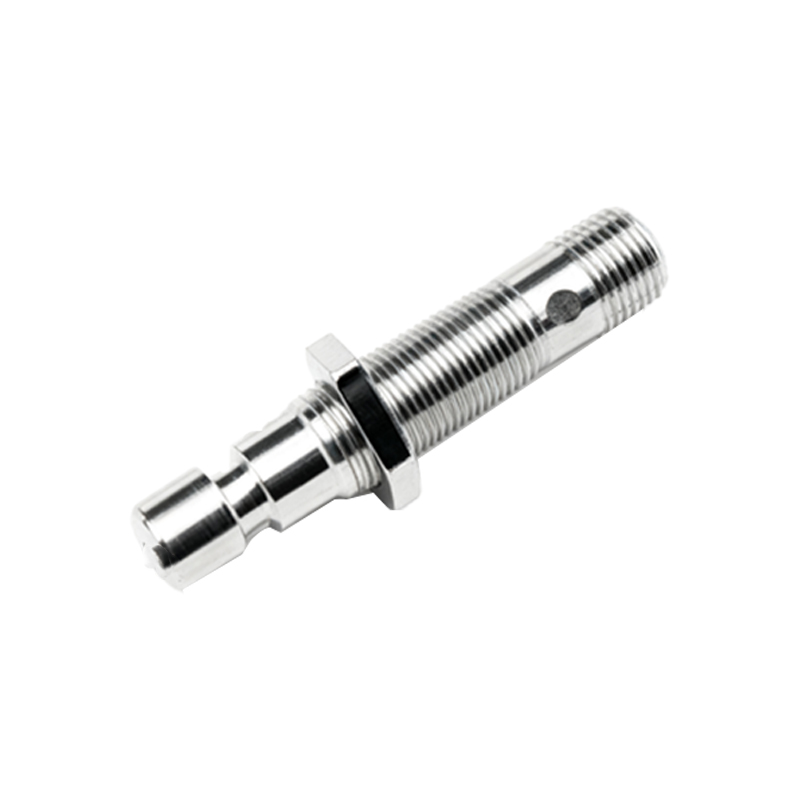
Omron Corporation and Rockwell Automation (Allen-Bradley) offer compelling solutions within broader automation ecosystems. Omron provides a reliable, diverse sensor lineup with strong performance in factory automation, backed by global service. Rockwell's sensors are deeply integrated with their control platforms (like ControlLogix and CompactLogix), offering seamless communication and simplified engineering for users heavily invested in their architecture.
Emerging trends are shaping brand selection. The integration of IIoT (Industrial Internet of Things) capabilities is now a critical differentiator. Brands that embed predictive maintenance data, energy consumption metrics, and easy cloud connectivity directly into their sensors are gaining traction. Furthermore, the demand for miniaturization without sacrificing performance or sensing distance continues to drive R&D investments from all major players.
In conclusion, there is no single "best" brand universally. The optimal choice depends on the specific application parameters: required accuracy, environmental conditions (temperature, contaminants, pressure), necessary output type (analog, digital, IO-Link), and integration framework. For rugged, general-purpose proximity detection, Pepperl+Fuchs or ifm are excellent. For critical, high-speed displacement measurement, Keyence or Micro-Epsilon lead. For a balanced approach within a connected factory vision, Sick or Balluff are superior. A thorough evaluation of technical specifications against operational requirements, supported by consultation with engineering specialists, remains the most reliable path to a successful investment in sensing technology.