In the precision-driven world of industrial automation, robotics, and surveying, laser distance sensors are indispensable tools for achieving accurate, non-contact measurements. At the heart of these sophisticated devices lies a critical yet often overlooked component: the protective front glass or window. This element is far more than a simple dust cover; it is a precisely engineered optical interface that directly influences sensor performance, reliability, and longevity. This article delves into the technical considerations surrounding laser distance sensor glass, exploring material selection, coating technologies, and the impact on overall system functionality.
The primary role of the sensor window is to seal and protect the delicate internal optics—including the laser diode, lens assembly, and receiver—from harsh environmental contaminants. Dust, moisture, oil mist, and chemical vapors prevalent in industrial settings can quickly degrade unprotected optical surfaces, leading to signal attenuation, measurement drift, or complete sensor failure. However, introducing any material in the optical path inherently poses challenges. The glass must provide robust physical protection while minimizing its interference with the laser beam's transmission and reception.
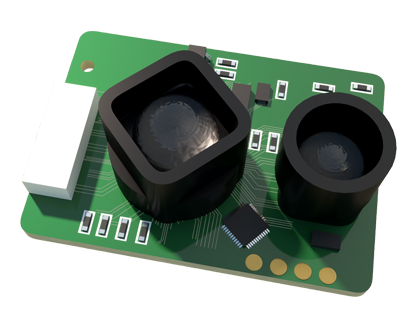
Material selection is the first critical decision. For most standard applications, optical-grade glasses like BK7 or fused silica are common choices. BK7, a borosilicate crown glass, offers excellent homogeneity, good transmission in the visible and near-infrared spectra (where many laser diodes operate), and favorable mechanical properties for polishing and coating. Fused silica (synthetic quartz) is preferred for applications involving higher-power lasers or broader wavelength ranges due to its superior UV transmission, extremely low thermal expansion coefficient, and high laser damage threshold. For environments requiring exceptional durability against impact or scratching, synthetic sapphire (aluminum oxide) is an elite option. While more costly, sapphire boasts remarkable hardness, second only to diamond, and maintains excellent optical clarity across a wide spectrum.
The raw glass substrate is merely the foundation. To optimize performance, advanced optical coatings are applied via vacuum deposition processes. These coatings are tailored to the sensor's specific laser wavelength. The most fundamental is an Anti-Reflective (AR) coating. Uncoated glass reflects approximately 4% of incident light per surface due to Fresnel reflections. For a sensor window, this means a potential loss of signal strength both on the outgoing beam and the returning signal. A high-quality AR coating can reduce this reflection to less than 0.5% per surface at the target wavelength, dramatically improving signal-to-noise ratio and measurement range. Furthermore, broadband AR coatings are available for sensors that utilize multiple wavelengths or have a wide operational bandwidth.
Beyond AR coatings, the surface of the sensor glass can be engineered with additional functional layers. Hydrophobic and oleophobic coatings cause water and oils to bead up and roll off, preventing the formation of films that could scatter or absorb the laser light. This is crucial for maintaining performance in wet or greasy conditions. For extremely demanding environments, such as food processing or chemical plants, a durable hard coat may be applied to enhance resistance to abrasive cleaning processes or mild chemical exposure. In some cases, a conductive Indium Tin Oxide (ITO) coating can be applied to create a heated window, preventing condensation or frost formation in cold, humid environments—a common failure mode for outdoor or refrigerated applications.

The physical design and integration of the glass are equally important. The window must be mounted securely with a reliable seal, often using O-rings or bonded adhesives that are resistant to environmental aging. The glass should be installed at a slight angle, typically a few degrees off perpendicular to the optical axis. This angled mounting is a key design tactic to prevent any reflected portion of the laser beam from bouncing directly back into the receiver, which would create a false short-distance measurement known as "optical crosstalk" or "ghosting." Instead, the angled reflection is directed harmlessly out of the sensor's field of view.
Performance degradation often manifests subtly. A dirty or degraded window can cause a gradual reduction in maximum measurable distance, increased measurement noise (jitter), or a higher incidence of measurement dropouts. In structured-light or profile-sensing applications, it can introduce distortions. Therefore, implementing a regular inspection and maintenance protocol is essential. Cleaning should be performed only with recommended materials, such as lens tissue and appropriate optical cleaning solutions, to avoid scratching delicate coatings. For critical applications, some sensors offer diagnostic outputs monitoring received signal strength, which can serve as an early warning for window fouling.
In conclusion, the laser distance sensor glass is a sophisticated optical component integral to system performance. Its selection involves a careful balance of material properties, specialized coatings, and mechanical design tailored to the specific operational wavelength and environmental challenges. Specifying a high-quality, correctly engineered window is not an area for compromise; it is a direct investment in measurement accuracy, long-term stability, and reduced total cost of ownership. As sensor technology advances towards higher speeds, greater precision, and more challenging deployment environments, the role of this protective optical interface will only grow in significance, demanding continued innovation in materials science and thin-film coating technology.