Proximity sensors are indispensable components in modern industrial automation, providing non-contact detection of metallic and, in some cases, non-metallic objects. Their reliability, speed, and durability make them superior to mechanical limit switches in countless applications. Selecting the right sensor, however, requires careful consideration of several technical and environmental factors. This guide outlines the critical parameters for an optimal selection process.
The first and most fundamental choice is the sensing technology. Inductive proximity sensors are the most common, detecting ferrous and non-ferrous metals without physical contact. They are ideal for metal detection tasks like counting, positioning, or end-of-travel sensing. Capacitive sensors can detect nearly any material, including liquids, plastics, wood, and glass, by measuring changes in capacitance. They are perfect for level detection, material handling, and presence sensing of non-metals. Ultrasonic sensors use sound waves to detect objects and measure distance, suitable for clear object detection and applications requiring precise distance measurement, regardless of color or material. Photoelectric sensors, while sometimes categorized separately, offer long-range detection and are excellent for sensing small objects or specific colors.
Once the technology is determined, the next critical specification is the sensing distance, or "rated operating distance (Sn)." This is the nominal distance at which the sensor is guaranteed to switch under standardized conditions. Always select a sensor with a rated distance greater than your required mounting distance, applying a safety factor (typically 0.5 to 0.7 of Sn) to account for temperature fluctuations, voltage variations, and target material differences. For inductive sensors, the target material significantly affects the effective sensing range; steel is the standard, while aluminum, brass, and copper have reduction factors.
The physical characteristics of the sensor are equally important. Housing material is crucial for the environment. Nickel-plated brass or stainless-steel housings offer excellent corrosion resistance for harsh conditions, while PBT or PVC plastic housings are suitable for general industrial use. The sensor's shape—cylindrical (threaded barrel), rectangular, or ring-shaped—depends on the mounting constraints. Cylindrical sensors are the most versatile and widely used. The electrical connection type, whether pre-wired, quick-disconnect (M8, M12 connectors), or terminal box, affects installation and maintenance ease.
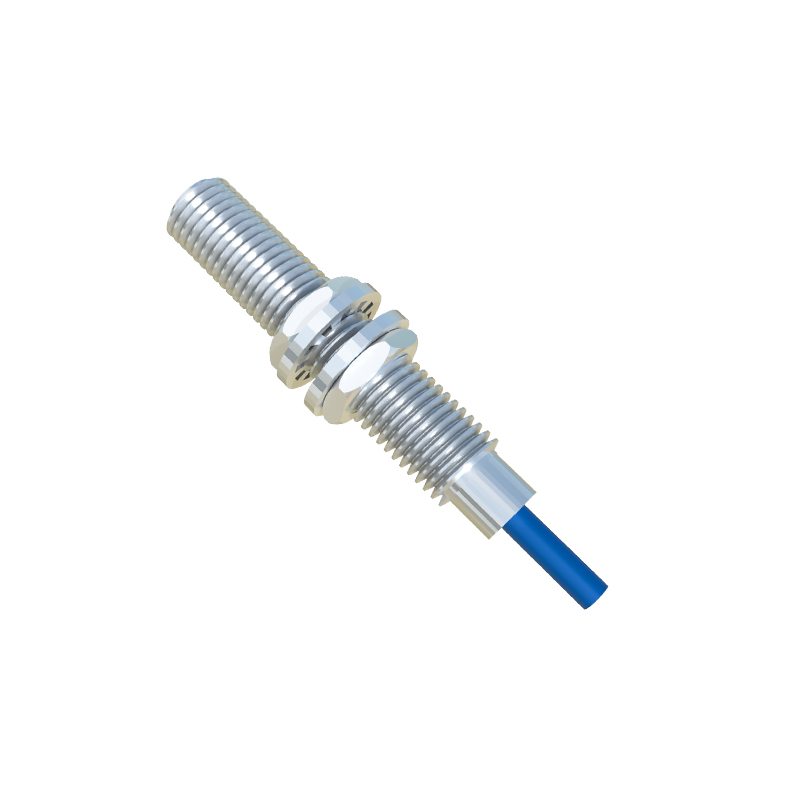
Output configuration must match the control system. Two-wire sensors are simple to wire in series with the load but have a residual leakage current. Three-wire DC sensors (PNP or NPN) are the industry standard, offering separate power, ground, and signal wires. PNP (sourcing) outputs switch the positive voltage to the load, while NPN (sinking) outputs switch the ground. The choice depends on your PLC or controller input card compatibility. Analog outputs (4-20mA or 0-10V) are used for continuous distance measurement. Don't forget to check the output current rating to ensure it can drive the connected load.
Environmental conditions dictate the required protection ratings. Ingress Protection (IP) rating (e.g., IP67, IP69K) defines protection against dust and liquids. An IP67 rating is standard for washdown environments, while IP69K is for high-pressure, high-temperature cleaning. For outdoor or highly corrosive settings, look for specific chemical resistance certifications. Operating temperature range must encompass the ambient temperature of the application. In environments with strong electromagnetic interference (EMI) or welding currents, sensors with welded-state immunity or shielded designs are mandatory to prevent false triggering.
Finally, consider special application requirements. For flush-mountable inductive sensors, ensure they can be installed flush in metal without affecting performance. For sensing small or precise targets, choose a sensor with a reduced sensing face or a specialized factor-1 design. In high-speed applications, verify the sensor's switching frequency (response time) is fast enough to detect objects passing at the maximum rate. For food and beverage or pharmaceutical applications, select sensors with FDA-compliant materials and hygienic designs that prevent bacterial growth.
In conclusion, a systematic approach to proximity sensor selection involves: 1) Defining the target material and selecting the appropriate technology. 2) Calculating the required sensing distance with a safety margin. 3) Choosing a housing and form factor for the mechanical and environmental conditions. 4) Specifying the correct electrical output for the control system. 5) Verifying protection ratings for the operating environment. Consulting with sensor manufacturers' technical datasheets and application engineers is always recommended for complex or critical installations. Proper selection ensures maximum reliability, longevity, and performance of your automated systems.