In the realm of precision measurement and industrial automation, phase laser ranging sensors have emerged as a cornerstone technology. Unlike simpler time-of-flight (ToF) methods, phase-based laser rangefinders offer superior accuracy and resolution for medium-range applications, making them indispensable in fields such as surveying, manufacturing, robotics, and construction. This article delves into the operational principles, key advantages, practical applications, and critical selection criteria for these sophisticated devices.
The fundamental principle of a phase laser ranging sensor is based on measuring the phase shift between a modulated laser beam emitted towards a target and the reflected beam received by the sensor. The system emits a continuous-wave (CW) laser beam whose intensity is modulated at a specific high frequency. This modulated light travels to the target, reflects, and returns to the detector. The returning signal has undergone a phase delay proportional to the distance traveled. By precisely comparing the phase difference (Φ) between the transmitted and received signals, the sensor's internal processor calculates the distance (D) using the formula: D = (c * Φ) / (4π * f_mod), where 'c' is the speed of light and 'f_mod' is the modulation frequency. This method allows for highly accurate distance measurements, often down to sub-millimeter levels, as the system measures the phase shift rather than an extremely short time interval.
The core advantages of phase laser rangefinders stem from this principle. First and foremost is their exceptional accuracy and resolution, which far exceeds that of standard pulse-based ToF sensors at comparable ranges, typically up to several hundred meters. They provide stable and repeatable measurements even on diffuse surfaces. Secondly, they are less susceptible to errors from varying target reflectivity compared to some intensity-based methods, as the measurement relies on phase, not signal amplitude. Modern sensors incorporate advanced signal processing and filtering algorithms to mitigate noise from ambient light and other sources, ensuring reliable operation in diverse industrial environments.
The applications for phase laser ranging sensors are vast and varied. In industrial automation, they are crucial for non-contact positioning, profile scanning, and fill-level monitoring in bins or silos. Robotics utilizes them for precise object localization, navigation, and collision avoidance. In the construction and civil engineering sectors, they are employed for alignment, deformation monitoring, and volume calculations. Surveying and mapping professionals rely on them for topographic measurements and as integral components of total stations. Furthermore, they are finding increasing use in emerging fields like autonomous vehicle perception systems for short to medium-range obstacle detection.
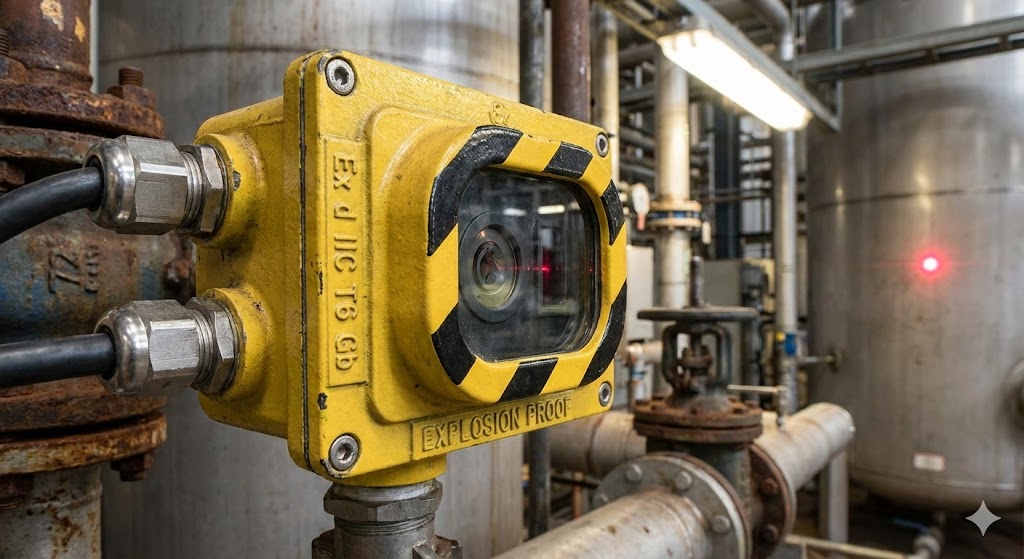
Selecting the right phase laser ranging sensor for a specific application requires careful consideration of several technical parameters. The primary specification is the measurement range, which must encompass the minimum and maximum distances required. Closely tied to this is the accuracy and resolution, usually specified in millimeters or even micrometers. The measurement rate or frequency determines how quickly the sensor can update distance readings, which is critical for dynamic or high-speed applications. The laser class (typically Class 1 or Class 2) is vital for safety compliance, indicating the potential hazard to human eyes. Environmental ratings like IP (Ingress Protection) codes define the sensor's resilience to dust and water, essential for harsh factory floors or outdoor use. Other factors include the type of output interface (analog voltage/current, digital protocols like RS-485, Ethernet, or IO-Link), power supply requirements, and physical characteristics like housing size and mounting options. Engineers must also consider the target surface properties; while phase sensors perform well on most surfaces, highly reflective or absorbent materials may require specific sensor models with adjustable laser power or receiver sensitivity.
In conclusion, phase laser ranging sensors represent a mature yet continually evolving technology that bridges the gap between high-precision laboratory instruments and rugged industrial sensors. Their ability to deliver micron-level accuracy in real-time makes them a powerful tool for engineers tasked with improving quality, efficiency, and automation. As modulation techniques and signal processing advance, we can expect these sensors to become even more compact, affordable, and integrated into the smart systems driving Industry 4.0. Understanding their underlying technology and selection criteria is paramount for leveraging their full potential in solving complex measurement challenges.