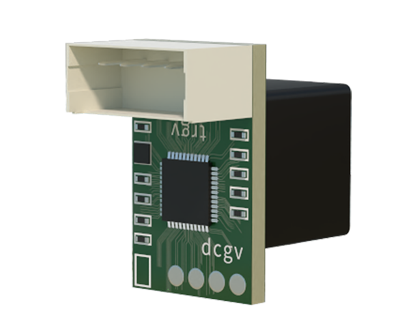
In the realm of industrial automation, robotics, and precision manufacturing, the demand for ultra-accurate positioning has never been higher. Laser platform positioning sensors have emerged as a cornerstone technology, enabling micron-level accuracy and repeatability in dynamic environments. Unlike traditional mechanical or ultrasonic sensors, these systems utilize laser triangulation, time-of-flight (ToF), or interferometric principles to measure distance and position without physical contact, thereby eliminating wear and ensuring long-term stability.
The core operating principle of a laser positioning sensor often involves projecting a focused laser beam onto a target surface. A receiving element, such as a CCD or CMOS array, detects the reflected light. By analyzing the displacement of the light spot on the detector, the sensor calculates the precise distance to the target through triangulation. For longer ranges, ToF sensors measure the time delay between the emitted laser pulse and its return. The result is real-time, high-resolution data on position, displacement, or vibration, often at sampling rates exceeding several kilohertz.

Key advantages of modern laser positioning sensors are numerous. Their non-contact nature makes them ideal for measuring delicate, hot, or fast-moving objects. They offer exceptional resolution, down to the sub-micron level in some models, and are largely immune to environmental factors like electromagnetic interference when properly shielded. Furthermore, advancements in integrated optics and digital signal processing have led to more compact, robust, and cost-effective designs. These sensors now commonly feature onboard processors for edge computing, allowing for direct output of calibrated measurement values and simplified integration with PLCs (Programmable Logic Controllers) and industrial networks like EtherCAT or PROFINET.
Applications span a diverse range of industries. In semiconductor manufacturing, they are critical for wafer alignment and lithography stage control. In automotive assembly, they ensure precise robot guidance for welding and part placement. Coordinate Measuring Machines (CMMs) rely on them for dimensional metrology, while in logistics, they facilitate automated guided vehicle (AGV) navigation and parcel dimensioning. Emerging fields such as additive manufacturing (3D printing) use these sensors for in-process monitoring of layer height and part geometry, ensuring print quality and reducing waste.

Selecting the right laser positioning sensor requires careful consideration of several parameters. Measurement range, standoff distance, spot size, and resolution must align with the application. The type of target surface (e.g., reflective, matte, transparent) significantly impacts performance; some sensors are equipped with specialized algorithms to handle challenging surfaces. Environmental conditions like ambient light, dust, and temperature fluctuations also dictate the choice of housing class (e.g., IP67 for dust and water resistance) and laser safety class (typically Class 2 or Class 1).
Looking ahead, the future of laser platform positioning is intertwined with Industry 4.0 and smart factory concepts. Integration with AI and machine learning algorithms will enable predictive maintenance and adaptive control, where sensors not only measure but also interpret data trends to optimize processes. The miniaturization of components will continue, paving the way for their use in micro-robotics and medical devices. Furthermore, the development of multi-point and profile sensors, which capture entire lines or arrays of data instead of a single point, is expanding their role into full 3D scanning and inspection tasks.
In conclusion, laser platform positioning sensors are indispensable tools for modern precision engineering. Their evolution from specialized laboratory instruments to robust, integrated industrial components has democratized access to high-accuracy measurement. As technology progresses, these sensors will become even more intelligent, connected, and versatile, solidifying their role as the eyes of automated systems and driving further advancements in manufacturing quality and efficiency.