Laser welding has revolutionized modern manufacturing, offering unparalleled precision, speed, and strength in joining materials. At the heart of this advanced technology lies a critical component often overlooked: the sensor system. These sophisticated devices are the eyes and ears of a laser welding machine, enabling it to perform with the accuracy and reliability demanded by industries from aerospace to microelectronics. Without them, the powerful laser beam would be an uncontrolled tool, incapable of the consistent, high-quality welds required today.
Sensors in laser welding systems perform a multitude of essential functions. Their primary role is process monitoring and control. They continuously gather real-time data on key parameters such as seam tracking, weld pool geometry, temperature distribution, and plasma plume characteristics. This data is instantly fed back to the machine's control unit, which can make micro-adjustments to laser power, focus position, welding speed, or gas flow. This closed-loop control is vital for compensating for material inconsistencies, part fit-up variations, or thermal distortion during the weld, ensuring every joint meets specification.
Several key sensor types are deployed in modern laser welding equipment. Optical sensors, including CCD and CMOS cameras, are ubiquitous. They are used for pre-weld seam finding and tracking, often employing laser line projection to identify the joint's exact path in three dimensions. During welding, pyrometers and photodiodes monitor thermal radiation from the weld pool and plasma. Pyrometers measure temperature, while photodiodes detect specific wavelengths of light emitted by the plasma, which correlate with weld penetration depth and the presence of defects like porosity or spatter. Acoustic emission sensors listen for high-frequency sounds generated by the welding process, which can signal crack formation or other discontinuities. Spectrometers represent a more advanced category, analyzing the spectral composition of the plasma to determine the chemical composition of the vaporized material, crucial for detecting contamination or ensuring the correct filler material is being used.
The selection of the appropriate sensor suite depends heavily on the application. For high-speed, repetitive welding of simple lap or butt joints on automotive components, a robust laser seam tracker might be sufficient. For welding safety-critical aerospace components from titanium or nickel alloys, a multi-sensor approach integrating pyrometry, plasma monitoring, and possibly acoustic emission is necessary to guarantee absolute integrity. In the delicate world of medical device or battery welding, where heat input must be meticulously controlled, temperature-focused sensors like pyrometers are paramount. The material being welded also dictates sensor choice; aluminum and copper, with their high reflectivity and thermal conductivity, present different sensing challenges compared to steel.
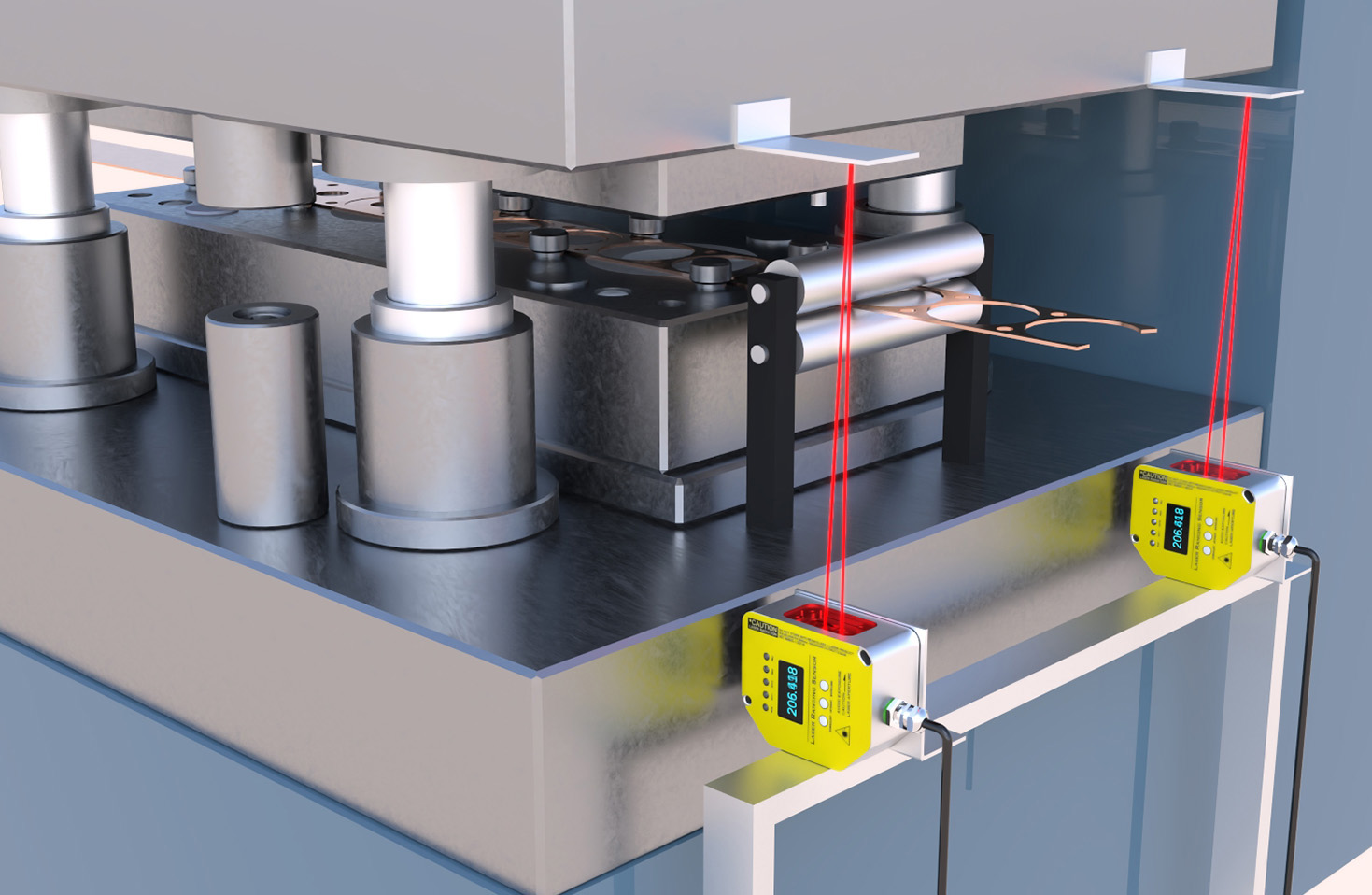
Integrating these sensors effectively presents its own set of challenges. The welding environment is hostile, with intense light, spatter, fumes, and electromagnetic interference. Sensors must be ruggedly packaged, often with protective windows and purge gas systems to keep optics clean. Their placement is critical to avoid interference with the welding head's movement or shielding gas nozzles. Furthermore, the vast amount of data generated requires powerful software algorithms to process signals in real-time, distinguishing meaningful process signatures from background noise. This software intelligence is what transforms raw sensor data into actionable control commands.
The future of laser welding sensors points towards greater integration and intelligence. The trend is moving beyond monitoring to predictive process control and quality assurance. Machine learning algorithms are being trained on vast datasets of sensor information correlated with post-weld quality inspections. This allows systems to not only correct processes in real-time but also to predict potential defects before they occur. Furthermore, the integration of in-situ, non-destructive evaluation sensors, capable of verifying weld integrity without stopping production, is a key research area. As laser welding advances into new materials and more complex joint geometries, the role of advanced, multi-modal sensor systems will only become more central to achieving reliable, automated, and intelligent manufacturing.
