Proximity sensors are widely used in industrial automation, robotics, and IoT applications to detect the presence or absence of objects within a specific range without physical contact. These sensors, including inductive, capacitive, and ultrasonic types, provide critical data for systems requiring precise object detection. One common method to interface these sensors with control systems or computers is through serial port output, which enables reliable data transmission over distances.
Serial communication, particularly using protocols like RS-232 or UART (Universal Asynchronous Receiver/Transmitter), offers a straightforward way to transmit sensor data. When a proximity sensor detects an object, it typically generates a digital signal or analog value. This output is converted into a serial data stream, often in ASCII or binary format, and sent via a serial port to a host device such as a PLC, microcontroller, or PC. For example, an inductive proximity sensor might output a simple "1" when an object is near and "0" when it is absent, transmitted as a character string through the serial interface.
Implementing serial port output for proximity sensors involves several key steps. First, the sensor must be connected to a serial interface module or microcontroller that handles data conversion. Wiring typically includes power, ground, and data lines, with attention to voltage levels to match the serial port specifications (e.g., ±3 to ±15V for RS-232). Next, configuration of communication parameters is essential: baud rate (common rates include 9600 or 115200 bps), data bits (usually 8), stop bits (1 or 2), and parity (none, even, or odd). These settings must align between the sensor and receiving device to ensure accurate data interpretation.
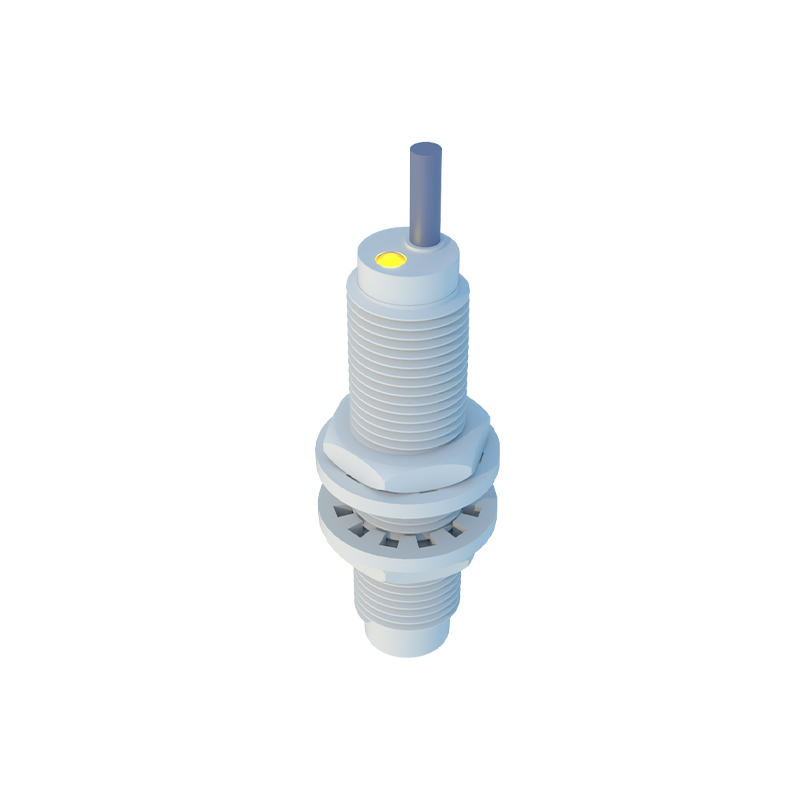
In practice, proximity sensors with serial output are deployed in scenarios like conveyor belt systems, where they detect items and trigger actions via serial commands. For instance, in a packaging line, a sensor might send a signal through a serial port to a computer, which then logs the event or activates a robotic arm. The advantages of using serial communication include simplicity, low cost, and compatibility with legacy systems. However, limitations exist, such as slower data rates compared to modern interfaces like USB or Ethernet, and susceptibility to noise in long cable runs, which can be mitigated with shielded cables or repeaters.
To optimize performance, developers should consider factors like data format consistency and error handling. Many sensors support custom data frames, allowing users to include identifiers or checksums for validation. Additionally, software on the receiving end, such as terminal emulators or custom scripts, must parse the serial data correctly. For example, a Python program using the PySerial library can read incoming bytes, convert them to readable values, and integrate with databases or control algorithms. This flexibility makes serial output a versatile choice for diverse applications, from simple presence detection to complex monitoring systems.
In summary, serial port output remains a reliable method for transmitting proximity sensor data, especially in environments where robustness and simplicity are prioritized. By understanding the setup, configuration, and integration processes, users can effectively leverage these sensors to enhance automation and data collection. As technology evolves, serial interfaces continue to adapt, supporting new sensor types and communication standards while maintaining backward compatibility for existing installations.