In modern industrial automation, laser sensor technology has become a cornerstone for achieving high-precision motor control. This article delves into the integration of laser sensors with motor systems, exploring the principles, applications, and benefits of this sophisticated control methodology.
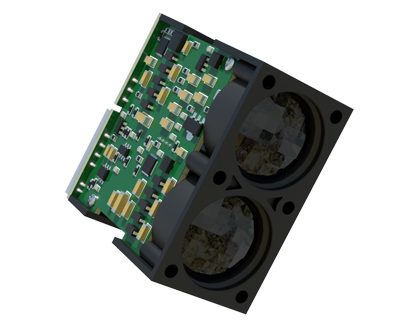
Laser sensors operate by emitting a focused beam of light and measuring the reflection from a target object. This allows for non-contact, real-time detection of position, distance, speed, and even surface characteristics. When coupled with motor control systems, these sensors provide critical feedback that enables closed-loop control, significantly enhancing accuracy and responsiveness.
The core of laser sensor-based motor control lies in the feedback mechanism. Traditional open-loop motor systems rely on predefined inputs without verification of actual performance, leading to potential errors in positioning or speed. In contrast, laser sensors feed precise data back to the controller—often a programmable logic controller (PLC) or a dedicated motion controller—which continuously adjusts the motor's operation. This ensures that the motor follows the desired trajectory or maintains specific parameters, such as in robotic arms, CNC machines, or conveyor systems.
One prominent application is in automated manufacturing lines, where laser sensors guide motors to position components with micron-level precision. For instance, in assembly processes, a laser sensor can detect the exact location of a part, and the control system directs a servo motor to align it correctly. This reduces waste, improves product quality, and increases throughput. Similarly, in packaging machinery, laser sensors monitor the movement of items on a conveyor belt, adjusting motor speeds to synchronize with downstream operations.

Another key area is in safety and monitoring. Laser sensors can detect anomalies, such as unexpected obstructions or deviations in motor-driven equipment, triggering immediate shutdowns or corrective actions. This proactive approach minimizes downtime and prevents damage, contributing to overall system reliability.
The integration process involves selecting appropriate laser sensors—considering factors like range, resolution, and environmental conditions—and interfacing them with motor drives via analog or digital signals. Modern systems often utilize Ethernet-based protocols, such as EtherCAT or PROFINET, for seamless communication and faster data exchange. Additionally, software algorithms play a vital role in processing sensor data and optimizing control loops, with machine learning techniques emerging to predict and compensate for dynamic changes.
Benefits of using laser sensors for motor control are manifold. They offer superior accuracy compared to mechanical encoders or proximity sensors, with some models achieving sub-micron resolution. Their non-contact nature reduces wear and tear, lowering maintenance costs. Moreover, they enhance flexibility, as the same sensor can be reprogrammed for different tasks, adapting to evolving production needs.
However, challenges exist, such as sensitivity to ambient light or reflective surfaces, which can be mitigated through proper calibration and shielding. Cost may also be a consideration, though the long-term gains in efficiency often justify the investment.
In summary, laser sensor control for motors represents a leap forward in industrial automation. By providing precise, real-time feedback, it enables smarter, more adaptive systems that drive innovation across sectors from automotive to electronics. As technology advances, we can expect even tighter integration, with laser sensors becoming integral to the next generation of intelligent motor drives.