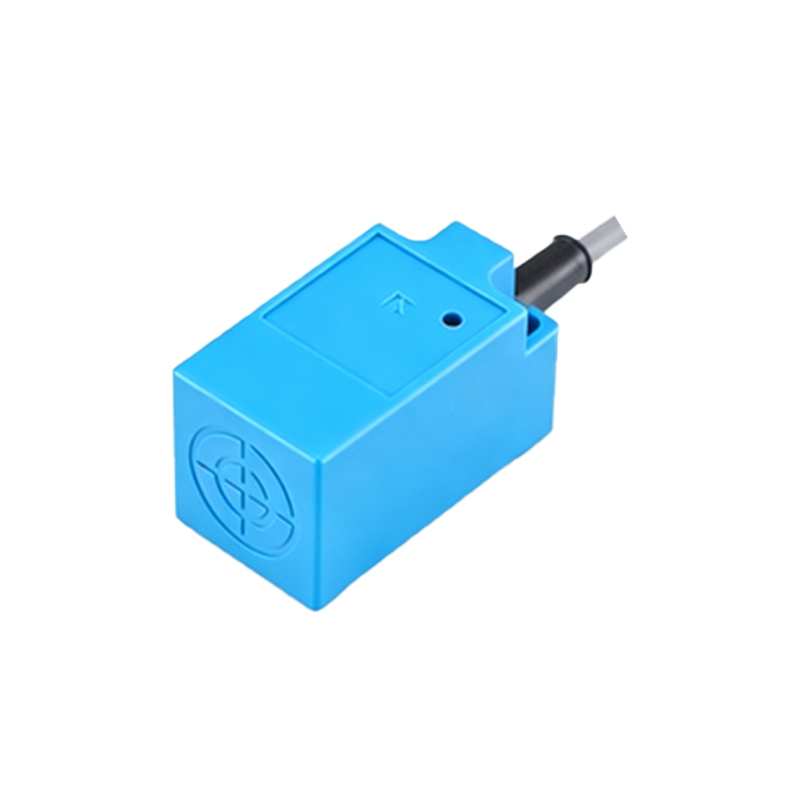
Inductive proximity sensors represent a fundamental component in industrial automation, capable of detecting metallic objects without physical contact. Among these, sensors with a nominal sensing distance of 2mm are particularly crucial for high-precision applications. This article delves into the underlying principles, construction, and key considerations for these compact yet powerful devices.
The core operating principle is based on electromagnetic induction. Inside the sensor, an oscillator circuit generates a high-frequency alternating magnetic field that radiates from the active face, typically the front of the sensor. When a conductive metal target enters this electromagnetic field, eddy currents are induced on the surface of the target. These eddy currents draw energy from the oscillator, resulting in a measurable energy loss or amplitude reduction within the sensor's coil system. An integrated evaluation circuit continuously monitors the oscillation amplitude. Once the amplitude drops below a predefined threshold—corresponding to the target being within the 2mm nominal sensing range—the circuit triggers a state change in the sensor's output (e.g., switching from OFF to ON).
The "2mm" specification refers to the nominal sensing distance (Sn). This is the standardized detection range for a standard target, typically defined as a square of mild steel (Fe360) with a side length equal to the sensor's diameter or three times the Sn, whichever is greater. It is critical to understand that the actual sensing distance can vary. Factors such as the target material's properties—specifically its electrical conductivity and magnetic permeability—significantly influence performance. For instance, stainless steel (austenitic, non-magnetic) may reduce the effective sensing distance to approximately 60-80% of Sn, while copper or aluminum might reduce it to 30-50%. Temperature fluctuations and voltage tolerances also contribute to operational deviations, which is why a reliable operating distance (often 0-81% of Sn) and a guaranteed operating distance (0-90% of Sn) are defined in standards like IEC 60947-5-2.
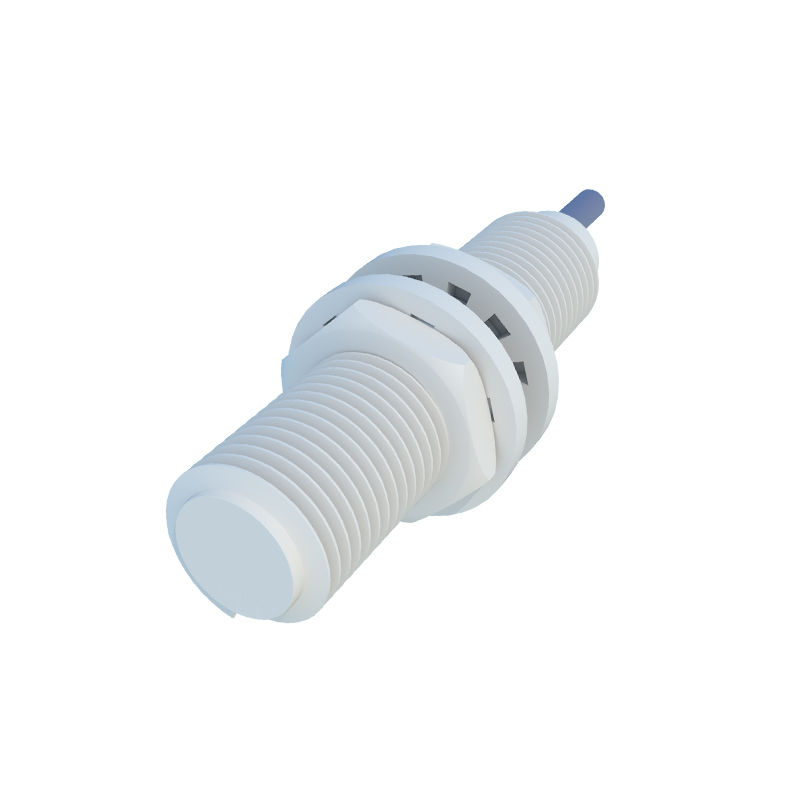
The physical construction of a 2mm inductive sensor is designed for robustness and miniaturization. Key components include the ferrite core with the oscillator coil, the damping magnet (which shapes the magnetic field), the evaluation ASIC (Application-Specific Integrated Circuit), and the output switching element (typically a transistor). The housing is usually made of stainless steel, PBT plastic, or nickel-plated brass, offering high resistance to mechanical stress, coolant, and oils. The compact size, often in M5, M8, or M12 threaded barrels or rectangular housings, allows for installation in space-constrained environments like small robotic grippers, precision assembly fixtures, or tool position verification on CNC machines.
Selecting and applying a 2mm inductive sensor requires careful attention to several parameters. First, the switching frequency defines how quickly the sensor can detect successive objects. Second, the hysteresis (typically 3-15% of Sn) prevents output chatter when a target is at the exact switching point. Third, the mounting conditions are paramount; flush-mountable sensors allow for side-by-side installation without mutual interference, whereas non-flush sensors offer a longer sensing range but require clearance around the active face. Common applications include end-position detection of pneumatic cylinders with small integrated magnets, verifying the presence of tiny metal components (e.g., screws, springs, contacts), monitoring tool breakage in micro-drilling, and counting gear teeth or detecting holes in thin metal disks.
In conclusion, the 2mm inductive proximity sensor is a precision instrument whose operation hinges on the physics of eddy current generation. Its reliable non-contact detection, immunity to environmental contaminants, and fast response make it indispensable in modern, high-speed automated systems where precision and reliability are measured in millimeters. Understanding its principles and limitations is key to deploying it effectively for tasks demanding exact positional feedback.