In the dynamic landscape of industrial automation and process control, the accurate measurement of concentration—whether of gases, liquids, or particulates in a medium—is a critical parameter for ensuring product quality, operational safety, and environmental compliance. Traditional methods, such as manual sampling, electrochemical cells, or absorption-based techniques, often present limitations in terms of response time, maintenance requirements, and applicability in harsh environments. Enter laser-based sensors, a technological leap that is fundamentally transforming concentration measurement across sectors from chemical manufacturing and pharmaceuticals to environmental monitoring and energy production.
At its core, laser sensor technology for concentration measurement leverages the principles of light-matter interaction. Most commonly, it employs techniques like Tunable Diode Laser Absorption Spectroscopy (TDLAS). In TDLAS, a laser diode emits a beam of light at a specific, tunable wavelength that corresponds to an absorption line of the target molecule (e.g., CO2, O2, CH4, H2O vapor). This laser beam is directed through the process gas or medium. As the light passes through, molecules of the target gas absorb a fraction of the light energy at their characteristic wavelength. A photodetector on the opposite side measures the intensity of the transmitted light. The degree of attenuation (absorption) is directly related to the number of absorbing molecules in the path, which, according to the Beer-Lambert law, correlates to the concentration of the target species. By rapidly tuning the laser wavelength across a narrow spectral range and analyzing the absorption profile, the sensor can precisely quantify concentration, often with parts-per-million (ppm) or even parts-per-billion (ppb) sensitivity.
The advantages of laser sensors over conventional methods are substantial and drive their rapid adoption. Firstly, they offer exceptional selectivity and specificity. Because each molecule has a unique "fingerprint" absorption spectrum in the near-infrared or mid-infrared range, the laser can be tuned to a spectral region where only the target gas absorbs, minimizing cross-sensitivity to other background gases. This leads to highly accurate readings with minimal interference. Secondly, they provide real-time, in-situ measurement. Unlike extractive systems that require sampling lines and conditioning, laser sensors are typically installed directly on the process pipe or duct (in-situ). This eliminates time delays associated with sample transport and provides instantaneous feedback for process control loops, enabling tighter and more efficient process management.
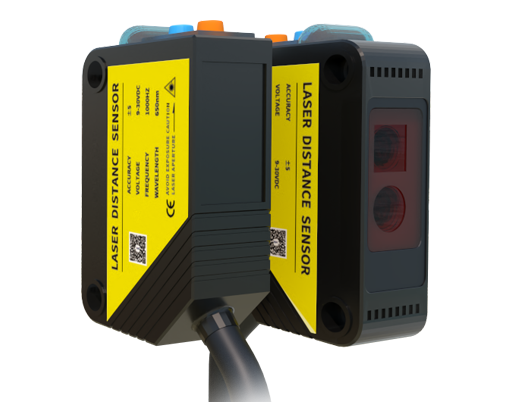
Thirdly, their robustness is a key asset. With no moving parts and minimal need for consumables like electrolytes or filaments, laser sensors exhibit very low maintenance requirements and high long-term stability. They are often housed in rugged enclosures, making them suitable for demanding environments with high temperatures, pressures, or corrosive atmospheres. Furthermore, their non-contact measurement principle means they do not interfere with the process stream, avoiding contamination or pressure drops.

Applications are vast and growing. In combustion processes, such as in power plants or industrial heaters, laser sensors monitor oxygen (O2) and carbon monoxide (CO) concentrations to optimize fuel-air ratios, maximizing efficiency while reducing NOx emissions and ensuring safe operation. In the natural gas industry, they are crucial for detecting trace moisture (H2O) and hydrogen sulfide (H2S) to protect pipelines and ensure gas quality. Semiconductor fabrication relies on ultra-precise monitoring of specialty gas concentrations in process chambers. In environmental monitoring, open-path laser sensors can measure average gas concentrations over long distances for fence-line monitoring of fugitive emissions.
Despite their strengths, implementing laser sensor technology requires careful consideration. Initial investment costs can be higher than some traditional sensors. The performance can be influenced by factors like overall gas pressure, temperature, and the presence of particulate matter or aerosols that can scatter the laser beam. However, modern sensors incorporate sophisticated algorithms and reference cells to compensate for these effects. Calibration, while infrequent, is still necessary to maintain traceable accuracy, though many units offer long calibration intervals.
Looking ahead, advancements in laser diode technology, photonic integrated circuits, and data analytics are pushing the boundaries further. The development of cheaper, more robust laser sources at new wavelengths is expanding the range of measurable compounds. The integration of laser sensors into Industrial Internet of Things (IIoT) platforms allows for predictive maintenance, advanced diagnostics, and centralized data management, unlocking even greater value from concentration data.
In conclusion, laser sensor technology represents a paradigm shift in concentration measurement. By delivering unmatched accuracy, speed, and reliability in real-time, it empowers industries to achieve new levels of process optimization, safety, and environmental stewardship. As the technology continues to evolve and become more accessible, its role as an indispensable tool in the engineer's instrumentation arsenal is set to solidify, driving innovation and efficiency across the global industrial landscape.