In the realm of industrial automation and precision engineering, laser displacement sensors have become indispensable tools for non-contact measurement. These devices operate by projecting a laser beam onto a target surface and analyzing the reflected light to determine distance or displacement with high accuracy. The input mechanisms and signal processing involved are critical to their performance, directly impacting application outcomes in quality control, robotics, and manufacturing.
The core input for a laser displacement sensor is the optical signal reflected from the target. This signal's characteristics—such as intensity, phase, and spot position—are influenced by factors including surface texture, color, material, and environmental conditions. For instance, a shiny or mirror-like surface may cause specular reflection, potentially leading to signal saturation or loss, while dark or absorbent materials might weaken the return signal. Advanced sensors incorporate automatic gain control (AGC) and filtering algorithms to compensate for these variations, ensuring stable input data.
Sensor inputs are typically converted into electrical signals through a receiver element, such as a position-sensitive detector (PSD) or a charge-coupled device (CCD). The choice of detector affects resolution and response time. PSD-based sensors excel in high-speed applications due to analog output, while CCD or CMOS-based sensors offer higher precision for detailed surface profiling. The raw input is then processed using triangulation principles (for most industrial models) or time-of-flight methods (for long-range measurements). In triangulation, the displacement of the laser spot on the detector is geometrically calculated to derive distance, requiring precise calibration to account for input angles and baseline distances.
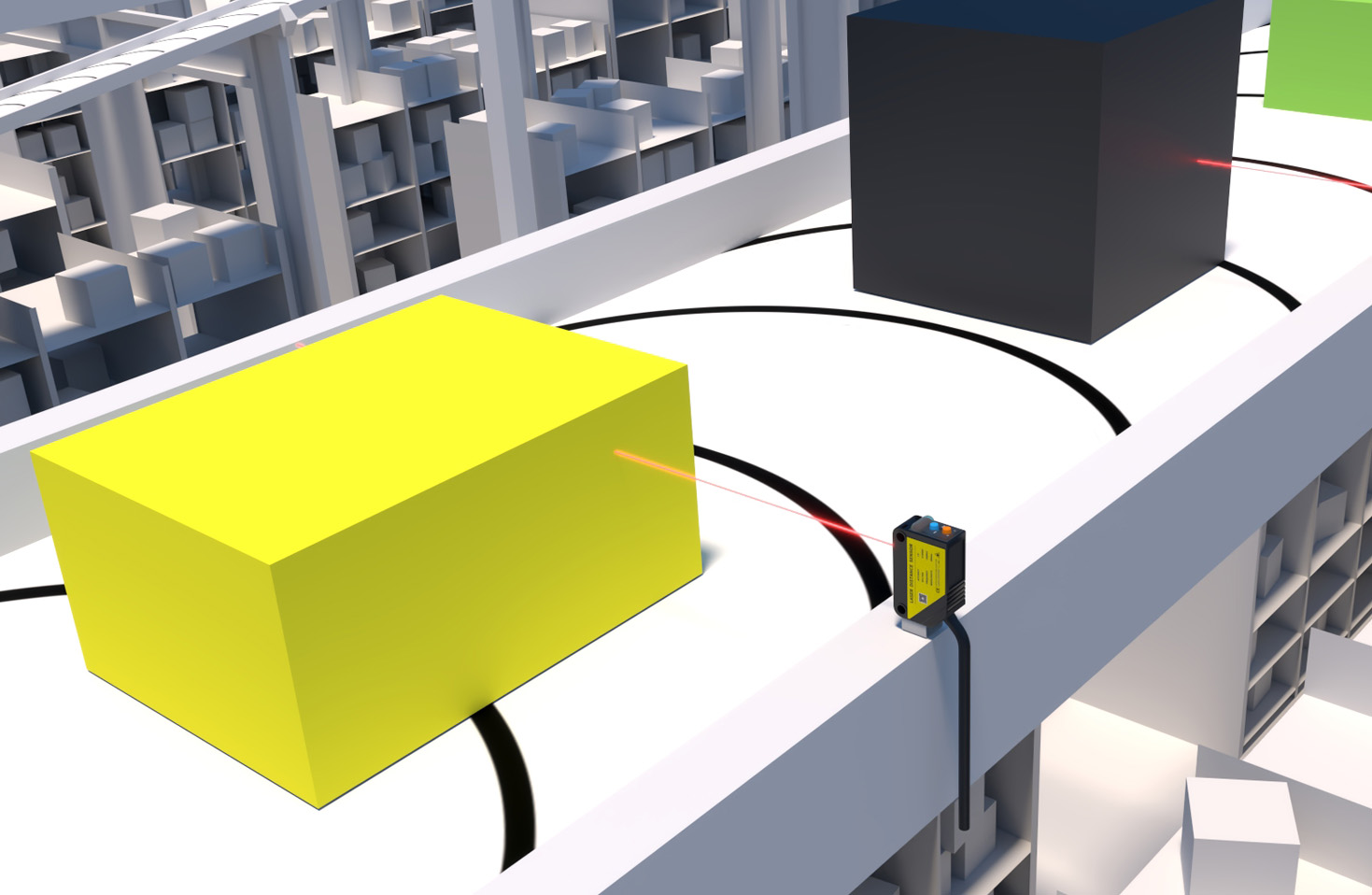
Environmental inputs like ambient light, temperature fluctuations, and vibrations can interfere with sensor performance. Modern designs integrate features to mitigate these issues: optical filters to block irrelevant light wavelengths, temperature compensation circuits to maintain accuracy across operating ranges, and robust housings to minimize mechanical noise. Additionally, digital interfaces (e.g., Ethernet/IP, PROFINET, or analog outputs) facilitate input integration into control systems, allowing real-time data acquisition and feedback loops.
In practice, configuring sensor inputs involves setting parameters such as sampling rate, averaging filters, and threshold levels. For example, in automotive assembly, sensors monitor gap dimensions between panels by processing thousands of input points per second, with filtering to smooth out surface irregularities. In electronics manufacturing, they measure component heights by analyzing input signals against calibrated references, where even micron-level deviations trigger alerts. Best practices include regular calibration using certified standards, aligning the sensor perpendicular to the target to optimize input signal strength, and avoiding contamination of optics.
As Industry 4.0 advances, laser displacement sensors are evolving with smarter input capabilities. Integration with AI algorithms enables predictive maintenance by analyzing trend data from sensor inputs, while IoT connectivity allows remote monitoring and adjustment. Future developments may focus on enhancing input tolerance for challenging surfaces (e.g., transparent or curved objects) and miniaturizing sensors for embedded applications. Understanding these input dynamics empowers engineers to select and deploy sensors effectively, driving efficiency and precision in automated systems. Ultimately, the reliability of laser displacement measurements hinges on how well sensor inputs are managed—from acquisition to processing—making it a cornerstone of modern industrial innovation.