Laser sealing sensors represent a pivotal advancement in modern industrial automation, offering unparalleled precision in monitoring and controlling sealing processes. At their core, these sensors operate based on the principles of laser triangulation or interferometry, depending on the specific application requirements. In laser triangulation, a laser diode emits a focused beam onto the target sealing surface. The reflected light is captured by a high-resolution CMOS or CCD detector at a known angle. By analyzing the position of the laser spot on the detector, the sensor calculates the distance to the surface with micron-level accuracy. This allows for real-time detection of gaps, misalignments, or inconsistencies in seals—critical in industries like automotive manufacturing, where gasket integrity is paramount.
Another common principle is laser interferometry, which utilizes the interference patterns of coherent laser light waves. When the laser beam is split, with one part directed at the reference surface and the other at the sealing interface, any minute displacement alters the interference fringes. Sophisticated algorithms interpret these changes to measure seal thickness, uniformity, or thermal expansion effects. This method is especially valuable in aerospace and semiconductor fabrication, where environmental factors like temperature fluctuations can compromise seal quality.

The integration of these sensors into automated systems enhances efficiency and reduces waste. For instance, in food packaging, laser sensors verify hermetic seals by detecting microscopic leaks through pressure differentials or gas leakage analysis. They emit low-power laser pulses, and any deviation in the expected reflection signal indicates a breach. This non-contact measurement avoids contamination and wear, extending equipment lifespan. Moreover, advancements in fiber-optic laser technology enable deployment in hazardous or confined spaces, such as chemical processing plants, where traditional sensors might fail.
Data processing is integral to laser sealing sensors. Embedded microprocessors convert raw optical data into actionable insights, often interfacing with PLCs (Programmable Logic Controllers) for adaptive control. Machine learning algorithms can further optimize sealing parameters by predicting failures based on historical sensor data. For example, in pharmaceutical production, sensors monitor vial capping processes, ensuring each seal meets sterility standards. Any anomaly triggers immediate corrective actions, minimizing downtime.
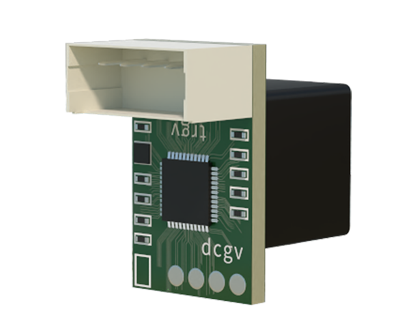
Despite their advantages, challenges persist. Surface reflectivity variations—such as on glossy or textured materials—can affect accuracy, necessitating calibration with adaptive optics. Environmental interference from ambient light or vibrations also requires shielding and filtering solutions. However, ongoing research into multi-wavelength lasers and AI-driven calibration is mitigating these issues. In summary, laser sealing sensors leverage precise optical mechanisms to uphold quality in sealing applications, driving innovation across manufacturing sectors. Their ability to deliver non-invasive, high-speed measurements makes them indispensable for Industry 4.0 initiatives, where smart factories demand reliable, data-driven oversight. As technology evolves, these sensors will likely incorporate IoT connectivity for remote monitoring, further revolutionizing industrial sealing processes.