In the realm of industrial automation and machine safety, proximity sensors are indispensable components for non-contact detection. The EM2_8s series represents a robust and reliable solution within this category, designed for demanding environments. This article delves into the key technical parameters, operational principles, and typical applications of the EM2_8s inductive proximity sensor, providing engineers and technicians with a comprehensive reference.
The EM2_8s is a cylindrical, shielded inductive proximity sensor. Its core function is to detect the presence of metallic objects without physical contact, utilizing the principle of electromagnetic induction. When a metallic target enters the sensor's active field, it causes eddy currents to form on the target's surface. This alters the oscillation amplitude within the sensor's coil, which is detected by the internal circuitry, triggering a solid-state switching output. This non-contact operation ensures high reliability, long service life, and eliminates mechanical wear.
A critical parameter for any proximity sensor is its sensing distance, or nominal range. For the EM2_8s, this is typically specified as 8mm. It is crucial to note that this is the rated operating distance (Sn) for a standard target defined by the sensor's specifications, usually a square of mild steel (Fe 360) with a side length equal to the sensor's diameter or three times the rated distance. The effective sensing point remains consistent, ensuring repeatability in detection. The sensor features a hysteresis of approximately 10% of the sensing distance, which prevents output chatter when a target is at the detection boundary.
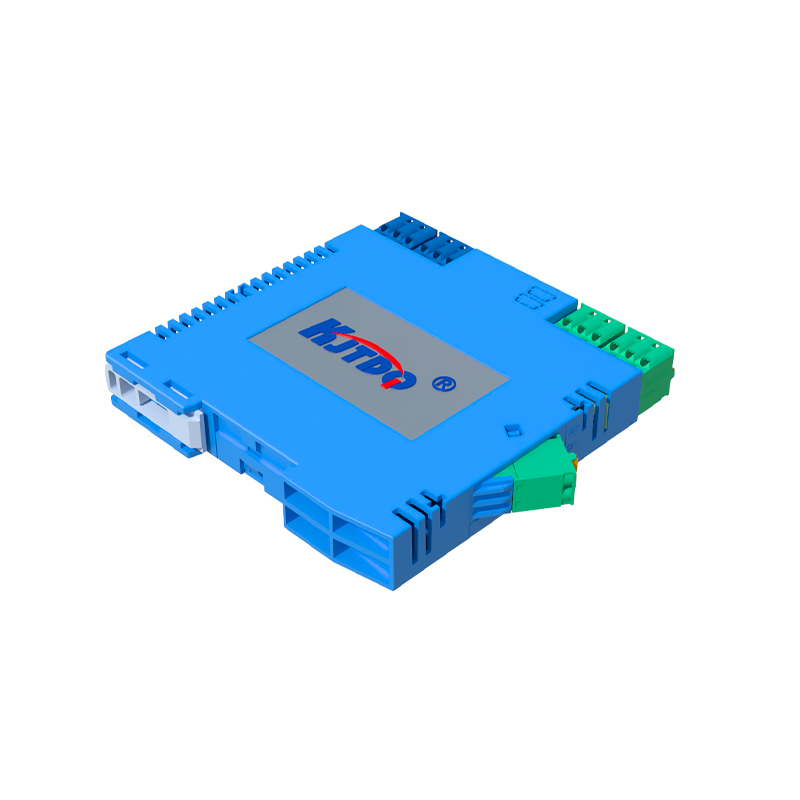
The electrical characteristics of the EM2_8s are fundamental for system integration. It is commonly available in both DC (10-30V DC) and AC (20-250V AC) variants, catering to different control voltage standards. The output configuration is typically a 3-wire design for DC models (PNP or NPN switching output) and a 2-wire design for AC models. The load current capacity is a vital specification; DC models often support up to 200mA, while AC models can handle up to 500mA, sufficient for driving relays, PLC inputs, or small contactors directly. The voltage drop across the sensor (≤3V for DC types) and leakage current (for AC 2-wire types) must be considered in circuit design to ensure proper operation of the load.
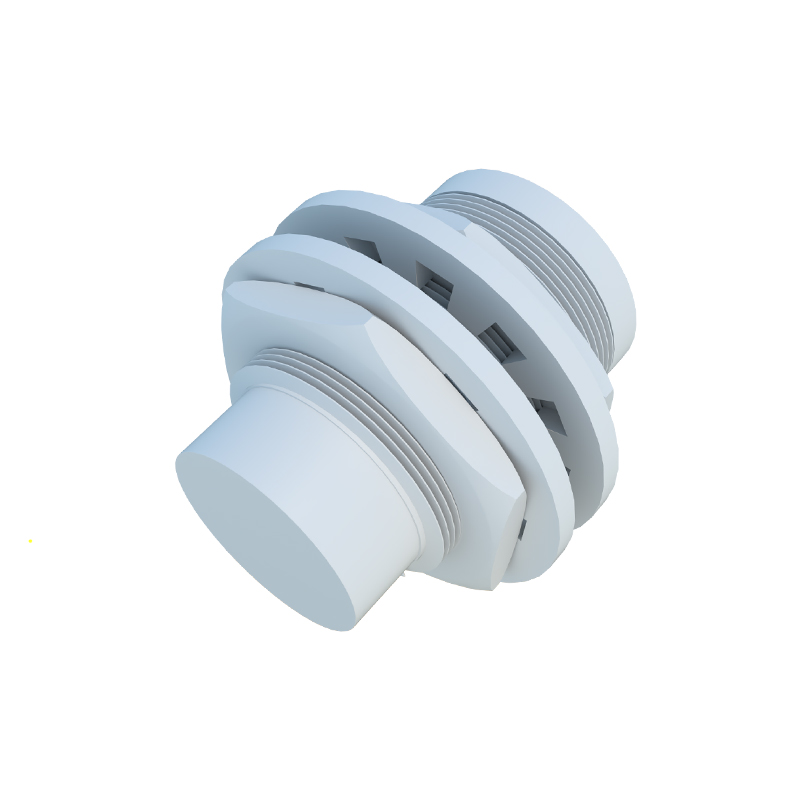
Environmental robustness is a hallmark of the EM2_8s series. It generally boasts an IP67 ingress protection rating, making it resistant to dust and capable of withstanding temporary immersion in water. This makes it suitable for washdown areas in food processing or other wet industrial settings. The housing is typically constructed from nickel-plated brass or stainless steel, offering excellent resistance to corrosion, oils, and coolants. Operating temperature ranges are usually from -25°C to +70°C, ensuring stable performance across a wide spectrum of industrial climates.
Frequency response, or switching frequency, is another key performance indicator. The EM2_8s sensors offer a high switching speed, often up to 1 kHz for DC models. This allows for the detection of fast-moving parts on conveyor lines or in high-speed assembly machines. The repeatability accuracy is exceptionally high, often within 5% of the sensing distance, guaranteeing precise and consistent object positioning.
When installing the EM2_8s, several factors must be considered. Being a shielded (flush-mountable) type, it can be installed flush with a metal mounting bracket without a loss of sensing range, which is a significant advantage in space-constrained applications. However, users must ensure adequate clearance from adjacent metal surfaces (lateral and frontal) as specified in the datasheet to avoid false triggering or reduced sensing distance. Proper wiring according to the color code (typically brown for +V, blue for 0V/neutral, and black for the output signal) is essential. For DC 3-wire models, attention must be paid to the sourcing (PNP) or sinking (NPN) output type to match the input circuit of the controller.
The applications for the EM2_8s are vast across factory automation. Common uses include position sensing of cylinders (via a piston ring), end-of-travel detection on linear actuators, part presence verification on assembly lines, bin level detection for metal parts, and safety interlocking on machine guards (as part of a control system). Its reliability and durability make it a preferred choice in material handling, packaging machinery, automotive manufacturing, and CNC machine tools.
In summary, the EM2_8s proximity sensor offers a blend of precise detection, robust construction, and versatile electrical integration. Understanding its detailed parameters—from the 8mm sensing distance and electrical ratings to the IP67 protection and high switching frequency—enables optimal selection and deployment. For engineers designing or maintaining automated systems, specifying the correct variant (DC