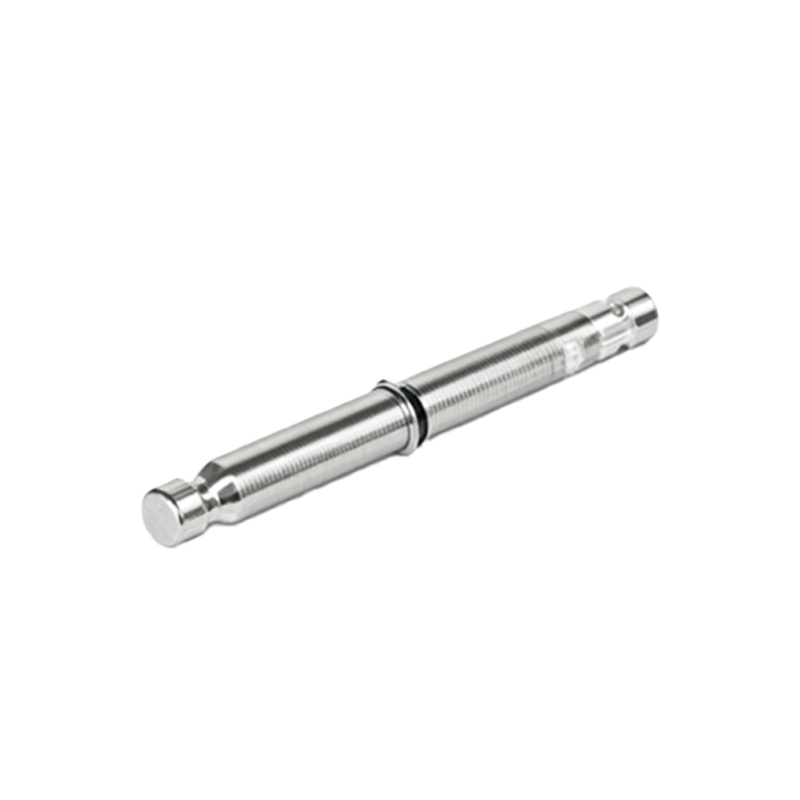
In the realm of industrial automation and machine control, proximity sensors are indispensable components for non-contact detection of metallic and, in some cases, non-metallic objects. Among the most common configurations are 2-wire and 3-wire DC sensors, each with distinct electrical characteristics, wiring schemes, and application suitability. Understanding the fundamental differences between these two types is crucial for engineers and technicians to ensure reliable system performance, safety, and cost-effectiveness.
The 2-wire proximity sensor is the simpler of the two in terms of physical connection. As the name implies, it requires only two wires: one for the power supply (typically DC voltage, e.g., 10-30 VDC) and the other as the load connection. In a standard setup, the sensor is connected in series with the load (such as a PLC input or a relay coil). When no target is present, a small leakage current (often 1-2 mA) flows through the sensor to maintain its internal circuitry. Upon detecting a target, the sensor switches, allowing the full load current to pass. This series connection means the sensor itself must carry the entire current of the load it controls. Key advantages of 2-wire sensors include simplified wiring, reduced installation space, and often a lower initial component cost. They are particularly favored in applications where cabinet space is limited or for direct replacement of mechanical limit switches. However, they come with notable considerations. The leakage current, while small, can be enough to inadvertently activate highly sensitive PLC inputs or keep a relay partially energized, potentially requiring a bleeder resistor in parallel with the load. Furthermore, voltage drop across the sensor in the "on" state can be significant (usually 1.5-3V), which must be accounted for in low-voltage systems. The load current must also fall within the sensor's specified switching capacity, limiting its use with very low-power or very high-power loads.
In contrast, the 3-wire proximity sensor provides a more robust and versatile solution, making it the most prevalent type in modern industrial control panels. It features three distinct wires: a brown wire for the positive supply voltage (+V), a blue wire for the common negative (0V), and a black wire as the switched output. This configuration separates the power supply for the sensor's internal electronics from the output switching circuit. The sensor's oscillator and amplifier are powered directly between brown and blue. The black output wire acts like a switch connected either to the positive supply (for a PNP, or sourcing, output) or to the negative supply (for an NPN, or sinking, output). When a target is detected, this electronic switch closes, connecting the load to either voltage or ground. This separation eliminates the leakage current issue entirely; when the sensor is off, the output is in a high-impedance state, providing a definitive "off" signal. Voltage drop is minimal (typically less than 1.5V), and the output can switch very low-current loads suitable for modern PLCs and solid-state devices. The choice between PNP and NPN outputs offers flexibility to interface with different control system conventions (sourcing vs. sinking inputs). The primary trade-offs are the need for an additional wire, slightly more complex wiring diagrams, and generally a higher unit cost compared to 2-wire models.
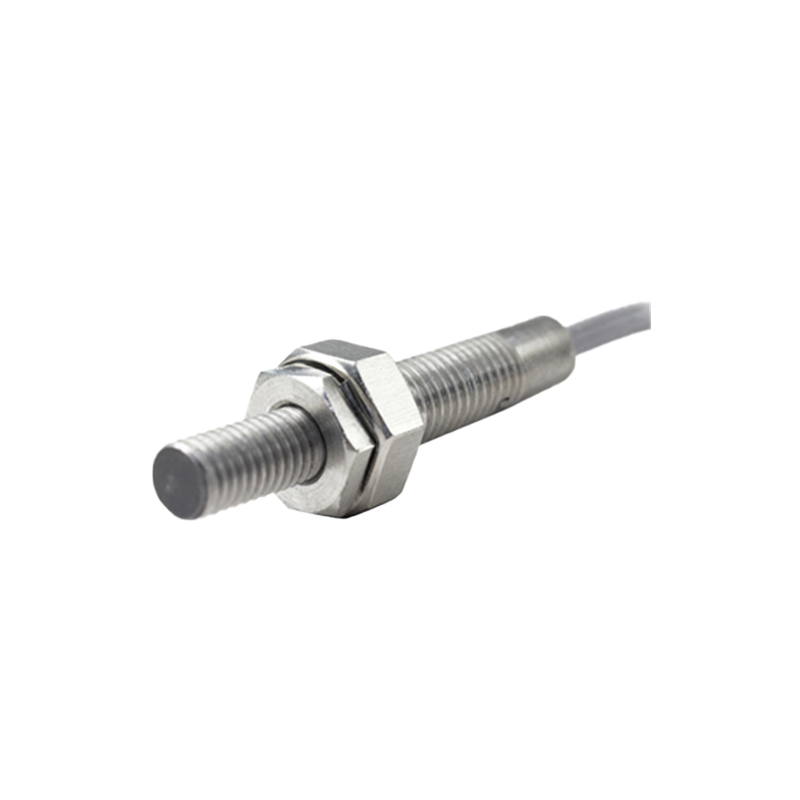
Selecting between a 2-wire and 3-wire sensor hinges on a careful analysis of the application requirements. For simple on/off control of higher-power loads like contactor coils, pilot lights, or relays where leakage current is not a concern, a 2-wire sensor offers a compact and economical solution. It is ideal for panel retrofits or cost-sensitive, high-volume applications. Conversely, for interfacing directly with programmable logic controllers (PLCs), safety circuits, solid-state relays, or any system requiring a crisp, unambiguous signal with no residual voltage, the 3-wire sensor is the unequivocal choice. Its superior electrical performance, compatibility with low-power electronics, and enhanced noise immunity make it the standard for precision automation, robotics, and complex machinery. Additionally, in safety-critical applications, the definitive off-state of a 3-wire sensor is often a mandatory requirement to prevent unintended machine operation.
In summary, the dichotomy between 2-wire and 3-wire proximity sensors is not about one being universally better, but about matching the right tool to the task. The 2-wire sensor excels in simplicity and direct load switching, while the 3-wire sensor provides precision, versatility, and compatibility with modern electronic control systems. A thorough evaluation of load characteristics, control system interface, wiring constraints, and performance expectations will guide the design engineer to the optimal selection, ensuring sensor reliability and the overall integrity of the automated system.